
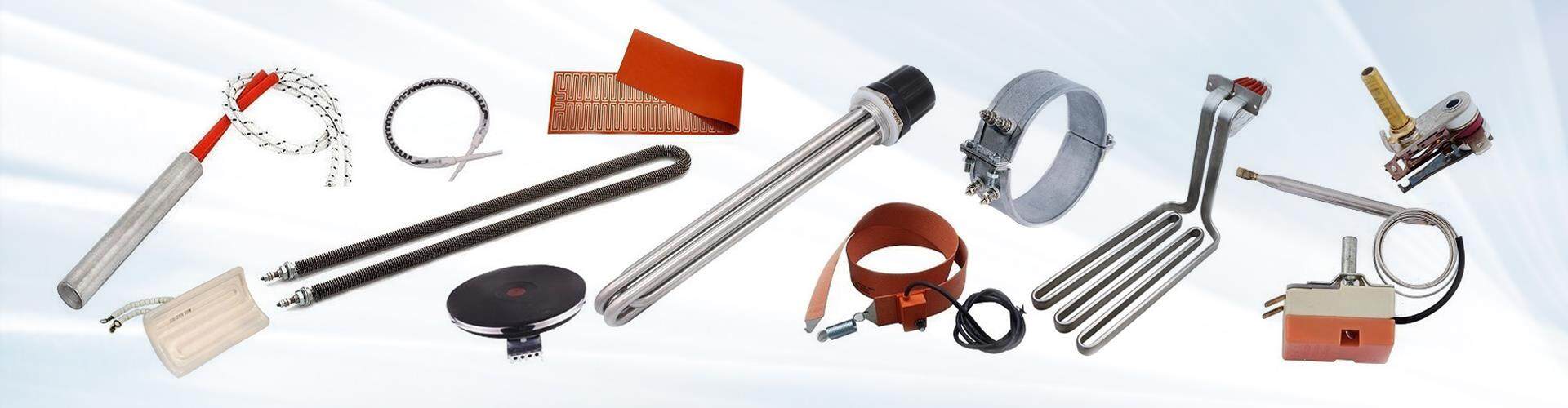
A manual reset capillary thermostat is used in water heating systems to prevent overheating by cutting off power and requiring manual restart.
Compared with automatic reset thermostats, it provides higher safety, because the system cannot restart until the issue is checked.
What Problem Does This Solve?
Many water heating systems face a common issue:
👉 Overheating without proper shutdown control
If the thermostat fails or resets automatically, it may lead to:
Repeated overheating cycles
Heating element damage
Safety risks in extreme cases
This is especially critical in water heater pipes and enclosed heating systems.
Customer Background
Our customer from New Zealand manufactures water heating pipe systems for residential and light commercial use.
Their goal was simple:
👉 Stable temperature + reliable safety protection
However, their existing solution could not fully guarantee this.
Our Thermostat Solution
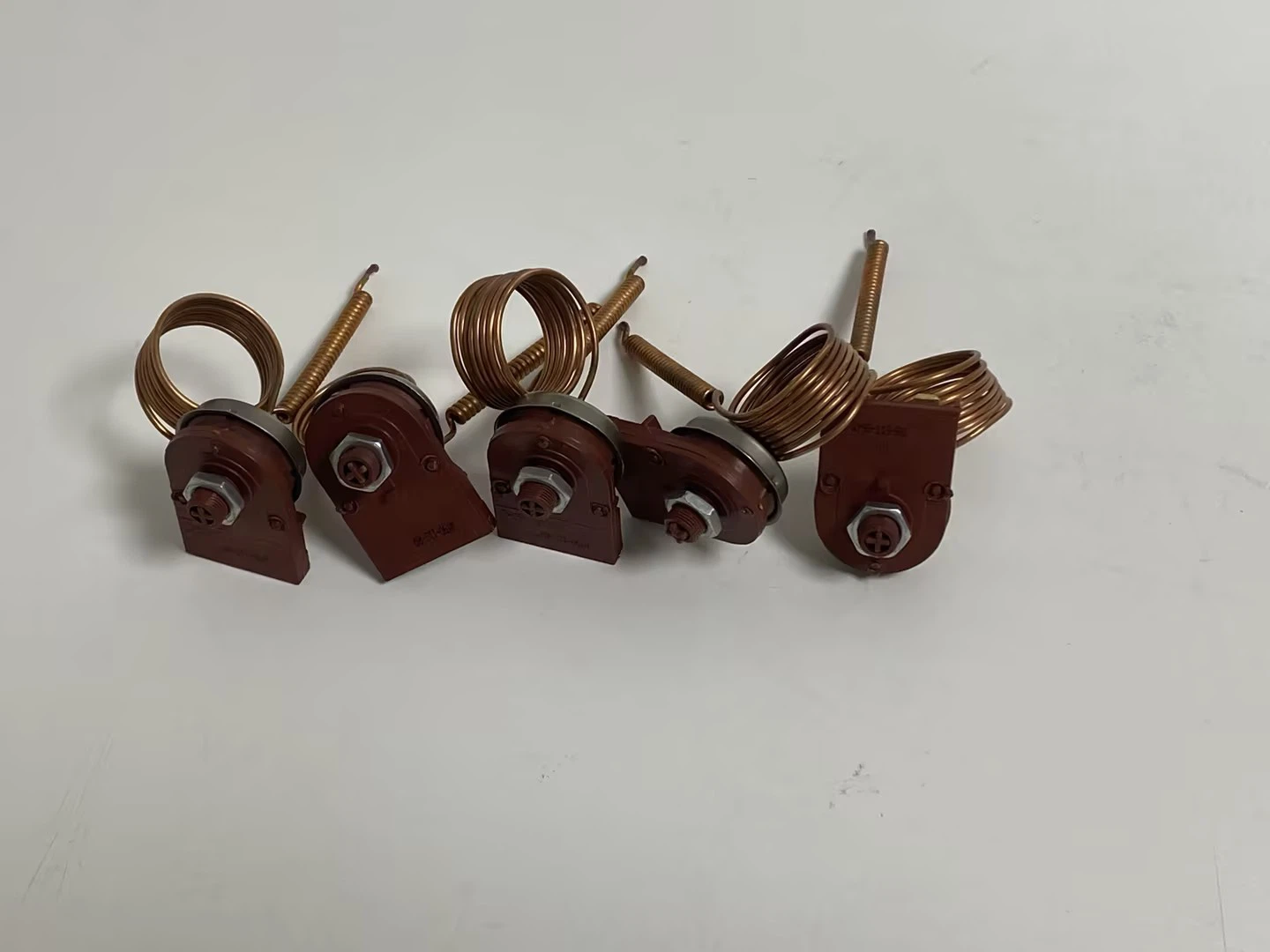
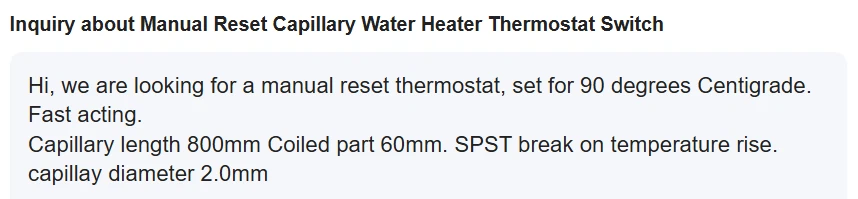
We recommended a Manual Reset Capillary Water Heater Thermostat Switch, designed for safety-critical heating applications.
How it works (simple explanation):
A capillary sensor detects temperature changes
When temperature exceeds the limit → power is cut off immediately
The system will NOT restart automatically
A technician must manually reset the thermostat
Key technical features:
Accurate capillary temperature sensing
Manual reset safety protection
Adjustable temperature range (e.g., 50–200°C)
Stable switching differential (~3%)
Custom capillary length (e.g., 1–3.5 meters)
We also customized the structure to fit their heating pipe installation.
Real Testing Results
After receiving samples, the customer conducted real application testing.
Results:
✅ Stable operation under normal conditions
✅ Immediate shutdown when overheating occurs
✅ No automatic restart after trip
✅ Improved system safety compliance
After several weeks of validation, the customer confirmed:
👉 The solution solved their overheating risk
They have since placed repeat orders and adopted it as a standard component.
Manual Reset vs Automatic Reset (Simple Explanation)
This is one of the most searched questions.
Automatic Reset Thermostat
Restarts when temperature drops
Suitable for non-critical applications
Risk: may restart without fixing the issue
Manual Reset Thermostat
Requires manual restart
Stops system until checked
Much safer for heating systems
👉 Conclusion:
For water heaters, manual reset is the safer choice
When Should You Use a Manual Reset Thermostat?
You should consider manual reset if your system has:
High power heating elements
Risk of dry burning
Enclosed or pressurized systems
Safety compliance requirements
Continuous operation environments
👉 Typical applications:
Water heater pipes
Boilers
Industrial heating tanks
Commercial kitchen equipment
Key Takeaways
Overheating protection is critical in heating systems
Automatic reset is not always safe
Manual reset thermostats prevent repeated failures
Real-world testing confirms reliability
Proper selection improves both safety and product quality

One-stop Manual Reset Capillary Thermostat Factory in China
If you require heating elements, Jaye Heater-as a long-standing manufacturer of heating elements-will assist you with our team of professional technicians and sales personnel.


