The Difference Starts with the Equipment, Not the Heater
Many buyers compare heating elements by looking at power, voltage, or tube diameter first.
In reality, those specifications can often be identical.
For example, both an M Type heater and a U Type heater may use:
- Stainless steel 304 sheath
- Ø12 mm tubular element
- 230V or 480V
- Spiral steel fins
- The same watt density
Yet once installed inside the equipment, they may perform very differently.
The reason isn't the electrical design-it's the way the heating surface is arranged inside the airflow.
This is why heater selection should always begin with the equipment layout rather than the heater catalog.
When a U Type Heater Makes More Sense
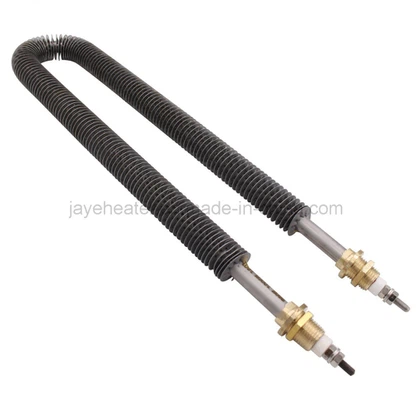
A U Type finned tubular heater is probably the most familiar design found in industrial air heating equipment.
Its structure is straightforward. A single tubular element is bent once to form a U, creating two parallel heating sections that are easy to install and replace.
For many standard air heating systems, this simplicity is actually its biggest strength.
We've seen customers choose U Type heaters simply because maintenance teams can replace them more quickly during scheduled shutdowns. In applications such as HVAC units, duct heaters, or industrial ovens, minimizing downtime is often more valuable than squeezing every possible watt into the heater chamber.
Another advantage is airflow predictability.Because the heating sections are arranged in a relatively open layout, airflow resistance remains low, making the overall heating system easier to design.
When an M Type Heater Becomes the Better Choice
The decision often changes when installation space becomes limited.
One project we frequently encounter involves customers increasing the required heating capacity while keeping the heater box exactly the same size.
The first reaction is often:
"Can we simply increase the wattage?"
Technically, yes-but increasing watt density isn't always the best solution. Higher surface temperatures can shorten heater life and place more stress on surrounding components.
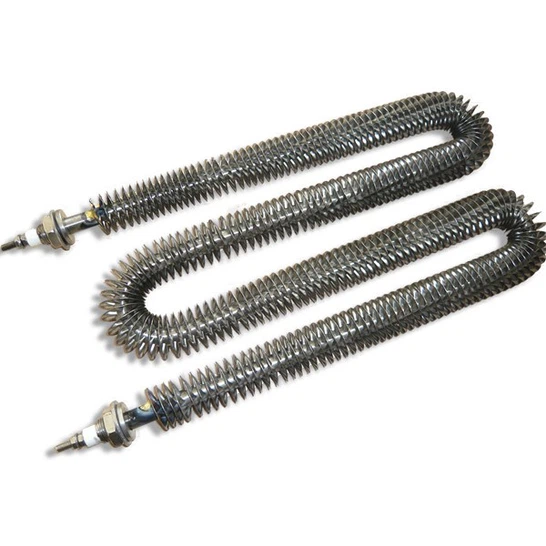
Instead, many engineers choose to increase the effective heating length.This is where the M Type design becomes valuable.
By adding another bend, the heating element occupies more of the available space inside the chamber without making the heater enclosure larger.
In other words, the heater doesn't become bigger-it becomes more efficient in the space already available.
For compact industrial air heaters, this approach often provides a better long-term solution than simply increasing power density.
A Question We Usually Ask Customers First
Before recommending any heater configuration, our engineering team typically asks a few questions:
- How much installation space is available?
- Is airflow horizontal or vertical?
- What is the required outlet air temperature?
- Will the heater operate continuously or intermittently?
- Is future maintenance an important consideration?
Interestingly, the answers to these questions often determine the heater shape long before voltage or wattage is discussed.
This simple design-first approach has helped many OEM customers avoid unnecessary redesigns later in the project.
Final Thoughts
Both M Type and U Type finned tubular heaters are proven solutions used across thousands of industrial heating systems worldwide.
Rather than viewing them as competing products, it's more helpful to think of them as two different design tools.
If your priority is easy installation, simple maintenance, and reliable heating, a U Type heater is often the logical choice.
If you're trying to maximize heating capacity inside a compact enclosure, an M Type heater may offer a more effective solution without increasing equipment size.
Ultimately, the right heater is the one that works best within your system-not the one with the most bends.