

Introduction
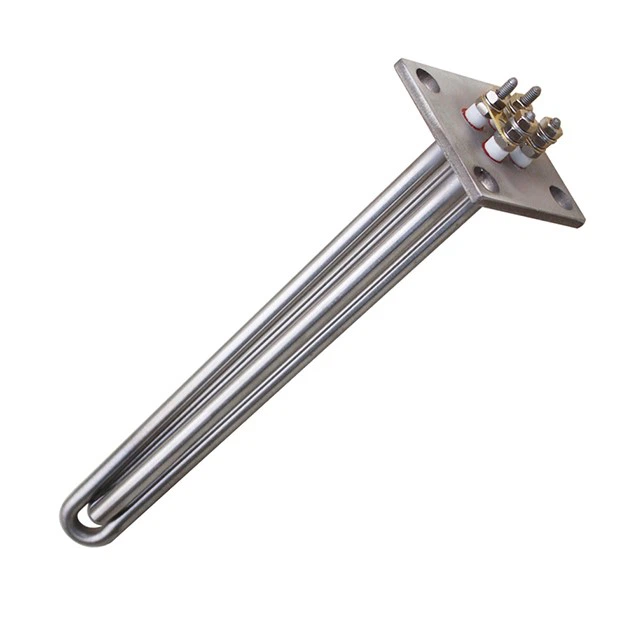
Many industrial processes require stable oil temperature control to maintain equipment performance, product quality, and process efficiency. Traditionally, some heating systems use thermal oil circulation systems, where a heat source transfers energy to thermal oil and the heated oil is then circulated through pipelines or equipment.
While thermal oil systems are widely used in industrial applications, they also require additional components such as heaters, pumps, expansion tanks, heat exchangers, and circulation piping. For certain applications, directly heating the process oil with an electric immersion heater can provide a more compact and efficient heating approach.
Flanged immersion heaters are commonly used for industrial oil heating because they can be directly installed into tanks, vessels, or heating chambers connected to oil circulation systems. By transferring heat directly into the oil medium, these heaters help simplify system design and provide accurate temperature control.
Why Oil Temperature Control Matters in Industrial Systems
Industrial oils are often used for lubrication, hydraulic systems, heat transfer, and process applications. Maintaining the correct oil temperature is essential because temperature changes can affect oil viscosity, flow characteristics, and equipment operation.
When oil temperature is too low, increased viscosity may reduce flow efficiency and increase the load on pumps or mechanical components. When temperature is too high, oil degradation and reduced service life may occur depending on the oil type and operating conditions.
A properly designed electric oil heating system helps maintain stable temperatures by providing controlled heat input directly into the process medium.
Key requirements for industrial oil heating include:
- Stable temperature control
- Uniform heat distribution
- Suitable heater material selection
- Reliable operation during continuous heating cycles
- Easy maintenance and installation
Flanged Immersion Heaters for Industrial Oil Heating
A flanged immersion heater consists of tubular heating elements mounted on a flange plate. The heating elements are immersed directly into the oil or heating medium, allowing heat to transfer from the element sheath into the surrounding liquid.
Compared with indirect heating systems, direct immersion heating eliminates the need for an additional heat transfer medium. This can reduce system complexity in applications where direct electric heating is suitable.
Flanged immersion heaters are commonly installed in:
- Oil storage tanks
- Hydraulic oil systems
- Lubrication oil reservoirs
- Process heating vessels
- Industrial circulation systems
The heater design must be matched with the oil characteristics, tank structure, operating temperature, and required heating capacity.
Benefits of Direct Electric Oil Heating
- Simplified Heating System Design
Compared with thermal oil circulation systems, direct electric heating can reduce the number of required components in suitable applications. Eliminating intermediate heat transfer equipment may simplify installation and maintenance.
- Efficient Heat Transfer
Because the heating element transfers heat directly into the oil medium, energy losses caused by additional heat exchange processes can be reduced.
- Flexible Installation
Flanged immersion heaters can be installed in different tank sizes and process equipment designs. The flange connection allows easier installation and replacement compared with some integrated heating systems.
- Precise Temperature Control
When combined with temperature sensors and controllers, electric immersion heaters can provide accurate temperature management for industrial oil applications.
Important Design Considerations for Oil Heating Applications
Selecting an immersion heater requires careful consideration of the operating environment.
The oil type and operating temperature should be evaluated before selecting the heater material. Different oils may have different chemical properties and temperature requirements.
Watt density is also an important factor. Excessive surface loading may increase local heater surface temperature, while a suitable design helps improve heater reliability and maintain stable oil heating.
Installation location affects heating performance as well. Proper positioning allows better circulation around the heating elements and helps prevent localized overheating.
For systems with temperature-sensitive oils, temperature monitoring and control devices are recommended to maintain safe operation.
Typical Applications
Flanged immersion heaters are used in various industrial oil heating systems, including:
- Hydraulic Oil Heating
Maintaining suitable oil temperature for hydraulic equipment operation and startup conditions.
- Lubrication Oil Systems
Supporting stable oil viscosity for industrial machinery and mechanical systems.
- Oil Storage and Processing Tanks
Providing controlled heating for stored or processed oil materials.
- Industrial Process Equipment
Used in equipment requiring continuous oil temperature management.
Related Article

Request a Custom Flanged Immersion Heater Solution
Jaye Heater provides customized flanged immersion heaters for industrial oil heating applications.


