
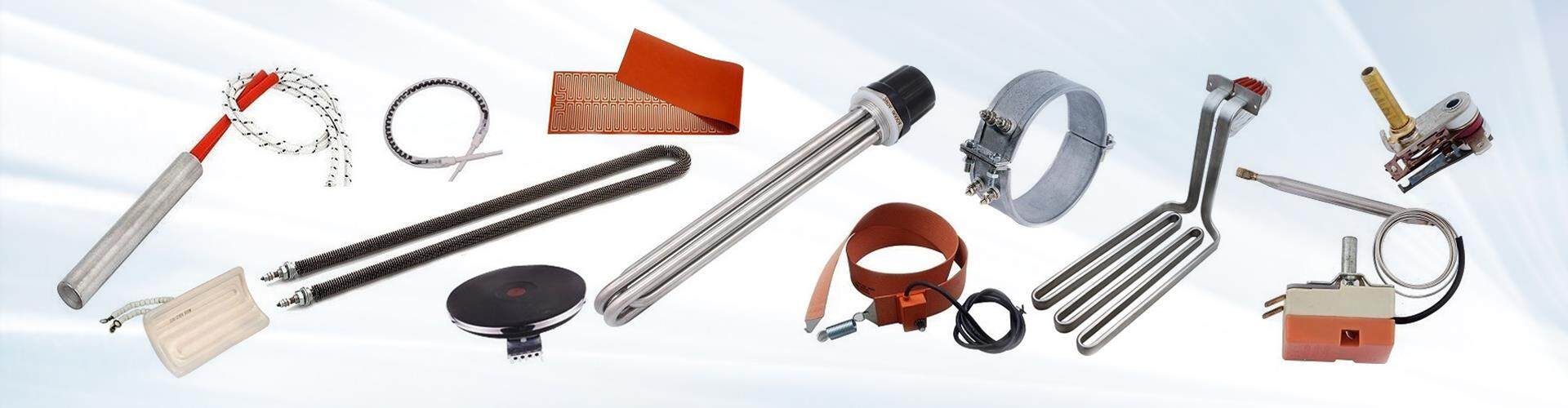
JAYE manufactures customized polyimide film heaters that can be evaluated as alternatives to selected Birk Kapton®/polyimide heaters.
Both product types use a thin, flexible insulating film with an etched-foil heating circuit, making them suitable for applications where installation space, low heater profile and controlled surface heating are important.
However, a suitable alternative must be assessed against the original heater's dimensions, voltage, wattage, resistance, operating temperature, insulation requirements, mounting construction and sensor configuration.
Similar material or product names alone do not establish direct interchangeability.
Birk offers several polyimide heater constructions, including acrylic-bonded, FEP-bonded and all-polyimide designs.
Its published temperature capabilities vary by construction, reaching up to 150°C for acrylic, 260°C for FEP and 300°C for AP/HT designs.
JAYE also offers customized polyimide film heaters, with published specifications varying by product construction.
For OEM buyers evaluating a second source, the original Birk model number, drawing or sample is the most reliable starting point.
Quick Answer: Birk vs. JAYE Polyimide Heaters
- Heating construction: Birk's Kapton® heaters use flexible etched-foil heating elements with polyimide insulation. JAYE's published polyimide foil heater also uses a thin etched-metal heating element laminated with polyimide film.
- Temperature range: Birk publishes different limits by bonding system: up to 150°C for acrylic, 260°C for FEP and 300°C for AP/HT constructions. JAYE's selected polyimide foil heater page lists a using temperature range of -60°C to 200°C.
- Watt density: JAYE's selected polyimide foil heater page lists 0.03–2.5 W/cm². Birk's current product page describes different material and construction options but does not provide one universal watt-density limit for the complete polyimide range.
- Dimensions: Birk's custom Kapton heater page lists sizes up to 23 × 29 inches for some constructions, while JAYE's selected polyimide foil heater page lists widths of 10–500 mm and lengths of 10–1800 mm.
- Precision heating: Birk describes designs capable of heat uniformity to ±0.1°C in specified applications. This is a manufacturer-stated uniformity capability, not a universal temperature-control accuracy specification.
- Replacement feasibility: JAYE can review an existing Birk heater drawing or sample to assess whether a corresponding custom design is manufacturable. Electrical, thermal, mechanical and safety requirements must be verified before replacement.
The specifications above refer to the cited product pages and constructions. They are not guaranteed ratings for every heater produced by either manufacturer.
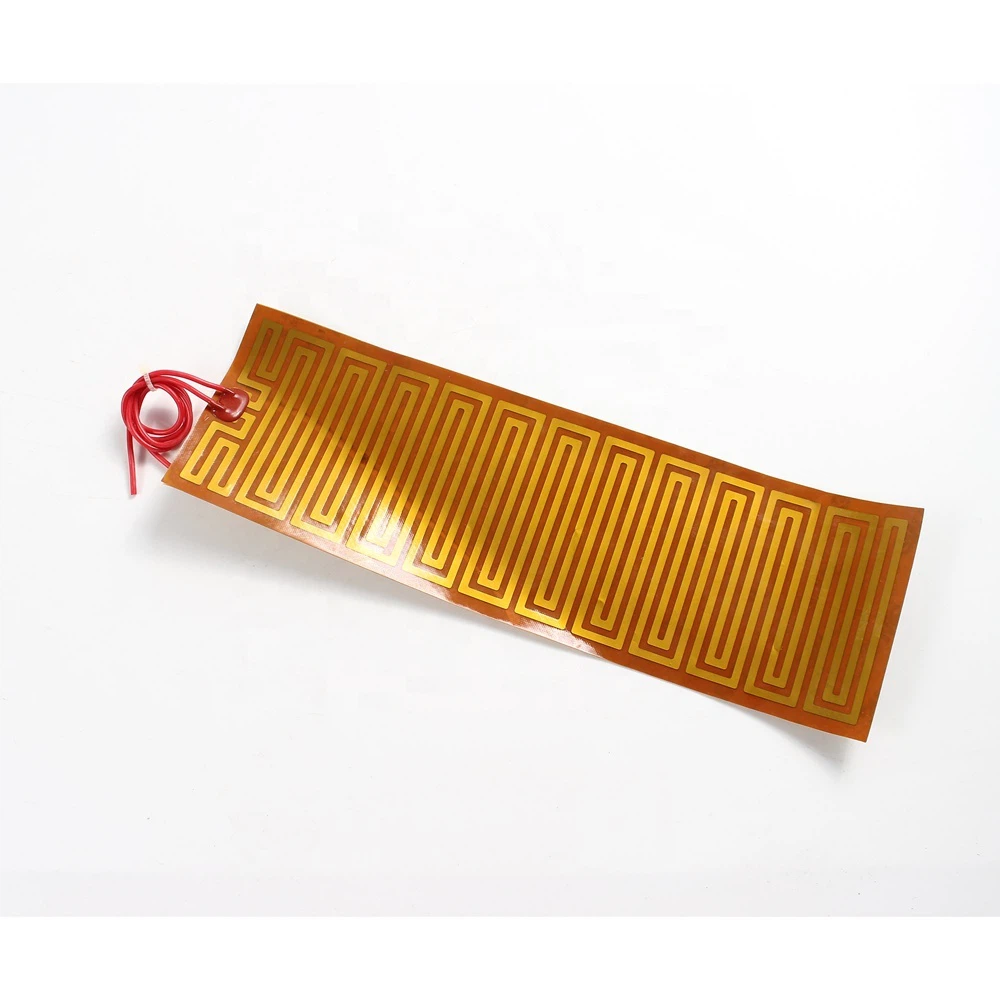
1. Understanding Birk's Polyimide Heater Technology
Birk Manufacturing produces flexible heating elements for applications requiring thin, lightweight and customized thermal structures.
Its Kapton® polyimide heaters use an etched-foil heating element insulated by polyimide film.
According to Birk, the material and bonding system can be selected according to the application's temperature and construction requirements. Its published product information identifies several types:
| Birk polyimide construction | Published temperature capability | Construction consideration |
|---|---|---|
| Acrylic-bonded Kapton | Up to 150°C | Acrylic bonding system |
| FEP-bonded Kapton | Up to 260°C | Fluoropolymer bonding system |
| All-polyimide / high-temperature (AP/HT) | Up to 300°C | Higher-temperature polyimide construction |
These are product-family capabilities published by Birk, not interchangeable operating limits for every heater.
The maximum temperature of the selected bonding system, adhesive, lead wires and other components must be considered together.
Birk also describes design options such as:
- Custom shapes and formed geometries.
- Multiple heating zones and shaded watt density.
- Integrated etched temperature sensors.
- EMI shielding.
- Connector and wiring integration.
- PSA and foil backing options.
- Encapsulation and wire strain relief.
These options are relevant when the heater needs to be integrated into a larger equipment assembly rather than installed as a standalone heating pad.
Source: Birk Manufacturing, Kapton® Polyimide Heaters [1].
2. Birk Polyimide Heater vs. JAYE Polyimide Heater: Published Specifications
The following comparison focuses on Birk's custom Kapton/polyimide heater portfolio and JAYE's published polyimide foil heater product.
2.1 Product Construction and Published Parameters
| Specification | Birk Manufacturing | JAYE Heater Technology |
|---|---|---|
| Heater type | Kapton® / polyimide flexible heater | Polyimide foil heater |
| Heating element | Etched foil | Etched metal foil |
| Insulation material | Polyimide film | Polyimide film |
| Bonding / lamination options | Acrylic, FEP and all-polyimide options | Polyimide foil construction; mounting details subject to selected design |
| Published temperature capability | Up to 150°C, 260°C or 300°C depending on construction | -60°C to 200°C on the selected product page |
| Published watt density | No single universal value stated on the current product page | 0.03–2.5 W/cm² |
| Voltage | Project-specific / standard options | 1.5–400 V |
| Published dimensions | Up to 23 × 29 in for some constructions | Width: 10–500 mm; length: 10–1800 mm |
| Custom shapes | Yes | Yes |
| Integrated sensor options | Yes | Custom sensor options subject to design review |
Sources: Birk Kapton® Polyimide Heaters [1]; JAYE Polyimide Foil Heater [2].
Comparison note: Birk's maximum temperature varies with the polyimide and bonding construction. JAYE's temperature and watt-density values above come from one specific published product page. They should not be interpreted as a complete comparison of every Birk and JAYE configuration.
2.2 Why Bonding Construction Matters
The polyimide film is only one part of a flexible heater assembly.
The bonding layer, heating circuit, lead exit and mounting arrangement also affect the heater's usable temperature and service conditions.
For example:
- Acrylic-bonded construction: The adhesive system can impose a lower temperature limit than the polyimide film itself.
- FEP-bonded construction: This is used in Birk's higher-temperature Kapton heater designs, with a published capability of up to 260°C.
- All-polyimide construction: Birk lists AP/HT options for applications requiring temperatures up to 300°C.
The selected heater must be evaluated as a complete assembly. A polyimide film's material temperature capability does not automatically establish the allowable temperature of its adhesive, lead wire, connector or complete heater.
For JAYE replacement projects, the original Birk bonding system and mounting arrangement should therefore be identified before selecting a corresponding construction.
3. What Makes Polyimide Heaters Suitable for Precision Heating?
Polyimide heaters are often used where conventional rigid heating elements cannot fit or where a thin heating structure is required.
Their design combines a thin insulating film with an etched resistive circuit.
The low-profile construction allows the heater to be placed close to the target surface, while the etched circuit can be shaped to distribute electrical heating across a defined area.
3.1 Thin Construction and Limited Installation Space
A thin heater can be integrated into assemblies where the available space is restricted.
Typical examples include:
- Compact medical diagnostic instruments.
- Semiconductor equipment.
- Optical and electronic assemblies.
- Battery and component temperature management.
- Laboratory instruments.
- Aerospace and defense equipment.
Birk identifies these types of applications in its published industry information.
JAYE also lists electronics, medical, aerospace and industrial heating applications for its polyimide film heaters.
The actual suitability depends on the required temperature, environmental conditions, electrical insulation and mechanical integration.
Sources: Birk application information [3][4]; JAYE polyimide heater product information [2].
3.2 Heating Pattern and Temperature Uniformity
The etched-foil circuit determines where electrical heat is generated. Its layout, resistance distribution and active area influence the temperature pattern.
For applications requiring a uniform heated surface, engineers should consider:
- Active heating area and inactive margins.
- Circuit spacing and trace geometry.
- Heat loss at edges and mounting points.
- Contact pressure against the heated surface.
- Thermal conductivity of the target component.
- Sensor location and control response.
Birk states that some customized designs can provide heat distribution uniformity to ±0.1°C.
This should be understood as a stated capability for specified designs, not as a guarantee that every Birk heater maintains ±0.1°C across all operating conditions.
It is also important to distinguish three different terms:
- Temperature uniformity: The temperature variation across a defined heated area.
- Temperature control accuracy: The difference between the measured temperature and the control setpoint.
- Temperature stability: The variation of temperature over time at a defined measurement point.
These values are not interchangeable.
A heater may have a uniform heating pattern but still require an appropriate sensor and controller to maintain the target temperature.
Source: Birk Manufacturing, Kapton® Polyimide Heaters [1].
3.3 Low Outgassing and Vacuum Applications
Some polyimide heater applications require low outgassing because the heater is installed inside a vacuum system or near sensitive optical and electronic components.
Birk identifies low-outgassing construction as a feature for certain aerospace, semiconductor and medical applications.
Watlow also identifies polyimide heaters as suitable for applications where low outgassing, solvent resistance and dimensional stability are required.
However, the suitability of a complete heater assembly for vacuum use depends on more than the polyimide film.
Adhesives, lead insulation, connectors, coatings and other materials can influence outgassing performance.
For a vacuum or cleanroom project, the buyer should specify the required outgassing test method, acceptance limits and material restrictions rather than relying on the term "polyimide heater" alone.
Sources: Birk application information [3][4]; Watlow Polyimide Heater Specification Sheet [5].
4. JAYE Polyimide Heater Options for Birk Replacement Projects
JAYE publishes several polyimide film heater product configurations. The appropriate reference should be selected according to the original Birk heater's construction and application.
4.1 JAYE Polyimide Foil Heater
JAYE's published polyimide foil heater uses a polyimide insulating film and an etched heating element.
The product page lists:
| Parameter | Published specification |
|---|---|
| Voltage range | 1.5–400 V |
| Power density | 0.03–2.5 W/cm² |
| Using temperature range | -60°C to 200°C |
| Width range | 10–500 mm |
| Length range | 10–1800 mm |
| Thickness range | 0.126–0.266 mm |
These values are product-page specifications and should be confirmed for the required heater construction before quotation.
The product is relevant to applications requiring a thin, flexible heating element with customized dimensions and electrical ratings.
Relevant product: JAYE Polyimide Foil Heater
4.2 Flexible Polyimide Heater
JAYE also publishes a flexible polyimide heater using etched-foil resistance circuits laminated between polyimide insulating layers.
Its product page lists:
- Customized dimensions.
- Maximum operating temperature of 200°C.
- Voltage options from 1.5 V to 380 V.
- Minimum production thickness of 0.8 mm, with conventional thickness options listed as 1.0 mm and 3.0 mm.
- Dielectric withstand test listed as AC 2500 V for 60 seconds.
- Insulation resistance listed as at least 300 MΩ.
- Power deviation of +5% / -10%.
These values belong to this specific product page and should not be combined with the thinner dimensions or different watt-density range published for JAYE's polyimide foil heater.
Relevant product: JAYE Flexible Polyimide Heater
4.3 Choosing the Appropriate JAYE Product Reference
| Original Birk requirement | JAYE evaluation focus |
|---|---|
| Thin, flexible etched-foil heater | Polyimide foil heater |
| Customized outline or cutouts | Flexible polyimide heater with drawing review |
| Low-voltage heating | Confirm voltage, resistance and power for the selected design |
| High-temperature AP/HT construction | Confirm whether the requested temperature is within JAYE's verified product capability |
| Integrated temperature sensor | Review sensor type, position and wiring requirements |
| Vacuum or low-outgassing application | Confirm the complete assembly's material and outgassing requirements |
A JAYE product may be a candidate for technical evaluation, but it should not be presented as an equivalent to a specific Birk model until the original specification has been checked.
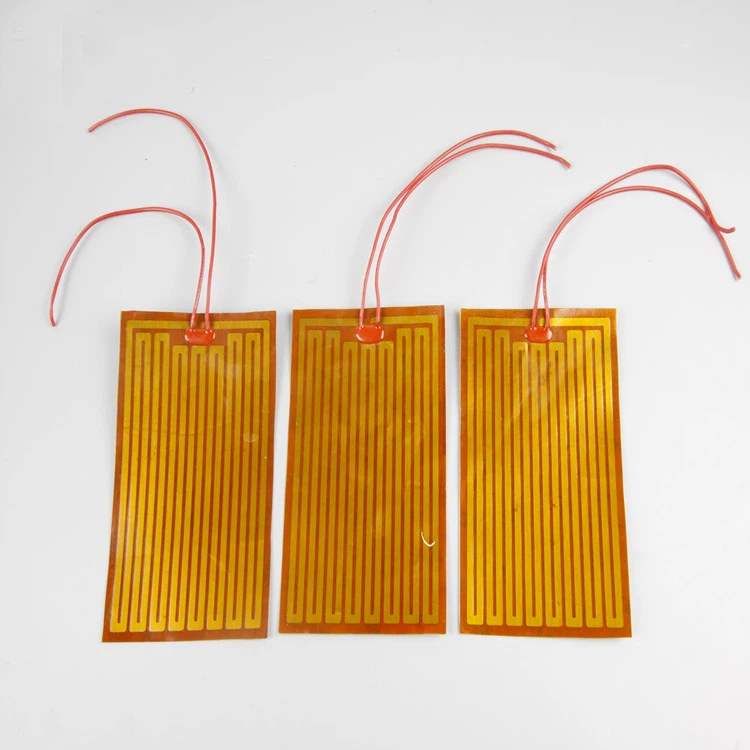
JAYE POLYMIDE HEATER
5. How to Evaluate a Birk Polyimide Heater Alternative
For OEM buyers and engineers, the following technical factors should be checked before selecting a replacement.
5.1 Dimensions and Installation Geometry
The heater must fit the available installation area.
Confirm:
- Overall length and width.
- Heater thickness, including adhesive or backing.
- Cutouts, holes and inactive areas.
- Minimum bend radius, if the heater is formed.
- Lead exit location and available wiring clearance.
- Contact surface shape and mounting pressure.
A heater with the same external outline may still have a different active heating area or circuit layout.
5.2 Voltage, Wattage and Resistance
The electrical rating must match the equipment's supply and control system.
This calculation provides a reference for electrical evaluation. It does not confirm full compatibility. Resistance tolerance, power tolerance, operating temperature and supply conditions must also be checked.
5.3 Watt Density and Thermal Loading
Watt density is the electrical power applied per unit of active heating area
A higher watt density can generate more heat from a smaller area, but it also increases the importance of heat transfer and temperature control.
For example, a heater bonded to an aluminum plate may dissipate heat differently from one attached to a low-conductivity plastic surface.
The same watt density can therefore produce different surface temperatures in different assemblies.
The required watt density should be determined from the target temperature, thermal mass, heat loss, mounting construction and operating cycle. Maximum catalogue values should not be used as the default design target.
5.4 Temperature Range and Bonding System
The required working temperature should be compared with the complete heater assembly's temperature limits.
For a Birk replacement project, identify whether the original heater uses acrylic, FEP or all-polyimide bonding.
Then confirm the required operating temperature and whether the adhesive or bonding layer is exposed to the same temperature as the active heating area.
For a JAYE alternative, confirm the specified temperature range for the exact product construction, including any adhesive backing and lead-wire insulation.
5.5 Insulation and Electrical Safety
A replacement heater should meet the original equipment's insulation and dielectric requirements.
The comparison should include:
- Insulation resistance and test voltage.
- Dielectric withstand voltage and test duration.
- Leakage current requirements, where applicable.
- Lead-wire insulation and terminal design.
- Grounding or shielding requirements.
- Applicable UL, CSA, CE or other project-specific requirements.
Certification or component recognition should be verified for the exact heater construction. A manufacturer's general quality-system certification does not automatically mean that every heater model carries the same product approval.
5.6 Sensor and Temperature-Control Integration
If the original Birk heater includes an RTD, thermocouple, NTC or etched temperature sensor, the replacement should be reviewed for the same measurement function.
The following details are important:
- Sensor type and nominal resistance or output.
- Sensor location relative to the active heating circuit.
- Lead-wire material and connection.
- Required control range.
- Temperature-control accuracy.
- Independent overtemperature protection.
The heater itself does not determine the complete system's temperature-control accuracy. The sensor, controller, mounting arrangement and thermal load all contribute to the final result.
6. Applications Where Polyimide Heater Alternatives May Be Evaluated
Polyimide heaters are relevant to equipment requiring thin, lightweight and flexible surface heating.
| Application | Main heating requirement | Important design consideration |
|---|---|---|
| Medical diagnostic equipment | Controlled heating of samples or device components | Temperature uniformity, sensor integration and material compatibility |
| Semiconductor equipment | Heating of selected components or process-related surfaces | Low outgassing, electrical insulation and thermal stability |
| Aerospace electronics | Maintaining component temperature in low-temperature environments | Weight, vibration, temperature range and assembly reliability |
| Optical instruments | Localized heating for temperature stabilization or condensation prevention | Heater geometry, sensor position and thermal uniformity |
| Battery systems | Localized surface heating for battery temperature management | Voltage, power distribution, temperature monitoring and safety |
| Laboratory instruments | Heating a defined surface or sample area | Repeatability, temperature stability and cleanability requirements |
These are application categories rather than claims that one standard heater design is suitable for every device.
The actual heater construction should be evaluated against the equipment's operating conditions.
7. Frequently Asked Questions
1.Can JAYE directly replace a Birk polyimide heater?
Not automatically. JAYE can evaluate a customized polyimide heater based on the original Birk model, drawing or sample. Replacement feasibility depends on the dimensions, etched circuit, voltage, wattage, temperature range, bonding construction, insulation and sensor requirements.
2.What is the maximum temperature of a Birk polyimide heater?
Birk publishes different temperature capabilities according to construction: up to 150°C for acrylic-bonded designs, 260°C for FEP-bonded designs and 300°C for AP/HT constructions. The selected model's complete assembly limits should be checked before use.
3.What is the maximum operating temperature of JAYE polyimide heaters?
It depends on the specific product construction.
JAYE's selected polyimide foil heater page lists a using temperature range of -60°C to 200°C, while other JAYE product pages describe different constructions and specifications. The exact product and mounting arrangement must be confirmed for the project.
4.What does ±0.1°C temperature uniformity mean for a polyimide heater?
It describes the temperature distribution across a defined heated area under specified conditions.
It does not necessarily mean the controller can maintain the target temperature within ±0.1°C. Uniformity, control accuracy and temperature stability are different performance measures.
5.Can polyimide heaters be used in vacuum equipment?
Some polyimide heater designs are used in vacuum-related applications because of their thin construction and potential for low outgassing. However, the complete heater assembly must be evaluated. Adhesives, wire insulation, connectors and other materials can affect outgassing performance.
6.What information is needed to request a JAYE alternative?
The most useful starting information includes:
- Original Birk model number or product specification.
- Dimensioned drawing or physical sample.
- Rated voltage, wattage and resistance.
- Required operating temperature and temperature range.
- Heater outline, active area and mounting construction.
- Adhesive or bonding requirements.
- Lead-wire and connector details.
- Sensor and overtemperature protection requirements.
- Quantity and prototype requirements.
References
[1] Birk Manufacturing – Kapton® Polyimide Heating Solutions:https://birkmfg.com/products/flexible-heaters/kapton-polyimide-heating-solutions/
[2] JAYE Heater Technology – Polyimide Foil Heater
[3] Birk Manufacturing – Thermal Systems for the Semiconductor Industry:https://birkmanufacturing.com/thermal_semi_industries.html
[4] Birk Manufacturing – Thermal Systems for the Medical Industry:https://birkmanufacturing.com/thermal_medical_industries.html
[5] Watlow – Polyimide Heaters Specification Sheet:https://www.watlow.com/-/media/documents/specification-sheets/colply0318.ashx
[6] JAYE Heater Technology – Flexible Polyimide Heater
[7] JAYE Heater Technology – Polyimide Heating Film

Request a Technical Evaluation for Your Birk Polyimide Heater
If you are considering JAYE as an alternative supplier for a Birk polyimide heater, the original model number, drawing or sample can be used as the starting point.


