
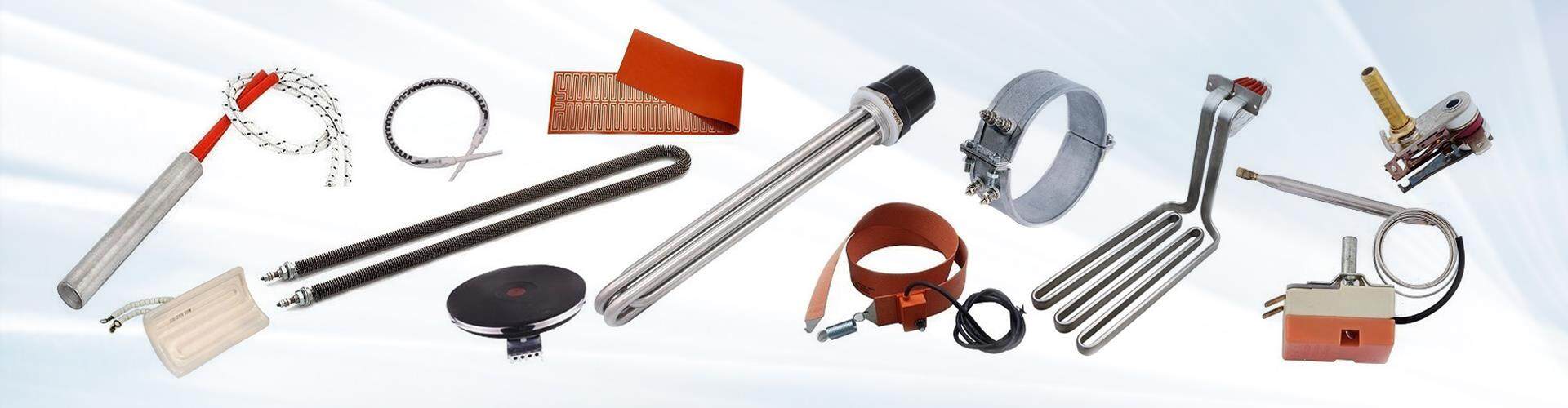
What Is a Finned Heating Element?
A finned heating element is an enhanced version of a standard tubular heating element with additional metal fins attached to the outer surface.
A conventional tubular heater transfers heat mainly through its external tube surface. By adding spiral fins or strip fins, the contact area between the heater and surrounding air is greatly increased, improving heat exchange efficiency.
A typical finned heating element consists of:
- Stainless steel or nickel alloy sheath tube
- High purity magnesium oxide insulation
- Resistance heating wire
- Metal heat dissipation fins
- Electrical terminals or lead wires
Depending on the equipment requirements, finned heating elements can be customized in terms of:
- Voltage
- Power rating
- Tube diameter
- Length
- Fin diameter
- Mounting structure
- Material selection

Why Are Finned Heating Elements Used in Load Equipment?
In industrial applications, "load equipment" usually refers to machines or systems where heating elements must continuously deliver stable thermal energy during operation.
Examples include:
- Industrial ovens requiring stable temperature control;
- Drying equipment requiring continuous hot air supply;
- Air heating systems requiring high heat output;
- Manufacturing equipment requiring reliable thermal performance.
If the heating efficiency is insufficient, equipment may experience:
- Slow temperature rise;
- Higher energy consumption;
- Uneven temperature distribution;
- Longer heating cycles;
- Reduced production efficiency.
Finned heating elements improve heat transfer performance by increasing the heating surface area, making them an ideal solution for many industrial heating applications.

Common Applications of Finned Heating Elements in Industrial Equipment
1. Industrial Ovens and Drying Equipment
Industrial ovens are one of the most common applications for finned heating elements.
Industries such as food processing, electronics manufacturing, coating, and packaging often require controlled hot air circulation for drying processes.
Finned heaters are typically installed inside heating chambers or air ducts. Combined with a fan system, they provide uniform heat distribution throughout the working area.
Key advantages include:
- Fast heating response;
- Improved temperature uniformity;
- Reliable continuous operation;
Reduced energy consumption.
2. Air Heaters and Hot Air Circulation Systems
Many industrial systems use heated air as the working medium, including:
- Air duct heaters;
- Industrial air heating systems;
- Hot air circulation equipment;
- Ventilation heating systems.
The fins increase the surface area of the heating element, allowing more efficient heat transfer between the heater and moving air.
For equipment requiring large airflow rates, finned heating elements provide better performance compared with standard tubular heaters.
3. Plastic Processing Machinery
Temperature stability is critical in plastic processing applications.
Finned heating elements can be used in equipment such as:
- Injection molding machines;
- Extrusion equipment;
- Blow molding machines.
Stable heating performance helps maintain proper processing conditions and improves product consistency.
By providing reliable heat output, finned heaters support efficient operation and reduce temperature fluctuations during production.
4. Industrial Drying Systems
Many industrial drying processes require a continuous supply of heated air.
Typical applications include:
- Printing and coating drying;
- Electronic component drying;
- Battery material drying;
- Industrial material processing.
Finned heating elements are suitable for these applications because they can provide stable heating performance during long-term operation.
5. Heat Treatment Equipment
Heat treatment processes require accurate and stable temperature control.
Finned heating elements can be applied in:
- Industrial heating chambers;
- Aging test equipment;
- Hot air furnaces;
- Laboratory heating systems.
With proper design, finned heaters can meet different temperature requirements while maintaining reliable performance.

Advantages of Finned Heating Elements Compared with Standard Tubular Heaters
1. Increased Heat Transfer Area
The additional fins significantly increase the surface area of the heating element, allowing more efficient heat release.
2. Higher Heating Efficiency
The enlarged surface area improves heat exchange between the heater and surrounding air, resulting in faster heating performance.
3. More Uniform Temperature Distribution
Better heat dissipation helps reduce hot spots and provides more stable temperature control.
4. Long Service Life
With proper material selection and manufacturing processes, finned heating elements can operate reliably in demanding industrial environments.
5. Customized Design Capability
Industrial equipment often has different installation spaces and heating requirements. Therefore, finned heating elements are usually manufactured according to specific customer designs.

Conclusion
With the continuous development of industrial automation, equipment manufacturers require heating components with higher efficiency, reliability, and durability.
Finned heating elements provide excellent heat transfer performance, stable operation, and flexible customization options, making them an important heating solution for industrial air heating applications.
From industrial ovens and drying systems to customized production equipment, properly designed finned heating elements can help improve heating efficiency, reduce energy consumption, and enhance overall equipment performance.
For equipment manufacturers looking for reliable heating solutions, working with an experienced heating element supplier ensures that the final product meets both technical requirements and application demands.


