Hey there! As a supplier of flat cartridge heaters, I've been getting a lot of questions lately about how the thickness of these heaters affects their performance. So, I thought I'd dive into this topic and share some insights with you all.
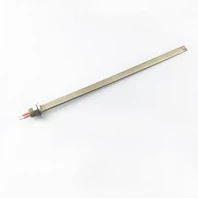
First off, let's talk about what a flat cartridge heater is. It's a type of heating element that's designed to provide efficient and uniform heating. These heaters are commonly used in various industrial applications, such as Industrial Flat Heating Tube For Molding, where even heat distribution is crucial.
Now, let's get to the main question: how does the thickness of a flat cartridge heater affect its performance? Well, there are several aspects to consider.
Heat Transfer
One of the most significant factors influenced by the heater's thickness is heat transfer. Thicker flat cartridge heaters generally have a larger mass. This means they can store more heat energy. When the heater is turned on, it takes a bit longer for the thicker heater to reach its operating temperature compared to a thinner one. This is because more energy is required to heat up the additional mass.
On the other hand, once the thicker heater is up to temperature, it can maintain that heat more consistently. It has a higher thermal inertia, which means it's more resistant to temperature fluctuations. For applications where a stable temperature is essential, like in some precision molding processes, a thicker heater might be a better choice.
In contrast, thinner flat cartridge heaters heat up much faster. They have less mass to heat, so they can reach the desired temperature quickly. This makes them ideal for applications where rapid heating is required, such as in some food processing equipment or small - scale laboratory setups.
Power Density
Power density is another key performance metric affected by the heater's thickness. Power density is defined as the amount of power dissipated per unit area of the heater surface. Thinner flat cartridge heaters can often achieve higher power densities.
Since they have a thinner profile, the heat generated by the resistance wire inside the heater can be transferred more efficiently to the surrounding environment. This allows for a higher concentration of heat per unit area. For applications where you need to heat a small area quickly and with a high amount of energy, such as in some soldering equipment, a thinner heater with a high power density would be beneficial.
Thicker heaters, however, may have lower power densities. But this doesn't necessarily mean they're less effective. In some cases, a lower power density can be an advantage. For example, in applications where you want to avoid over - heating or where the material being heated is sensitive to high temperatures, a thicker heater with a more evenly distributed and lower power density can provide a more gentle and controlled heating process.
Mechanical Strength
The thickness of a flat cartridge heater also impacts its mechanical strength. Thicker heaters are generally more robust and can withstand more physical stress. They are less likely to bend, break, or deform during installation or use. This makes them a great choice for industrial environments where the heaters may be subject to vibrations, shocks, or rough handling.
On the other hand, thinner heaters are more flexible. While they may not be as strong as thicker ones, their flexibility can be an advantage in some applications. For example, in some curved or irregular - shaped heating applications, a thinner and more flexible heater can be easily bent or shaped to fit the specific requirements.
Efficiency
When it comes to energy efficiency, the relationship with thickness is a bit more complex. As I mentioned earlier, thicker heaters have higher thermal inertia, which can be both good and bad for efficiency. On one hand, their ability to maintain a stable temperature can reduce the need for frequent on - off cycles, which can save energy in the long run.
On the other hand, the longer warm - up time of thicker heaters means that during the initial start - up phase, more energy is consumed to reach the operating temperature. Thinner heaters, with their fast warm - up times, can be more efficient in applications where heating is only required for short periods.
Cost
Cost is always a consideration in any purchasing decision. Thicker flat cartridge heaters generally cost more than thinner ones. This is due to the additional material used in their construction. However, you need to weigh the cost against the benefits. If you need a heater with high mechanical strength, stable temperature control, and long - term reliability, the extra cost of a thicker heater might be worth it.


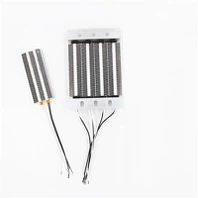
Now, let's take a look at some of our specific products. We offer a range of Flat Electric Cartridge Heaters in different thicknesses to meet various customer needs. Whether you're looking for a fast - heating, thin heater or a more robust, thick one, we've got you covered.
Our Cartridge Heater Flat Heating Element is designed with high - quality materials to ensure optimal performance. We've put a lot of research and development into these products to make sure they offer the best combination of heat transfer, power density, and mechanical strength.
If you're in the market for a flat cartridge heater, I highly recommend considering the thickness carefully based on your specific application requirements. Take the time to evaluate your heating needs, such as the desired temperature, heating time, and the environment in which the heater will be used.
We're here to help you make the right choice. If you have any questions or need more information about our flat cartridge heaters, don't hesitate to reach out. We can work with you to determine the best thickness and specifications for your project. Whether you're involved in industrial manufacturing, food processing, or any other industry that requires heating solutions, we're confident that we can provide you with a high - quality flat cartridge heater that meets your needs.
So, if you're interested in purchasing flat cartridge heaters for your business, feel free to contact us for a detailed discussion. We're looking forward to working with you and helping you find the perfect heating solution.
References
- ASHRAE Handbook - Heating, Ventilating, and Air - Conditioning Applications.
- Thermodynamics: An Engineering Approach by Yunus A. Cengel and Michael A. Boles.
- Heat Transfer by J. P. Holman.