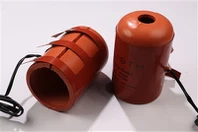
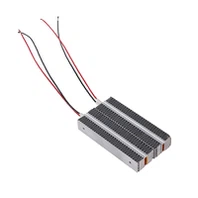
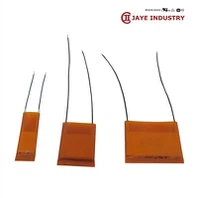
Polyimide (PI) is widely regarded as the best material for flexible and thin heaters due to its unique combination of thermal, mechanical, and electrical properties.

Here's why:
1. Excellent Thermal Stability
For high temperature heating applications, PI can continuously withstand temperatures up to 250–400°C (conservatively based on grade). It has a low coefficient of thermal expansion (CTE) so it will maintain its dimension during repeated heating/cooling cycles.
2. Outstanding Flexibility & Thinness
PI films (like Kapton) can reach thicknesses down to 12.5–25 µm. In other words, PI enables ultra-thin and lightweight heaters. PI remains flexible at cryogenic temperatures to enable dynamic and/or bendable applications (such as wearable heaters, aerospace, etc.).
3. Superior Electrical Insulation
PI has high dielectric strength (~200–300 kV/mm) to prevent unintended electrical leakage which is extremely important for accurate heating elements. It also has high arc resistance, so it is safe for high voltage applications.
4. Chemical & Environmental Resistance
Resistant to acids, solvents, and oils, making PI heaters durable in harsh conditions.
Performs well in vacuum and space environments (low outgassing).
5. Uniform Heat Distribution
PI's smooth surface allows for uniform deposition of resistive elements (e.g., etched metal foils, printed inks), ensuring even heat distribution.
6. Lightweight & Space-Efficient
Ideal for applications where weight and thickness matter (e.g., medical devices, aerospace, automotive seat heaters).
7. Customizable & Reliable
Can be laser-cut, etched, or printed with conductive traces for precise heating patterns.
Long operational life with minimal performance degradation over time.