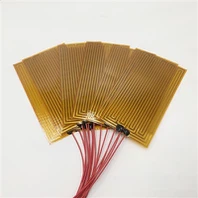
Kapton emerges as the preferred material for heaters in high-humidity or waterproof cameras due to a harmonious blend of properties tailored to challenging environments. Here's a structured breakdown of its advantages:
1. Moisture and Water Resistance
Non-Hygroscopic Nature: Kapton does not absorb water, preventing swelling, warping, or electrical degradation in humid conditions.
Waterproof Integrity: Its resistance to moisture penetration ensures heaters remain functional even when submerged or exposed to rain, critical for waterproof cameras.
2. Thermal and Electrical Performance
High Heat Resistance: Withstands temperatures up to 180°C, allowing heaters to operate efficiently without degrading, even during prolonged use.
Dielectric Strength: Excellent electrical insulation prevents short circuits, crucial in tightly packed camera electronics where moisture could otherwise induce conductivity.
3. Flexibility and Form Factor
Ultra-Thin and Lightweight: Kapton heaters can be as thin as 25 microns, conforming to complex camera geometries (e.g., curved lenses, tight sensor housings) without adding bulk.
Conformal Adhesion: Bonds seamlessly to surfaces via adhesives, maintaining waterproof seals and avoiding gaps that could trap moisture.
4. Durability in Harsh Conditions
Chemical Resistance: Impervious to saltwater, oils, and solvents, making it ideal for marine or industrial environments.
Long-Term Stability: Resists degradation from UV exposure, temperature cycling, and mechanical stress, ensuring reliable performance over time.
5. Precision Heating
Uniform Heat Distribution: Etched metal traces (e.g., copper, nichrome) in Kapton film provide even heat dispersion, eliminating cold spots that could lead to localized fogging.
Low Thermal Mass: Heats up rapidly and cools quickly, conserving energy-critical for battery-operated devices like action cameras or drones.
6. Application-Specific Advantages
Anti-Fogging Efficacy: Maintains lens/sensor temperatures above the dew point, preventing condensation without overheating delicate optics.
Space Efficiency: Replaces bulky traditional heaters, preserving the compact, sleek design of modern waterproof cameras.
Why Not Silicone or Other Materials?
Silicone vs. Kapton: While silicone is flexible, it lacks Kapton's ultra-thin profile and superior dielectric properties. Silicone may also degrade faster under UV or chemical exposure.
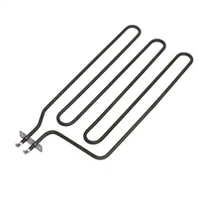
Ceramic Heaters: Though robust, ceramics are rigid and prone to cracking in dynamic environments, unlike Kapton's bendable resilience.