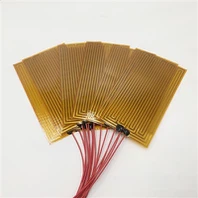
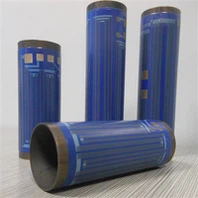
Why are polyimide film heaters a popular choice for medical device heating elements?
Polyimide film heaters are physically resistant to ozone, moisture and fungus. While most medical devices operate in a controlled environment and require great care, this is not always the case. As with any other industrial equipment, these components are susceptible to moisture and bacterial or fungal growth if not taken care of.

Polyimide film heaters are a popular choice for medical device heating elements due to several advantageous characteristics:
Thin and Lightweight: Polyimide film heaters are extremely thin and lightweight, making them ideal for applications where space and weight are limited, such as in medical devices. Their slim profile allows for easy integration into compact designs without adding bulk.
Flexibility: Polyimide film heaters are highly flexible and can conform to various shapes and contours. This flexibility allows for the efficient transfer of heat to the target area, ensuring uniform heating and optimal performance in medical devices.
Rapid and Precise Heating: Polyimide film heaters offer rapid heating capabilities, reaching the desired temperature quickly. They provide precise and controllable heat distribution, allowing for accurate temperature control within medical devices. This is crucial in applications where maintaining specific temperatures is critical, such as in thermal therapy or warming medical fluids.
Chemical Resistance: Polyimide film is inherently resistant to a wide range of chemicals and solvents, including common cleaning agents and disinfectants used in medical settings. This chemical resistance ensures that the heater's performance and integrity are not compromised when exposed to various substances, making it suitable for medical applications.
Electrical Insulation: Polyimide film possesses excellent electrical insulation properties, which is crucial for ensuring the safety and reliability of medical devices. The film acts as a barrier between the heating element and other components, preventing electrical shorts and ensuring patient safety.
Biocompatibility: Polyimide film heaters can be manufactured using biocompatible materials, making them suitable for direct contact with the human body in medical devices. They are designed to meet the necessary regulatory requirements and minimize any potential adverse reactions when used in patient-care applications.
Durability: Polyimide film heaters are durable and can withstand repeated use and mechanical stress without compromising their performance. They have good resistance to tears, punctures, and abrasion, ensuring a longer lifespan for medical devices that incorporate these heating elements.
Due to these beneficial properties, polyimide film heaters are widely utilized in various medical applications, including blood and fluid warming systems, thermal therapy devices, surgical instruments, and diagnostic equipment, among others.
With their physical resistance, FPC heaters flexible heater elements can work. Polyimide heaters can withstand extreme temperature environments from -328 °F to 329 °F. In addition, they retain their shape regardless of temperature exposure or rapid heating and cooling. This is due to their uniform temperature distribution properties. All these properties make them ideal for life-saving medical applications, where precise temperature control is important. Heating elements made of polyimide have low outgassing properties. This means that the smallest amount of gas that is trapped during application is released. In environments where air flow is slower than usual, especially in closed vacuum environments, outgassing can be a big problem. If the heating element has high de-gassing characteristics, components may adhere to sensors and lenses, which can affect their functionality. Polyimide flexible heater applications can avoid such problems. fpc electric heaters polyimide film heaters are solvent resistant, thin and lightweight, with excellent tensile strength, dimensional stability and tear resistance. All these properties make them ideal for blood, fluid, endoscope heaters and several other medical device heating element applications. polyimide films in FPC heaters are low tolerance and ensure precise temperature control. This allows for preservation of biological specimens within a specific temperature range.