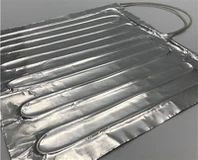
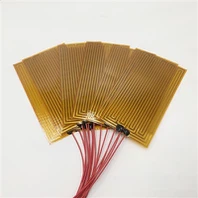
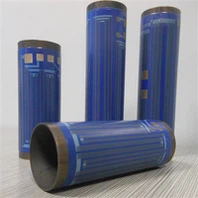
Carbon fiber heaters are a popular choice in high-precision semiconductor processes for several reasons. These include their ability to offer consistent, rapid, and controllable heat, which is crucial in the semiconductor industry where temperature control is paramount. Here's a breakdown of why carbon fiber heaters are particularly suited for this application:

1. Rapid Heat Response
Quick Heating Time: Carbon fiber heaters have excellent thermal conductivity, allowing them to heat up quickly. This fast response time is vital in semiconductor processes where precise temperature control is needed over short time frames.
Fast Cooling: Similarly, they cool down quickly, allowing for tight control over thermal cycles.
2. Precision and Uniformity
Even Heat Distribution: Carbon fiber heating elements provide uniform heat distribution across the surface. This uniformity reduces the risk of thermal gradients that could cause defects in semiconductor materials during processes like wafer baking, photolithography, and annealing.
Fine Temperature Control: Carbon fiber heaters can be controlled with great accuracy, allowing for micro-level temperature adjustments, crucial in semiconductor applications that require strict temperature thresholds.
3. High-Temperature Performance
High-Temperature Resistance: Carbon fiber heaters can withstand very high temperatures without degrading. In semiconductor fabrication, where processes like thermal oxidation or chemical vapor deposition (CVD) can require temperatures above 1000°C, carbon fiber heaters are well-suited to handle these extremes.
Durability: Their resistance to high temperatures and thermal cycling makes them long-lasting, reducing maintenance and downtime in precision manufacturing environments.
4. Energy Efficiency
Low Power Consumption: Carbon fiber heaters are more energy-efficient than traditional metal-based heating elements. This is because they have a higher surface-to-volume ratio, allowing for faster heat-up and reduced energy consumption while still achieving precise temperature control.
Minimized Heat Loss: The nature of carbon fiber materials ensures that heat loss is minimized, which is important in keeping energy costs low in high-precision processes.
5. Customization and Flexibility
Tailored Designs: Carbon fiber heaters can be easily customized into various shapes and sizes, allowing them to fit into specific semiconductor process setups, such as furnaces or vacuum chambers.
Adaptability: Their flexibility and form factor make them ideal for use in equipment like semiconductor photomask aligners, rapid thermal processors, or chemical vapor deposition (CVD) systems.
6. Clean Operation
Non-Toxic and Clean Heating: Carbon fiber heaters operate without producing harmful emissions, making them suitable for the cleanroom environments common in semiconductor manufacturing.
Reduced Contamination: Since carbon fiber heaters don't shed particles or impurities during operation, they help maintain the strict cleanliness standards required in semiconductor fabrication.
7. Compact Design
Space Efficiency: Carbon fiber heaters are compact and lightweight, which allows for integration into small or confined spaces. This is particularly valuable in semiconductor manufacturing environments where space is often limited, and equipment needs to be highly compact.
Conclusion:
In semiconductor processes, precision is everything, and carbon fiber heaters provide the fast, efficient, and uniform heating necessary for high-precision applications. Whether it's for wafer processing, annealing, or thin-film deposition, their ability to maintain tight thermal control and operate at high temperatures makes them a go-to choice in the industry.