In industrial and commercial settings where heating large volumes of air is a common requirement, the choice of heating systems becomes a critical factor in achieving both efficiency and cost-effectiveness. Among the various heating solutions available, finned heaters stand out as efficient and versatile options for effectively warming expansive spaces. This article explores the efficiency of finned heaters in the context of heating large volumes of air and the key factors that contribute to their effectiveness.
1. Understanding Finned Heaters:
Finned heaters are specially designed heating elements with extended surfaces, or fins, that enhance their heat transfer capabilities. This unique design allows for increased surface area, which significantly improves the efficiency of heat distribution.
2. Efficiency in Heat Transfer:
One of the primary reasons finned heaters excel in heating large volumes of air is their exceptional heat transfer efficiency. The extended fins create additional contact points with the surrounding air, promoting a more rapid and uniform distribution of heat. This efficiency ensures that the entire volume of air is heated evenly, eliminating cold spots and optimizing the heating process.
3. Rapid Heating Response:
Finned heaters are known for their quick heating response times. This characteristic is particularly advantageous when heating large volumes of air, as it enables the system to reach the desired temperature promptly. The ability to achieve the target temperature rapidly is crucial in applications where time-sensitive processes or occupant comfort are priorities.
4. Uniform Heat Distribution:
The finned design contributes to uniform heat distribution throughout the space. Large volumes of air can be challenging to heat evenly with traditional heating methods, leading to temperature variations and inefficiencies. Finned heaters, however, excel in maintaining a consistent temperature profile across the entire volume, ensuring a comfortable and controlled environment.
5. Versatility in Design:
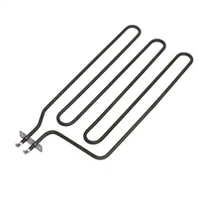
Finned heaters come in various designs, including tubular, open-coil, and rod elements, allowing for flexibility in applications. This versatility enables the selection of finned heaters that are specifically tailored to the requirements of heating large volumes of air, taking into account factors such as space constraints, airflow patterns, and heating capacity.
6. Energy-Efficient Operation:
The efficiency of finned heaters extends to their energy-efficient operation. By providing rapid and uniform heat distribution, these heaters minimize the need for prolonged heating cycles. This not only reduces energy consumption but also contributes to cost savings, making finned heaters a sustainable and economical choice for heating large spaces.
7. Integration with Control Systems:
Finned heaters can be seamlessly integrated into advanced control systems, allowing for precise temperature regulation and energy management. The integration of temperature controllers, thermostats, and programmable logic controllers (PLCs) enhances the overall efficiency of the heating system, ensuring optimal performance while minimizing energy waste.
8. Application-Specific Considerations:
The efficiency of finned heaters in heating large volumes of air is further enhanced when considerations are given to specific application requirements. Factors such as the height of the space, insulation, and ventilation play crucial roles in optimizing the overall heating system for maximum efficiency.
9. Conclusion:
Finned heaters prove to be highly efficient and effective solutions for heating large volumes of air in industrial, commercial, and even residential applications. Their ability to provide rapid, uniform heat distribution, coupled with energy-efficient operation and versatility in design, makes them a preferred choice in diverse settings. As industries and businesses seek to enhance heating efficiency and reduce operational costs, the role of finned heaters in heating large volumes of air becomes increasingly significant, aligning with the principles of sustainability and resource optimization.
Know More about Finned Heaters