What is the difference between cartridge heaters and other types of heating elements?
Cartridge heaters are a specific type of electrical heating element, and they differ from other types of heating elements in several key ways. The choice of heating element often depends on the application, required temperature range, size constraints, and heating efficiency. Below are the main differences between cartridge heaters and other common heating elements like band heaters, immersion heaters, flexible heaters, and ceramic heaters.
1. Form Factor and Design
Cartridge Heaters:
Cartridge heaters are typically cylindrical in shape and are designed to be inserted into a hole or cavity (like a metal block or mold). They are compact, long, and narrow, making them ideal for confined spaces where other types of heaters might not fit.
They are usually fixed into place and provide localized, direct heating.
Other Heating Elements:
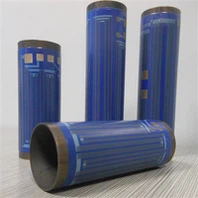
Band Heaters: These are flat and wrap around an object (like a pipe, barrel, or drum). They are often used to heat the exterior of a surface, providing a uniform heat distribution around it.
Immersion Heaters: These heaters are designed to be immersed directly in a liquid or fluid (like water, oil, or chemicals). They are typically longer and are used to heat large volumes of liquids.
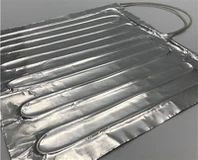
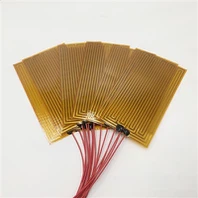
Flexible Heaters: These heaters are thin and flexible, allowing them to conform to the shape of the object they are heating. They are commonly used for wrapping around irregular surfaces or objects.
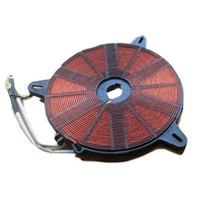
Ceramic Heaters: These heaters use a ceramic material as the heating element, which can be used in various forms (either as a heating plate or coil) for applications that require higher heat or thermal stability.
2. Heating Method
Cartridge Heaters:
Cartridge heaters use a metal sheath (typically stainless steel) that houses a resistance wire (usually a nickel-chromium or iron-chromium alloy). The resistance wire generates heat when current passes through it. The heat is then transferred through the sheath to the surrounding material.
Other Heating Elements:
Band Heaters: Heat is applied to the outer surface of the object they are wrapped around, providing uniform heat to the object's exterior.
Immersion Heaters: Directly transfer heat to the liquid or fluid by immersion, making them ideal for heating liquids.
Flexible Heaters: These heat surfaces by providing contact across the entire area, and they can bend to conform to complex shapes.
Ceramic Heaters: Ceramic heating elements use ceramic cores to generate heat and then transfer it through the ceramic material. These are often more suited for high-temperature applications.