Here's a comprehensive technical breakdown of IBC Heater installation methods, covering mechanical mounting, thermal interface optimization, electrical integration, and industry-specific configurations:
1. Mechanical Mounting Systems
A. Flexible Silicone Jackets (Most Common)
Installation Steps:
- Wrap & Align: Drape jacket around IBC with heat zones aligned to material volume (e.g., concentrate heating near outlet valve).
- Tensioning: Secure stainless steel buckles at 20–25 N·m torque (over-tightening reduces contact).
- Gap Inspection: Verify ≤3mm air gaps using 0.15mm feeler gauge (critical for efficiency).
B. Rigid Band Heaters
For High-Temp Applications (>200°C):
- Segmented Clamping: Bolt overlapping bands with 316SS brackets (allow 1.5mm thermal expansion gap per meter).
- Load Distribution: Use spreader plates on composite IBCs to prevent crushing.
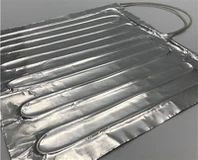
C. Adhesive-Backed Mats
Quick-Install for Light-Duty:
- Surface prep: Degrease with acetone, apply heat-conductive epoxy (≥3.5 W/m·K).
- Pressure-bond with roller (50 PSI for 5 mins).
2. Thermal Interface Optimization
Thermal Conductivity and Application
- Gap-Filling Pads : 1.2–3.0 W/m·K :Irregular surfaces (e.g., ribbed IBCs)
- Ceramic Thermal Paste : 4.5–5.5 W/m·K : High-temp processes (bitumen, molten sulfur)
- Phase-Change Films: 1.8 W/m·K : Food/pharma (removable for cleaning)
3. Electrical & Control Integration
Wiring Protocols
Power Circuits:
Use high-temp silicone cables (200°C rating) in steel-flex conduit.
Size conductors for ≤3% voltage drop (e.g., 10 AWG for 30A/240V at 15m distance).
Safety Grounding:
Bond heater sheath to IBC frame with 8 AWG wire (resistance <0.1Ω).
Control Systems
Sensor Placement:
Primary RTD: Immersed in fluid near outlet valve.
Backup RTD: Sandwiched between heater and IBC wall.
PID Tuning:
Start parameters: P=5, I=0.5 min⁻¹, D=0.1 min (adjust based on thermal mass).

4. Industry-Specific Configurations
Chemical Processing (Corrosive Media)
- Mounting: PTFE-coated jackets with Hastelloy buckles.
- Isolation: Fiberglass standoffs prevent galvanic corrosion.
- ATEX Compliance: Intrinsically safe controls with IP66 enclosures.
Food/GMP Facilities
Installation:
- Electropolished 316L stainless hardware.
- Quick-disconnect couplings for CIP.
Validation: Thermal mapping with 12+ sensors per IBC.
Outdoor/Harsh Environments
Weatherproofing:
- NEMA 4X control boxes.
- Heated junction boxes for sub-zero operation.
Structural Reinforcement: Vibration-resistant mounts for forklift handling.

5. Validation & Commissioning
- Infrared Thermography: Scan for cold spots (max 10% deviation).
- Heat-Up Test: Record time from 20→80°C (benchmark: 1.5–2°C/min for 1,000L water).
- Load Response: Verify PID stability at 90% power with viscous fluid (e.g., glycerol).

6.Advanced Techniques
Dynamic Zonal Control:
- Segment heaters into zones (top/mid/bottom) with independent PIDs.
- Example: Bitumen storage → Top: 85°C, Outlet: 150°C.
Mobile IBC Solutions:
- Slip-on frames with spring-loaded contact pads.
- Wireless battery-powered controls (72hr runtime).

7.Maintenance Integration
Fail-Safe Design:
- Magnetic contactors cut power if jacket disconnects.
- Slide rails for tool-less heater removal.
Cleaning Compatibility:
- IP69K-rated connectors withstand high-pressure washdown.

Proper IBC heater installation bridges thermal engineering and practical execution. By optimizing mechanical contact, thermal interfaces, and control logic, you achieve >90% thermal transfer efficiency – turning standard totes into precision-heated process vessels. Always reference ASME PCE-1 and IEC 60519 standards for industrial compliance.