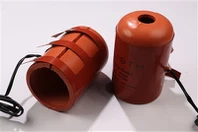
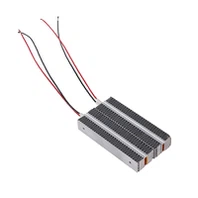
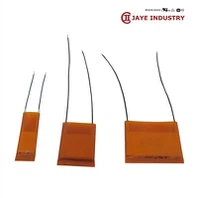
Band Heater Requirements Across Industries: Injection Molding, Extrusion, and 3D Printing
1. Injection Molding Machines
Key Needs:
High-Temperature Stability: Requires rapid heating (often 300–400°C) to melt thermoplastics like ABS, nylon, or PEEK. Band heaters must maintain tight temperature tolerances (±2°C) to ensure consistent melt quality.
Cyclic Thermal Stress Resistance: Frequent heating/cooling cycles demand durable materials (e.g., Incoloy sheaths) to prevent cracking or warping.
Pressure Resistance: Heaters must remain securely clamped under high barrel pressures (up to 2,000 bar) to avoid gaps causing heat loss.

2. Extruders (Plastic/Polymer)
Key Needs:
Continuous High-Temperature Operation: Extruders run 24/7 at 200–450°C, requiring band heaters with robust ceramic or mica insulation to prevent burnout.
Uniform Heat Distribution: Even heating across long barrels (e.g., twin-screw extruders) is critical to avoid material degradation or viscosity fluctuations.
Energy Efficiency: Optimized watt density (8–12 W/cm²) reduces power waste in large-scale production.

3. 3D Printing Equipment (Filament-Based)
Key Needs:
Precision and Responsiveness: Nozzle heaters require ultrafast thermal response (e.g., achieving 250°C in <1 minute) to accommodate rapid material changes (PLA, PETG, etc.).
Compact Design: Low-profile heaters (≤20mm width) are essential for space-constrained printer heads.
Temperature Accuracy: ±1°C control prevents filament oozing, stringing, or under-extrusion.

Critical Differences Summary
| Parameter | Injection Molding | Extrusion | 3D Printing |
|---|---|---|---|
| Thermal Cycles | High-frequency cycling | Continuous operation | Intermittent, rapid changes |
| Temperature Range | 300–400°C | 200–450°C | 200–300°C |
| Mechanical Stress | High barrel pressure | Moderate vibration | Minimal physical stress |
| Design Priority | Durability & clamping force | Uniformity & energy efficiency | Precision & miniaturization |