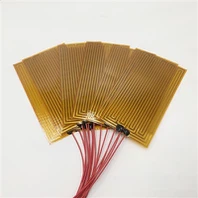
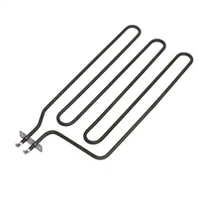
Designing and manufacturing large-scale thick film heaters present several challenges that engineers and manufacturers need to overcome. Thick film heaters are widely used in various industrial and consumer applications, including automotive, aerospace, electronics, and appliances. The challenges faced in their design and manufacturing include:
1. Temperature Uniformity:
Ensuring uniform temperature distribution across the entire surface of the heater is crucial. Variations in temperature can lead to uneven heating of the target material, affecting the performance and efficiency of the heater.
2. Material Selection:
Choosing appropriate materials for thick film pastes is critical. These materials must have high-temperature stability, good adhesion to substrates, and compatibility with the target application environment.
3. Thermal Stress and Expansion:
Large-scale thick film heaters are susceptible to thermal stresses due to rapid heating and cooling cycles. Managing thermal expansion and contraction to prevent cracking or delamination is a significant challenge.
4. Substrate Compatibility:
Ensuring that the thick film materials adhere well to different types of substrates (ceramic, glass, metal) is challenging. Compatibility issues can lead to delamination and reduced heater efficiency.
5. Manufacturing Process Control:
Achieving consistent quality in large-scale production is challenging. Variations in the manufacturing process can lead to differences in performance among individual heaters.
6. Energy Efficiency:
Designing thick film heaters that are energy-efficient is crucial for many applications. This involves optimizing the heater's design to minimize energy losses and maximize heat transfer efficiency.
7. Reliability and Durability:
Thick film heaters are often used in critical applications where reliability is paramount. Ensuring long-term durability and reliability under harsh operating conditions is a significant challenge.
8. Cost Considerations:
Balancing performance requirements with production costs is always a challenge. Developing cost-effective manufacturing processes without compromising quality is a key consideration.
9. Integration with Control Systems:
Integrating large-scale thick film heaters with control systems, sensors, and feedback mechanisms adds complexity. Ensuring seamless interaction between the heater and the control system is essential for proper functioning.
10. Customization and Scalability:
Many applications require custom-designed heaters to fit specific shapes and sizes. Adapting the manufacturing process for customization while maintaining scalability for mass production can be challenging.
11. Compliance and Safety Regulations:
Meeting regulatory standards for safety, electromagnetic interference (EMI), and environmental compliance adds complexity to the design and manufacturing process.
Addressing these challenges requires a multidisciplinary approach involving materials science, engineering, and manufacturing expertise. Continuous research and development efforts are essential to improving the efficiency, reliability, and cost-effectiveness of large-scale thick film heaters.