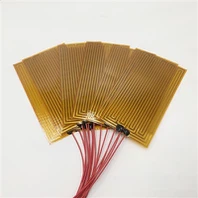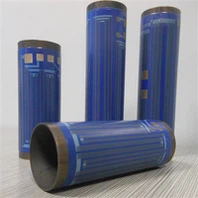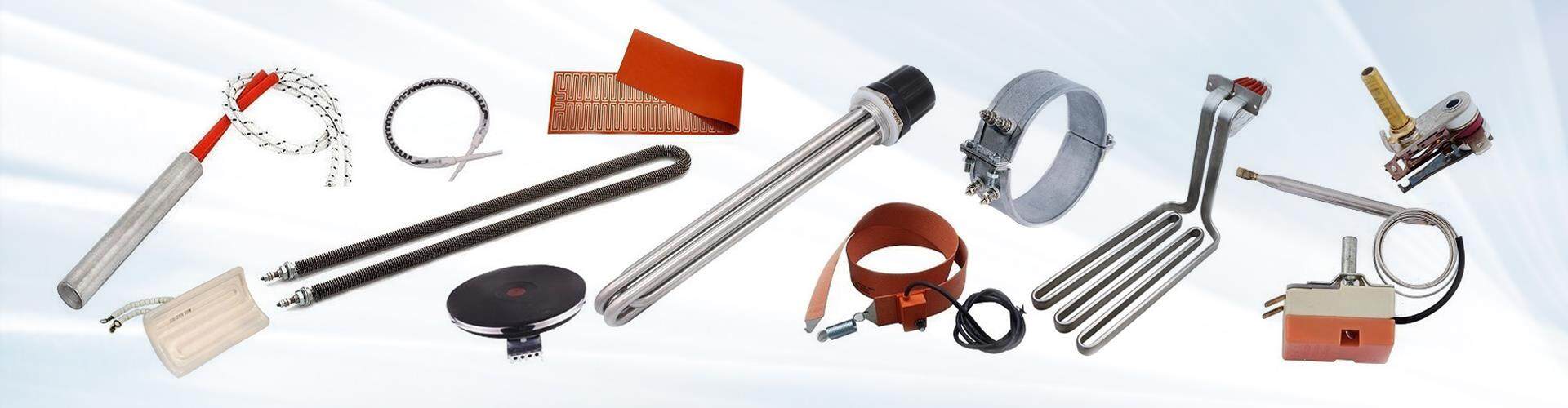
Here's why our heavy-duty silicone rubber heaters outperform standard silicone heating pads, tailored for industries demanding reliability, durability, and high-performance thermal solutions:
1. Enhanced Durability for Demanding Environments
Heavy-duty heaters feature reinforced silicone layers (up to 50% thicker) and advanced fiberglass cores, making them resistant to abrasion, punctures, and mechanical stress. Ideal for rugged industrial settings (e.g., food processing equipment, heavy machinery), they withstand repetitive motion and harsh handling far better than standard thin-profile pads.

2. Superior Heat Distribution & Stability
The increased thickness ensures uniform heat dispersion across the entire surface, eliminating "hot spots" common in thinner heaters. This precision is critical for applications like medical sterilization or semiconductor manufacturing, where consistent temperatures are non-negotiable.

3. Higher Power Density & Faster Response
By integrating high-wattage elements within the thicker structure, heavy-duty heaters deliver faster heat-up times (up to 30% quicker) and support higher power loads without compromising safety. Perfect for rapid thermal cycling in packaging machinery or battery preheating systems.

4. Extended Lifespan Under Extreme Conditions
The robust design resists moisture ingress, chemical corrosion, and thermal degradation even at sustained high temperatures (up to 230°C/446°F). Unlike standard pads, they maintain performance in humid, oily, or corrosive environments (e.g., marine equipment, chemical reactors).

5. Improved Safety & Compliance
Thicker insulation layers reduce surface leakage current and enhance electrical safety, meeting strict certifications (UL, CE, RoHS). Essential for medical devices, aerospace, or automotive applications where safety failures are unacceptable.

6. Customizable Flexibility Without Compromise
Despite their thickness, heavy-duty heaters retain 360° bendability and can be tailored to complex geometries (curved pipes, irregular surfaces). This versatility suits HVAC systems, 3D-printing beds, or electric vehicle components better than rigid alternatives.
7. Cost Efficiency Over Time
While slightly higher upfront, their 3x longer service life and reduced downtime from replacements make them a smarter investment for high-intensity operations. Maintenance costs drop by 40%+ compared to frequently replaced standard pads.

Target Industries That Benefit Most:
Industrial Automation | Electric Vehicles | Medical Equipment
Food & Beverage Processing | Aerospace | Energy Storage Systems