Industrial heating technology using infrared radiation has many characteristics and advantages:
1.Infrared heating is fast. Because the energy of infrared light is directly absorbed by material molecules, and the energy density of infrared is very large, the temperature of the object surface will soon increase. This velocity is much higher than that of conduction and convection. The latter requires molecular collision, which is transmitted level by level through the conversion of kinetic energy and potential energy.
2. Infrared heating is surface heating. As mentioned above, infrared radiation heats the object surface very quickly, so there will be a large temperature difference between the object surface and the interior. This is a great advantage for the purpose of rapid heating of the object surface, because it will not cause large changes in the temperature of the material body. It saves energy and will not have a great impact on the humidity, chemical characteristics, stress, etc. of the logistics body. However, it also has disadvantages, that is, uneven illumination or shadow will cause temperature difference. At this time, we should make up for it through technical means.
3. Infrared heating has certain penetrability. Infrared photons can pass through the surface of an object to a certain depth. When molecules in this depth absorb infrared light, they are heated from inside to outside at the same time. This has great advantages over conduction and convection. It not only has fast heating speed, but also avoids the phenomenon of skin and blistering due to surface closure to a great extent.
4. Infrared heating is selective. The infrared band of electromagnetic spectrum can be divided into short wave, medium wave and long wave. Different materials have different infrared absorption bands and different heating efficiency. The penetration ability of infrared rays with different wavelengths is also different. Therefore, the type and quantity of infrared lamps can be selected according to the characteristics of materials, thickness, heating purpose, etc.
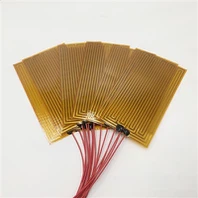
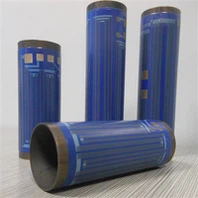
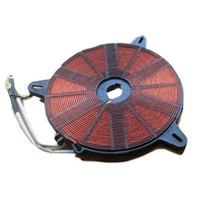
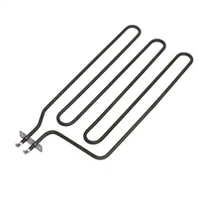
5. Personalized design of infrared radiator. The infrared radiator can do many different personalized designs, and change the shape, size, power and wavelength according to the heating demand to meet the purpose of heating.
6. Space and time selectivity and intelligent control of infrared heating: through the optimized design of infrared radiator, space structure and system control, infrared can achieve the required temperature and temperature gradient at the required time and place. This flexible structural design and rapid response make it possible for intelligent control and system matching.