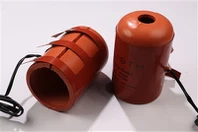
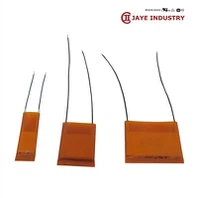
In the hyper-precise world of semiconductor manufacturing, where nanometer-scale defects can mean the difference between a functional chip and a costly failure, every component within a fabrication tool is mission-critical. Among these, thermal management systems play a surprisingly vital role. For processes ranging from wafer baking and chemical vapor deposition (CVD) to photoresist curing and advanced packaging, precise, uniform, and reliable heating is non-negotiable.
Increasingly, semiconductor equipment designers (OEMs) and fab engineers are turning away from traditional, rigid heating methods in favor of silicone rubber heaters. This shift is driven by fundamental requirements that directly impact yield, uptime, and total cost of ownership. Here are the top five reasons why these flexible heating elements are becoming the standard in modern fabs.
1. Unmatched Temperature Uniformity and Precision
The single most critical factor in semiconductor thermal processing is achieving near-perfect temperature uniformity across the entire substrate. A hot spot of even a few degrees can cause inconsistent etching rates, uneven film deposition, or dopant diffusion variations, leading to device failure.
Why Silicone Rubber Heaters Excel:
Conformable Heating Surface: Unlike rigid ceramic or metal-sheathed heaters, silicone rubber heaters are thin and flexible. They can be manufactured to conform perfectly to the surface of a heating platen, chuck, or chamber wall. This eliminates microscopic air gaps-a primary cause of hot and cold spots-ensuring efficient and uniform heat transfer.
Customizable Heat Patterns: The etched-foil heating element embedded within the silicone can be precisely engineered. Designers can create custom trace patterns that deliver more or less heat to specific zones, actively compensating for inherent thermal losses at edges or corners. This results in a remarkably uniform thermal profile across a wafer.
Rapid Thermal Response: The low thermal mass of silicone and its thin profile allow for faster heat-up and cool-down cycles. This enables quicker process cycles and improves the responsiveness of the temperature control system, which is crucial for modern, fast-paced process steps.
2. Superior Cleanroom Compatibility and Chemical Resistance
A semiconductor fab is a uniquely demanding environment. Components must not only perform flawlessly but also do so without introducing contamination or degrading when exposed to aggressive chemicals.
Why Silicone Rubber Heaters Excel:
Non-Particulating and Sealed: High-quality, fully molded silicone rubber heaters have a smooth, non-porous surface that does not shed particles. The heating element is completely encapsulated, preventing any outgassing of internal materials (like adhesives) that could contaminate a vacuum chamber or sensitive process.
Resistance to Process Chemicals: Specially formulated grades of silicone rubber offer excellent resistance to a wide range of chemicals used in fabs, including weak acids, bases, solvents, and plasma by-products. This ensures long-term reliability when heaters are installed inside process chambers or near chemical delivery lines.
Ease of Cleaning: The inert, smooth surface can be easily wiped clean for maintenance, supporting the stringent cleanliness protocols required in semiconductor manufacturing.
3. Exceptional Reliability and Long Service Life
Unplanned tool downtime in a fab is astronomically expensive. Heating elements that fail unexpectedly can halt production, cause wafer scrap, and require lengthy, costly interventions.
Why Silicone Rubber Heaters Excel:
Robust Construction: These heaters are built to withstand significant mechanical stress, including vibration from pumps and robotic handlers. The silicone encapsulation protects the heating element from moisture, mild physical impact, and thermal cycling fatigue.
Excellent Dielectric Strength: High-grade silicone rubber provides outstanding electrical insulation, preventing short circuits and enhancing operator safety, even in high-voltage applications.
Proven Durability: When operated within their specified parameters, silicone rubber heaters offer a significantly longer mean time between failures (MTBF) compared to many traditional heaters, directly contributing to improved tool availability and lower total cost of ownership.
4. Design Flexibility and Ease of Integration
Semiconductor tools are complex, and space is often at a premium. Heating solutions need to fit into intricate, three-dimensional spaces and interface seamlessly with other components.
Why Silicone Rubber Heaters Excel:
Custom Shapes and Sizes: They can be die-cut into virtually any shape-rectangular, circular, or complex custom geometries-to fit specific tool designs, such as around viewports, sensor ports, or irregular chamber surfaces.
Integrated Features: Components like RTD or thermocouple sensors can be laminated directly into the heater during manufacturing. This provides accurate, localized temperature feedback for superior process control. Mounting holes, lead wire exits, and connectors can all be customized for plug-and-play integration.
Low Profile and Lightweight: Their thinness (often less than 2mm) and minimal weight allow them to be installed in tight spaces without adding significant bulk or load to moving parts.
5. Energy Efficiency and Cost-Effectiveness
While performance is paramount, operational efficiency matters. Silicone rubber heaters contribute to a more energy-efficient and economically sustainable operation.
Why Silicone Rubber Heaters Excel:
Direct, Efficient Heat Transfer: The conformal contact and high thermal conductivity of silicone ensure that a greater percentage of the electrical energy input is transferred as usable heat to the target surface, reducing energy waste.
Reduced Thermal Lag: The fast thermal response means less energy is spent on overshooting and correcting temperatures, leading to more stable and efficient process control loops.
Long-Term Value: The combination of extended lifespan, reduced downtime, and lower maintenance requirements translates to a significantly lower total cost of ownership over the tool's lifecycle, despite a potentially higher initial investment compared to standard heaters.
Conclusion: A Strategic Choice for Advanced Manufacturing
The adoption of silicone rubber heaters in semiconductor fabrication is not a minor trend; it is a logical evolution driven by the industry's relentless pursuit of precision, purity, and productivity. By offering superior temperature uniformity, cleanroom-ready durability, unmatched reliability, seamless integration, and operational efficiency, these heaters directly address the core challenges faced by fab engineers and equipment designers.
For companies looking to specify or upgrade thermal systems in semiconductor tools, partnering with an experienced manufacturer like JAYE is crucial. JAYE's expertise in designing and producing high-performance, custom silicone rubber heaters ensures that these critical components are not just purchased, but are engineered solutions tailored to the exacting demands of the next generation of semiconductor manufacturing. Choosing the right heating element is no longer just about generating heat-it's about ensuring yield, enabling innovation, and protecting your most valuable asset: uptime.