How It Differs
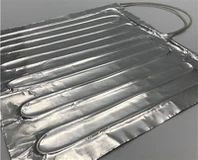
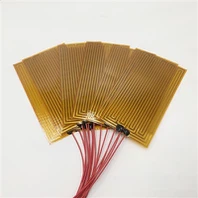
Thin film heaters use printed resistive elements on flexible substrates, such as polyimide or polyester, rather than bulky ceramic or wire-wound heaters. Thin film heaters' construction leaves them able to conform to curved or irregular surfaces, uniformly distribute heat, respond quickly, and do all of this at a lesser energy cost.
Main Benefits for the Industry
Design Freedom: Engineers can develop shapes, voltages, and power densities specific to their product.
Efficiency & Safety: Uniform heating reduces hot spots and increases product reliability.
Extreme Environments: Operate from –40 °C to +200 °C in aerospace, medical, or outdoor industries.
Miniaturization: Adds heat without bulk - vital for today's smaller devices.

Where They Are Used
Industrial: Battery pre-heating for EVs and drones, semiconductor manufacturing equipment, medical laboratory analyzers, and 3D printing beds.
Consumer: Heated mirrors, heated cameras, coffee machines, under-surface warming, and heating in wearable garments.
Specialty/OEM: Embedded heating in smart devices, new energy products, and medical wearables.
Why It Is Important
As products continue to get smaller, smarter, and energy efficient, thermal management will become a hidden differentiator. Flexible thin film heaters allow designers to add heat exactly where it is needed without compromising size, weight, or overall look – which opens doors for product innovation in all industries - including healthcare and aerospace.
E-Mail: Cici@Jaye-Heater.Com
Whatsapp: +86 13480586962