Traditional heating methods often fall short in meeting the stringent demands of modern medical devices. This is where JAYE-HEATER's advanced silicone rubber heaters shine, offering an unparalleled solution for effective and safe thermal management in ventilator humidifiers.
The Challenge: Why Active Humidification is Non-Negotiable
Mechanical ventilation bypasses the body's natural upper airway, which normally warms and humidifies inhaled air. Delivering dry, cold gas directly to the lungs can lead to serious complications, including:
- Drying of the Airway Mucosa: Impairing the lung's natural defense mechanisms.
- Increased Mucus Viscosity: Making it difficult for patients to clear secretions, leading to potential blockages and infections.
- Patient Discomfort and Hypothermia: Causing strain and slowing the recovery process.
Heated humidifiers are therefore standard of care. They must rapidly heat water to create saturated vapor and maintain the delivered gas at a specific, physiological temperature (typically around 37°C and 100% relative humidity). This presents a significant engineering challenge.

Why Silicone Rubber Heaters are the Superior Choice for Ventilator Humidifiers
Compared to ceramic or metal sheath heaters, silicone rubber heaters offer a unique set of properties that make them ideal for this sensitive application.
1. Exceptional Uniform Heating & Thermal Efficiency
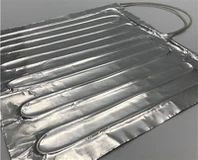
Our silicone rubber heaters provide wide, even heat distribution across the entire surface of the humidifier chamber or base plate. This eliminates dangerous cold spots that can lead to condensation within the circuit ("rain-out") and ensures consistent vapor production. The thin-profile construction allows for rapid thermal response, quickly reaching and maintaining the target temperature.
2. Unmatched Flexibility and Conformability
JAYE-HEATER heaters are inherently flexible, allowing them to be custom-designed to fit the complex contours of modern, compact humidifier chambers. This ensures optimal surface contact for maximum heat transfer efficiency, unlike rigid elements that can create air gaps and hotspots.
3. Medical-Grade Safety and Reliability
Patient safety is paramount. Our heaters for medical applications are engineered with the highest standards:
- Biocompatible Materials: We use USP Class VI compliant silicone rubber, ensuring the material is safe for indirect patient contact.
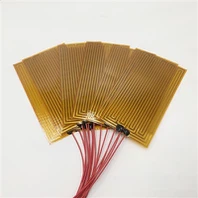
- Robust Construction: The etched-foil heating element is fully encapsulated and insulated within the silicone layers, making it highly resistant to moisture, corrosion, and electrical hazards.
- High Dielectric Strength: This critical feature provides excellent electrical insulation, protecting both the patient and the equipment from potential leakage currents.
4. Precision Temperature Control
Accurate temperature is non-negotiable. JAYE-HEATER seamlessly integrates high-accuracy sensors-such as Negative Temperature Coefficient (NTC) thermistors or Resistance Temperature Detectors (RTDs)-directly into the heater assembly. This allows for closed-loop feedback to the ventilator's control system, enabling real-time adjustments and ensuring the delivered air is always within the safe, prescribed range.
5. Durability for Demanding Environments
Designed to withstand repeated cleaning cycles and the mechanical stresses of a hospital environment, our heaters are resistant to chemicals, abrasion, and thermal cycling. This translates to a longer service life and reduced total cost of ownership for medical device manufacturers.

Conclusion: A Partnership for Better Patient Outcomes
In the high-stakes field of respiratory care, the reliability of every component is a link in the chain of patient safety. The humidification system is a vital part of that chain. By choosing JAYE-HEATER's silicone rubber heaters, you are not just selecting a heating element; you are investing in a solution that guarantees:
- Enhanced Patient Comfort and Safety
- Superior Device Performance and Reliability
- Streamlined Design and Integration