1.Quick Comparison of Core Characteristics
| Characteristic | Silicone Rubber Heater | Mica Heater |
| Typical Operating Temperature Range | 10°C to 250°C | 300°C to 500°C (some models up to 600°C+) |
| Thermal Efficiency & Response Speed | High. Excellent thermal conductivity from silicone rubber and tight contact with heated surfaces minimize interface thermal resistance, enabling rapid heat-up and low thermal loss. | Moderate. The layered structure of mica sheets can create microscopic air gaps, slightly impairing heat transfer efficiency. |
| Mechanical Strength & Durability | Excellent. Tear-resistant, abrasion-resistant, vibration-resistant. The silicone layer effectively protects internal heating alloy wires/foil. | Brittle. Mica sheets are inherently fragile and prone to flaking, especially under frequent vibration or mechanical shock. |
| Flexibility & Shape Adaptability | Superior. Highly flexible, can conform perfectly to complex curves (e.g., oven doors, curved conveyor belts). Custom shapes are easily achievable. | Limited. Typically rigid or semi-rigid flat panels. Difficult to bend; suitable only for flat surfaces. |
| Environmental Resistance | Exceptional. Waterproof (up to IP68), resistant to moisture, most chemicals, and oils. Surface is easy to clean. | Poor. Low hygroscopicity but not waterproof. Insulation properties may degrade in humid environments long-term. Prone to contaminant retention. |
| Installation & Maintenance | Convenient. Often feature Pressure-Sensitive Adhesive (PSA) backing or can be easily secured mechanically. Simple to maintain or replace. | Complex. Typically require drilling and bolting for installation, which is labor-intensive. Replacement is difficult if damaged. |
| Cost Consideration | Moderate, with High Lifecycle Cost-Effectiveness. Initial purchase cost may be higher, but long lifespan, high efficiency, and low maintenance lead to a lower Total Cost of Ownership (TCO). | Lower Initial Cost. However, potentially shorter lifespan, higher energy consumption, and more frequent maintenance can increase long-term costs. |
| Typical Service Life | Long. Under rated conditions, service life often exceeds 10,000 hours. | Moderate. High temperatures and vibration can accelerate mica aging/cracking, potentially shortening lifespan. |


2. Design Flexibility & Integration
Modern industrial oven designs are increasingly compact and feature-integrated.
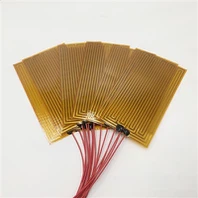
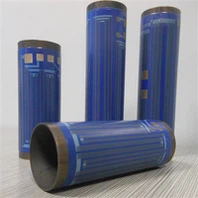
- Silicone Rubber Heaters are ideal for customized designs. They can be fabricated into virtually any shape, easily integrating into oven door seals, complex ductwork, roller surfaces, or beneath trays. Furthermore, sensors (like thermocouples, RTDs) and wiring can be directly laminated inside the heater, creating highly integrated, unified heating-sensing modules that simplify wiring and improve temperature control accuracy.
- Mica Heaters are essentially limited to flat plates or simple curved panels, offering very low customization flexibility and struggling to fit into complex spaces.


3. Mechanical Reliability & Environmental Suitability
Industrial oven environments may involve vibration (e.g., conveyor operation), frequent door cycling, and cleaning schedules.
- Silicone Rubber Heaters: Their structure resembles a "sandwich," fully encapsulating the heating alloy wire or etched foil circuit within food-grade or industrial-grade silicone rubber. This monolithic construction provides outstanding resistance to physical shock and vibration. Their superior chemical resistance allows them to withstand cleaning agents, making them ideal for industries requiring rigorous periodic cleaning, such as food processing and pharmaceuticals.
- Mica Heaters: They use mica sheets as insulating layers and a frame, sandwiching the resistance wire. Mica is a natural mineral and is inherently brittle. Long-term vibration can cause delamination or cracking of the mica sheets, compromising insulation and potentially causing short circuits. Their open-edge structure is also more susceptible to moisture, dust, and chemical ingress.
4. Heat Transfer Efficiency & Energy Consumption
Industrial ovens require a uniform, stable temperature field for consistent process results.
- Silicone rubber heaters, due to their excellent flexibility, can form intimate, gapless physical contact with oven walls or workpiece carrier surfaces through light pressure or adhesives. This minimizes interfacial thermal resistance, allowing heat to transfer efficiently and evenly, reducing localized hot/cold spots, thereby improving energy efficiency and temperature uniformity.
- In contrast, the rigid structure of mica heaters makes it difficult to achieve full contact with irregular surfaces. Microscopic air gaps act as thermal insulators, reducing heat transfer efficiency. To reach the same process temperature, higher setpoints or longer pre-heat times may be required, leading to increased energy consumption.
Conclusion
For the vast majority of modern industrial oven applications, silicone rubber heaters, with their superior flexibility, efficient heat transfer, robust environmental resistance, and long service life, offer better overall technical value and a lower Total Cost of Ownership. They are not just heating elements but precision thermal management solutions that enhance overall equipment performance, reliability, and energy efficiency.
At JAYE-HEATER TECHNOLOGY, we specialize in designing and manufacturing high-performance custom silicone rubber heaters for global industrial clients. Our engineering team can provide comprehensive technical support-from thermal simulation and circuit optimization to sensor integration-tailored to your oven's specific structure, temperature control requirements, and application environment.
Contact our heating solution experts today for a free technical evaluation and sample testing