Defrost Visibility: Silicone Heating Pads for Clear Freezer Display Cases
In the competitive retail landscape, product visibility is directly linked to sales. A fogged or frosted freezer display case acts as a physical barrier between your products and your customers, obscuring merchandise and discouraging purchases. At JAYE, we provide a robust and reliable solution: high-performance, durable Silicone Rubber Heating Pads designed to effectively eliminate condensation and frost, ensuring your freezer displays remain clear and your products are always visible.
The Science of Fog and Frost on Freezer Glass
Understanding the root cause is key to implementing the right solution.
Condensation in Action
Fogging occurs when warm, moisture-laden air from the store environment comes into contact with the cold surface of the freezer glass or door frame. When the glass temperature falls below the dew point of the surrounding air, the water vapor condenses into tiny liquid droplets, creating a layer of fog.
From Fog to Frost
If the surface temperature drops further, below the freezing point, this condensed moisture will crystallize, forming a layer of frost or ice. This is common in low-temperature environments and high-humidity conditions.
The Business Impact of Fogged Freezer Displays
A obscured view into your freezer case has direct negative consequences:
Lost Sales and Reduced Impulse Buys
Customers cannot see products clearly, leading to missed sales opportunities. Attractive packaging and promotions are ineffective if hidden.
Poor Customer Experience
Shoppers may force doors open to see inside, causing temperature fluctuations, energy waste, and accelerated frost buildup.
Increased Energy Consumption
Frequent door openings and the compressor working harder to combat heat ingress lead to significantly higher electricity costs.
Unprofessional Store Image
A fogged-up case appears poorly maintained, which can negatively impact the perceived freshness and quality of your food items.
What Are Silicone Rubber Heating Pads?
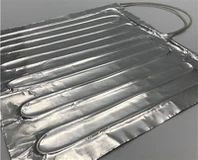
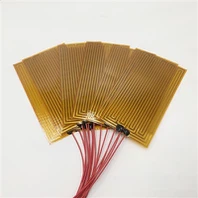
JAYE Silicone Heating Pads are flexible, durable, and high-performance thermal components. They consist of a woven fiberglass or mica core embedded with a resistance wire element, all encapsulated within a high-grade silicone rubber material. This construction makes them an ideal choice for demanding commercial environments, offering:
Excellent Flexibility and Conformability
High Thermal Efficiency and Uniform Heat Distribution
Superior Moisture, Chemical, and Weather Resistance
Robust Physical Durability to withstand impact and abrasion
How Silicone Heaters Prevent Fog and Frost on Freezer Cases
The principle is highly effective: eliminate the cold surface that causes condensation.
While silicone pads are not transparent, they are strategically installed in critical areas to manage temperature. They are typically mounted on the metal frame surrounding the glass or on the glass itself (on the perimeter). When powered on, the pad generates uniform, consistent heat. This warmth radiates to the adjacent glass, raising its surface temperature above the ambient dew point. By ensuring the glass is warm enough, moisture cannot condense, effectively preventing both fog and frost from forming on the viewing area.

How to Install Silicone Heating Pads on Freezer Displays
Installation is straightforward and versatile, suitable for both retrofit and OEM integration.
Retrofit Application
For existing display cases, our silicone heaters can be supplied with a high-strength pressure-sensitive adhesive (PSA). The process involves cleaning the mounting surface (frame or glass perimeter), aligning the pad, and applying firm pressure for a secure, permanent bond.
OEM Integration for Manufacturers
For freezer and display case manufacturers, we provide fully customized OEM solutions. We engineer the pads to your exact specifications for seamless integration during the assembly process, including pre-drilled holes for mechanical fastening or custom adhesive patterns.
Typical Specifications for JAYE's Freezer Display Heating Pads
We specialize in customization to meet your specific needs. Standard specifications often include:
| Feature | Specification |
|---|---|
| Heater Material | High-Temperature Silicone Rubber |
| Heating Element | Resistance Wire (Kanthal/Nichrome) |
| Thickness | 1.5mm - 3.0mm (Customizable) |
| Temperature Range | -60°C to +250°C |
| Operating Voltage | Customizable (e.g., 12V, 24V, 110V, 240V) |
| Watt Density | Optimized for efficient defogging (e.g., 0.5 - 2 W/in²) |
| Mounting Options | PSA Adhesive, Mechanical Fasteners, or Custom |
Key Applications in Food & Retail Industries
JAYE Silicone Heating Pads are versatile and widely used across the cold chain:
Supermarket Frozen Food Doors
Mounted on the frame to keep the entire glass panel clear.
Open-Air Dairy and Beverage Display Cases
Preventing condensation on glass and metal surfaces in high-humidity environments.
Glass Doors for Walk-In Coolers and Freezers
Providing clear visibility for staff and improving safety.
Commercial Ice-Making Machines and Display Bins
Preventing frost buildup on dispensing chutes and viewing windows.
Why Partner with JAYE for Your Silicone Heating Pads?
Choosing JAYE means selecting a partner committed to quality, reliability, and custom engineering.
Deep OEM Customization Expertise
We don't just sell standard sizes. We engineer custom silicone heating pads tailored to your voltage, shape, wattage, and thermal profile requirements.
Built for Harsh Environments
Our silicone rubber construction is inherently resistant to moisture, condensation, and physical wear, ensuring long-term reliability in demanding commercial settings.
Energy-Efficient and Reliable
We design for optimal heat transfer and low power consumption, helping you maintain clear views without a significant energy cost increase.
End-to-End Technical Support
Our team provides expert guidance from design and prototyping through to installation and maintenance.
FAQs
Since it's not transparent, where exactly is the heater placed?
The pad is strategically placed on the metal frame that surrounds the glass. The heat from the frame conducts into the glass, warming it sufficiently to prevent fogging across the entire viewing area. It can also be applied as a border directly on the glass.
How does this compare to transparent film heaters?
While transparent films are applied directly to the viewing area, silicone pads are significantly more durable, powerful, and better suited for harsh physical environments. They are the industrial-grade choice for long-term, reliable performance where ultimate transparency is not required for the heater itself.
Will the heater affect the freezer's internal temperature?
No. The heat is localized and low-level, specifically calibrated to only raise the temperature of the glass edge and frame slightly above the dew point. It does not impact the internal temperature of the stored products.
Can you create a custom-shaped pad for our unique door design?
Absolutely. Customization is our core service. We can manufacture silicone heating pads in virtually any shape-rectangular, curved, or complex geometries-to fit your specific freezer door design perfectly.
Don't let frost and fog chill your sales. Contact the thermal engineering experts at JAYE today to discuss your custom silicone heating pad requirements. Let us help you design a solution that guarantees crystal-clear displays and boosts your retail performance.
Click here to know more about our Silicone Heating Pad