Q&A: Addressing Critical Sourcing Questions
Q1: How do you ensure uniform heat distribution across a complex-shaped surface?
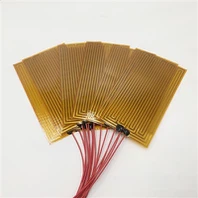
A1: Uniformity is a function of the etched trace design. Using advanced thermal simulation software, we engineer the trace pattern-varying its width, spacing, and path-to compensate for heat losses at edges or corners. This computational design ensures a consistent temperature across the entire target area, which is a key differentiator of a professionally engineered heater.

Q2: Can you integrate temperature sensors and control circuitry directly into the heater?
A2: Absolutely. This is a core strength of our customization. We can laminate Negative Temperature Coefficient (NTC) thermistors or Resistance Temperature Detectors (RTDs) directly onto the polyimide film. Furthermore, we can design multi-zone heaters with separate circuits, allowing for independent temperature control of different areas from a single heater unit.

Q3: What are the limitations of polyimide film heaters regarding mounting and mechanical stress?
A3: While extremely durable, they are not designed for high-abrasion environments or sharp bending at the electrical terminals. Proper mounting using our recommended pressure-sensitive adhesives (PSAs) or mechanical clamping is crucial. We provide detailed application notes to ensure optimal performance and longevity, preventing delamination or trace damage.

Q4: For international clients, what certifications and standards do your heaters comply with?
A4: JAYE-HETAER manufactures heaters that can be designed and tested to meet a range of international standards, including CSA for North America and CE/RoHS for the European market. We work with certified laboratories to provide the necessary documentation for your product's compliance and market entry.

Q5: What is your typical lead time for a custom prototype and subsequent production?
A5: For a new custom design, the prototype lead time is typically 2-4 weeks, which includes design finalization, simulation, and sample fabrication. Upon approval, mass production lead times are competitive and depend on order volume, which we will confirm with a precise schedule upon project initiation.