1.In low-temperature environments (typically below 10°C), lithium-ion batteries face three interconnected problems:
- Increased Internal Resistance & Reduced Ionic Conductivity: The electrolyte becomes more viscous, slowing the movement of lithium ions. This causes a sharp voltage spike during charging, forcing the Battery Management System (BMS) to drastically reduce charge current to protect the cell.
- Lithium Plating – The Primary Safety Risk: When charging at low temperatures, lithium ions cannot intercalate into the anode graphite quickly enough. Instead, they plate as metallic lithium on the anode surface. This irreversible process not only permanently reduces capacity but creates dendrites that can pierce the separator, leading to internal short circuits and potential thermal runaway.
- Extended Charge Time and Customer Dissatisfaction: What is advertised as a 30-minute charge can easily extend to 90 minutes or more in freezing conditions, severely impacting EV usability and consumer confidence.
The solution is clear: batteries must be preheated to an optimal temperature range (typically 15°C-25°C) before fast-charging can commence safely and efficiently.
2.Introducing the Enabler: Polyimide (PI/Kapton®) Film Heaters
Traditional heating methods-such as ambient air heating or PTC heaters attached to the cooling plate-are often slow, energy-inefficient, and create significant temperature gradients within the battery pack. This "hot-spot-and-cold-zone" phenomenon can stress cells unevenly and fail to fully mitigate lithium plating risk.
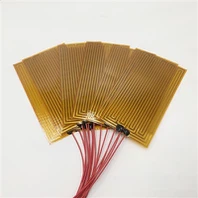
Advanced Polyimide (PI) Film Heaters, leveraging materials like DuPont™ Kapton®, represent a paradigm shift in direct, precision thermal management. Their properties are uniquely suited for integration into modern battery systems:
- Ultra-Thin Profile (<0.25mm): They add negligible weight and volume, conforming directly to cell surfaces or module housings without compromising pack energy density.
- Exceptional Thermal Conductivity & Uniformity: The etched foil circuit pattern and thin dielectric layer enable rapid, uniform heat distribution across the entire active area, minimizing thermal gradients between cells.
- High-Temperature Stability & Reliability: PI film maintains its properties across a wide temperature range (from -269°C to +400°C), ensuring long-term performance without degradation, outlasting silicone-based alternatives in continuous high-temperature operation.
- Extreme Flexibility & Customizability: They can be precisely cut to match the contour of prismatic, cylindrical, or pouch cells, enabling tailored heating solutions for any pack architecture.
- Electrical Insulation & Safety: PI film possesses excellent dielectric strength (typically >3000 VAC), providing a critical insulation barrier between the heater circuit and the high-voltage battery components.


3.Application Strategy: Integrated Precision Heating
The true power of PI film heaters lies in their integration strategy. Unlike external heating blankets, they are designed for direct, intimate contact with the energy source:
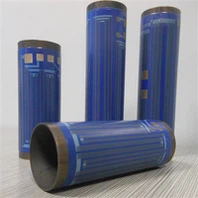
- Cell-Level Integration: Heaters can be laminated directly onto the flat surfaces of prismatic or pouch cells, or wrapped around cylindrical cells within a module. This provides the most direct thermal path, minimizing heat loss and ensuring each cell reaches the target temperature uniformly.
- Module-Level Integration: Heaters can be applied to the module's cold plate or sidewalls, providing a more generalized warming. While slightly less direct than cell-level, this approach offers easier serviceability and is highly effective.
- System-Level Control: Integrated with high-accuracy NTC thermistors, the heaters operate under the precise command of the BMS. The system only activates heating when needed (e.g., when plugging into a DC fast charger in cold weather) and maintains the ideal temperature window, optimizing both energy use and battery longevity.

4. Why JAYE-HEATER's PI Film Solution Stands Out
At JAYE-HEATER TECHNOLOGY, we move beyond supplying standard components to delivering validated thermal subsystem solutions:
- Co-Engineering Design: We work with your team from the early pack design phase to model thermal requirements and optimize heater placement, power density, and circuit layout.
- Automotive-Grade Manufacturing: Our processes are compliant with IATF 16949, and our heaters are designed to meet stringent reliability standards such as AEC-Q200 for long-term performance under vibration and thermal cycling.
- Full Integration Support: We provide solutions with integrated sensors, robust flexible leads, connectors, and bonding recommendations (PSA, thermally conductive epoxy) to ensure seamless and reliable assembly into your pack.

5.Conclusion
The path to year-round, reliable EV fast-charging runs through intelligent, integrated thermal management. Ultra-thin Polyimide (PI) film heaters are the key enabling technology, transforming battery packs from passive components into actively managed systems. By ensuring rapid and uniform preheating, they solve the critical triad of winter challenges: safety (preventing Li-plating), performance (enabling fast charge), and customer satisfaction (delivering consistent experience).
Ready to engineer the cold out of the fast-charging equation?
Contact JAYE-HEATER's battery thermal solutions team today for a detailed thermal analysis of your pack design and to request performance samples of our automotive-grade PI film heaters. Let's collaborate to build a safer, faster, and more reliable electric future.