Introduction to Electric Heating Fundamentals
Electric heating technology represents one of the most versatile and widely implemented methods of thermal energy generation across industrial and commercial applications.
At its core, electric heating involves the precise conversion of electrical energy into controlled thermal energy through specialized resistive elements.
This transformation follows fundamental principles first quantified by James Prescott Joule, whose pioneering work established the mathematical relationship between electrical input and thermal output.
The efficiency and effectiveness of electric heating systems depend on careful consideration of multiple factors including material properties, thermal transfer mechanisms, and application-specific requirements.
Understanding these fundamental principles enables engineers and designers to select optimal heating solutions that balance performance, reliability, and operational efficiency.
Electrical Principles Governing Heat Generation
Joule's Law and Its Practical Applications
The foundation of electric heating rests upon Joule's First Law, which mathematically describes the thermal energy generated when electrical current passes through a resistive element. This relationship can be expressed as:
Thermal Energy (Q) = I² × R × t
Where:
I represents electrical current (amperes)
R denotes electrical resistance (ohms)
t signifies time duration (seconds)
This fundamental principle demonstrates that heat generation increases proportionally with both current magnitude and resistance value. In practical heating applications, designers typically focus on power calculation rather than total energy, utilizing the simplified formula:
Power (P) = I² × R
This power relationship governs the heating rate and temperature characteristics of all resistive heating elements, forming the basis for performance prediction and system design.
Time-Dependent Thermal Behavior
The temporal aspect of heating systems manifests through the observable temperature increase that occurs as electrical current flows through resistive materials. This time-dependent behavior necessitates careful consideration in applications requiring precise temperature control or rapid thermal response. The rate of temperature rise depends on multiple factors including element mass, thermal conductivity, and environmental heat dissipation mechanisms.
Comprehensive Heating Element Selection Framework
Application-Specific Heater Configurations
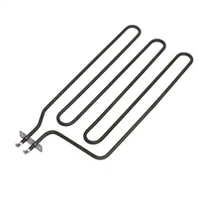
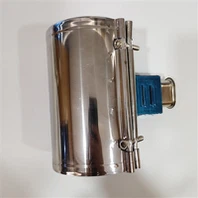
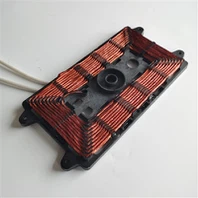
Modern heating solutions encompass diverse form factors and construction methodologies, each optimized for particular operational requirements. Key heater classifications include:
Direct Contact Heating Elements:
- Strip and band heaters for uniform surface heating
- Cartridge heaters for insertion into drilled cavities
- Flexible rope and cable heaters for irregular surfaces
Immersion and Circulation Systems:
- Direct immersion heaters for liquid media
- Circulation heaters for process fluids
- Tote and drum heaters for containerized materials
Radiant and Environmental Heaters:
- Infrared radiant heaters for targeted heating
- Process air and duct heaters for airflow systems
- Comfort heating solutions for space conditioning
Material Selection Criteria
The selection of appropriate sheath and element materials represents a critical design consideration impacting performance, longevity, and application suitability:
Metallic Sheath Options:
- Stainless steel for general purpose applications
- Incoloy alloys for high-temperature corrosive environments
- Copper for superior thermal conductivity requirements
Non-Metallic Encapsulations:
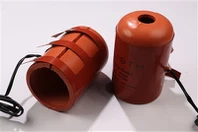
- Silicone rubber for flexible, low-profile applications
- Kapton polyimide for lightweight, high-temperature uses
- Ceramic and glass overbraid for specialized environments
Design Parameter Optimization
Successful heater selection requires systematic evaluation of multiple operational parameters:
Electrical Characteristics:
- Available supply voltage and phase configuration
- Required power density and wattage specifications
- Control methodology and interface requirements
Physical Constraints:
- Available installation space and geometric limitations
- Thermal expansion considerations and mounting methods
- Connection types and termination requirements
Environmental Factors:
- Target material properties and heat transfer characteristics
- Ambient conditions and heat dissipation mechanisms
- Regulatory compliance and safety certification needs
Heat Transfer Mechanisms and Optimization
Conduction-Based Heat Transfer
Conduction represents the most efficient thermal transfer mechanism, involving direct molecular energy exchange between contacting materials. This method dominates applications where the heating element maintains physical contact with the target medium, such as in platen heating, mold temperature control, and surface heating applications.
Key optimization strategies include:
Maximizing contact surface area
Utilizing high-conductivity interface materials
Implementing uniform pressure distribution systems
Convection Heating Principles
Convective heat transfer employs fluid motion (typically air or liquid) to distribute thermal energy from source to target. This method proves particularly effective for environmental heating, process air systems, and liquid immersion applications where direct contact proves impractical.
Optimization approaches encompass:
Strategic fluid flow path design
Enhanced surface area through finned elements
Controlled fluid velocity and turbulence management
Radiant Energy Transfer
Radiative heating transmits thermal energy through electromagnetic wave propagation, primarily in infrared wavelengths. This contactless method excels in applications requiring rapid response times or where physical barriers prevent direct contact.
Performance enhancement techniques include:
Spectral matching of emitter and absorber characteristics
Reflector geometry optimization
Distance and alignment precision
Thermal Management and Loss Mitigation
Heat Loss Mechanisms
All heating systems experience inevitable thermal losses through various pathways:
- Conductive Losses: Thermal energy dissipation through mounting hardware and support structures
- Convective Losses: Unintended heat transfer to surrounding air or fluids
- Radiative Losses: Infrared emission to cooler surrounding surfaces
Loss Minimization Strategies
Effective thermal management requires systematic approaches to loss reduction:
Insulation Implementation:
- Application of high-efficiency thermal barrier materials
- Strategic placement to minimize conductive pathways
- Regular maintenance to ensure insulation integrity
System Design Optimization:
- Proportional sizing to match thermal requirements
- Integration of reflective surfaces to redirect radiant energy
- Implementation of active cooling where appropriate
Control System Enhancement:
- Precise temperature monitoring and feedback loops
- Adaptive power modulation based on thermal demand
- Multi-zone control for complex heating requirements
Application-Specific Implementation Guidelines
Medical and Laboratory Equipment
Heating solutions for medical applications demand exceptional precision, reliability, and safety compliance. Key considerations include:
Biocompatible material selections
Strict temperature uniformity requirements
Validation for regulatory compliance standards
Fail-safe protection mechanisms
Industrial Process Heating
Manufacturing and processing applications prioritize durability, maintainability, and operational efficiency:
Robust construction for industrial environments
High power density capabilities
Compatibility with process control systems
Extended service life under continuous operation
Precision Instrumentation
Analytical and testing equipment requires exacting temperature control and stability:
Minimal thermal mass for rapid response
Exceptional temperature uniformity
Vibration and shock resistance
Electromagnetic interference mitigation
Performance Validation and Testing Protocols
Electrical Performance Verification
Comprehensive testing ensures heating elements meet specified performance criteria:
Resistance verification at operating temperatures
Insulation resistance and dielectric strength testing
Power consumption validation under load conditions
Thermal cycling endurance assessment
Thermal Performance Characterization
Detailed thermal analysis confirms proper system operation:
Surface temperature distribution mapping
Heat-up rate and stabilization time measurement
Thermal uniformity quantification
Efficiency calculation under operational conditions
Reliability and Durability Assessment
Long-term performance evaluation through accelerated testing:
Extended operational life testing
Environmental stress screening
Mechanical endurance verification
Failure mode analysis and mitigation
Future Development Trends
Advanced Material Integration
Emerging materials offer enhanced performance characteristics:
Nanocomposite heating elements for improved efficiency
High-temperature superconducting materials
Self-regulating smart materials with embedded sensing
Intelligent Control Systems
Digital transformation enables sophisticated thermal management:
Predictive maintenance through IoT connectivity
Adaptive learning algorithms for optimization
Integration with industrial automation platforms
Sustainability Enhancements
Environmental considerations drive innovation:
Energy recovery and reuse systems
Reduced material consumption through advanced manufacturing
Extended product lifecycle through modular design
Conclusion
Electric heating technology continues to evolve, offering increasingly sophisticated solutions for diverse thermal management applications. Successful implementation requires careful consideration of fundamental principles, material characteristics, and application-specific requirements.
By applying systematic selection methodologies and optimization strategies, engineers can develop heating solutions that deliver reliable performance, operational efficiency, and long-term value across medical, industrial, and scientific applications.
The ongoing advancement of heating technologies, coupled with enhanced control methodologies and material innovations, promises continued improvement in precision, efficiency, and versatility.
Organizations that maintain awareness of these developments while applying fundamental engineering principles will achieve optimal results in their thermal management applications.

One-stop Heating Elements Factory in China
Jaye Heater Technology specializes in industrial heating elements, offering OEM/ODM services for global clients.