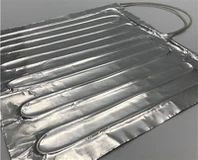
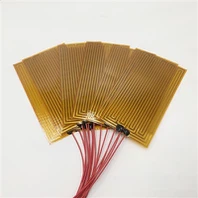
Finned heaters play a pivotal role in industrial processes, offering efficient and controlled heating for various applications, ranging from air and liquid heating to process heating. Sizing these heaters appropriately is crucial to ensure optimal performance, energy efficiency, and longevity. In this article, we'll walk through the essential steps to properly size finned heaters for industrial use.
1. Determine Heating Requirements:
Begin by clearly defining the heating requirements of your industrial application. Understand the type of material to be heated, whether it's air, liquid, or a solid substance. Specify the desired temperature rise and calculate the overall heat load needed.
2. Calculate Required Wattage:
Utilize the heat transfer equation Q = mcΔT, where Q is the heat required (in watts), m is the mass or volume of the material (in kg or liters), c is the specific heat of the material (in J/(kg·°C) or J/(liter·°C)), and ΔT is the temperature rise required (in °C).
3. Select the Heater Type:
Choose the appropriate type of finned heater based on your application's specific needs. Common types include tubular heaters, strip heaters, and cartridge heaters. Each type has unique characteristics suitable for different environments.
4. Consider Environmental Factors:
Environmental conditions significantly impact the performance of finned heaters. Account for factors such as ambient temperature, insulation, and ventilation, as they can influence the overall heat transfer and, consequently, the required heater size.
5. Determine Heater Configuration:
Decide on the heater's configuration, considering factors like length, diameter, and the number of fins. Tailor these parameters to fit the physical constraints of your application and the available space.
6. Calculate Surface Area:
Calculate the required surface area using the formula A=Q /(ℎ⋅ΔT), where A is the surface area (in m²), Q is the heat required (in watts), ℎ is the heat transfer coefficient (in W/(m²·°C)), and ΔT is the temperature difference (in °C).
7. Choose Finned Heater Size:
Select a finned heater with a surface area that meets or exceeds the calculated value. Refer to the manufacturer's specifications for available sizes and choose the one that best aligns with your requirements.
8. Consider Safety Margins:
Incorporate safety margins into your calculations to account for variations in environmental conditions, system inefficiencies, and unforeseen factors. This ensures a robust and reliable heating solution.
9. Consult Manufacturer Guidelines:
Always refer to the manufacturer's guidelines and specifications for the selected finned heater. Manufacturers provide valuable information on sizing, installation, and other critical considerations based on their product expertise.
10. Installation Considerations:
Take into account the installation environment, including mounting options, electrical connections, and any specific requirements outlined by the finned heater's manufacturer. Proper installation is essential for maximizing performance and longevity.
Know More about Finned Heaters
In conclusion, sizing finned heaters for industrial applications involves a thoughtful and systematic approach. By understanding your heating requirements, considering environmental factors, and following manufacturer guidelines, you can ensure that the selected finned heater delivers efficient and reliable performance in your specific industrial setting. Always consult with the manufacturer for detailed information and support tailored to their product specifications.