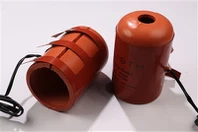
Casting an aluminum band heater for injection die involves the following steps:
- Designing the band heater: The first step is to design the band heater to meet the specific requirements of the injection die. This includes determining the size, shape, and wattage needed.
- Creating a mold: Once the design is finalized, a mold must be created. The mold will be used to shape the aluminum into the desired form of the band heater.
- Melting the aluminum: Aluminum is melted using a furnace or crucible at temperatures around 1,220-1,260 °F (660-680 °C).
- Pouring the molten aluminum: Once the aluminum is melted, it is poured into the mold. The mold is usually made of steel and coated with a release agent to prevent the aluminum from sticking to it.
- Cooling and solidifying: The molten aluminum is allowed to cool and solidify in the mold. This may take several minutes depending on the size and thickness of the band heater.
- Finishing: After the aluminum has cooled and solidified, the band heater is removed from the mold and any excess material is trimmed off. The band heater may also be polished or otherwise finished to ensure a smooth surface.
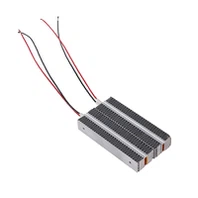
- Attaching the heating elements: The band heater is then fitted with heating elements, such as ceramic or mica heaters, and electrical connections.
- Testing: The final step is to test the band heater to ensure it meets the required specifications and is safe to use.

Note that casting an aluminum band heater for injection die is a specialized process that should only be performed by experienced professionals with the appropriate equipment and safety precautions.