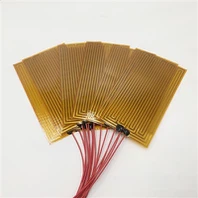
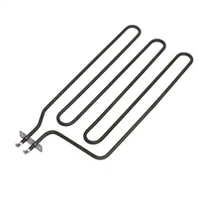
Open Coil Heaters, with their unique design philosophy of maximizing exposed surface area to airflow, offer a superior, customizable solution that addresses the specific and often demanding requirements of these industries.
Part 1: Core Advantages of Open Coil Heaters for Drying Applications
Before diving into industry specifics, it's essential to understand the universal benefits that make Open Coil Heaters ideal for forced-air drying systems:
- High Thermal Efficiency & Rapid Response: The open wire coil design minimizes the barrier between the heating element and the airflow. This allows for direct, unimpeded heat transfer, resulting in faster temperature ramp-up and reduced thermal lag. Energy is transferred to the air stream almost instantaneously, improving system responsiveness.
- High Watt Density Capability: They can operate at significantly higher surface watt densities than sheathed elements, delivering more power (heat) in a compact space, which is crucial for maintaining high airflow temperatures in constrained ductwork.
- Customizable Heat Profile: By strategically varying the coil pitch (spacing) and wire gauge along the length of the heater, engineers can create a tapered or uniform heat profile to match the specific airflow dynamics and drying curve of the application, ensuring even air temperature at the outlet.
- Optimized Airflow with Low Pressure Drop: The open construction offers less resistance to airflow compared to dense finned tubular heaters. This allows system designers to use smaller, more energy-efficient fans or achieve higher airflow rates for the same fan power.

Part 2: Tailored Solutions for Textile Drying & Curing
Textile drying (for yarn, fabric, or non-wovens) and curing (for prints or coatings) require precise control over temperature and airflow to preserve fiber integrity, achieve consistent moisture removal, and set chemicals without damage.
Key Application Challenges:
- Wide, Even Temperature Distribution: Avoiding hot spots that can scorch or degrade delicate fabrics.
- Managing High Moisture Load: Initial drying stages involve evaporating large amounts of water, requiring high heat input without temperature spikes.
- Chemical Exposure: In curing ovens, volatilized chemicals from coatings or dyes can condense on components.
- Cycling Endurance: Lines often start and stop, requiring heaters that can handle thermal cycling.
How Open Coil Heaters Deliver an Efficient Solution:
- Material Selection for Longevity: For standard drying, Nickel-Chromium (NiCr) alloys offer excellent oxidation resistance and longevity. In more corrosive curing environments, Iron-Chromium-Aluminum (FeCrAl) alloys may be specified for superior resistance to certain chemical vapors at high temperatures.
- Precision Coil Design for Uniformity: Engineers can design the heater with a graduated coil pitch-tighter at the air inlet where the air is coolest, and wider downstream. This ensures heat is released proportionally, resulting in an exceptionally uniform outlet air temperature across the plenum, critical for preventing uneven drying or curing on wide fabrics.
- High-Temp, High-Airflow Compatibility: Open coil elements can withstand the high air velocities common in textile tenters or dry cans, efficiently transferring heat even in challenging flow conditions. Their ability to handle high watt densities supports the rapid evaporation needed in the first drying zone.
- Easy Maintenance & Cleanability: The simple, open structure allows for easier inspection and, if necessary, cleaning of any lint accumulation (with proper system shutdown and safety procedures), compared to tightly finned elements that can clog.

Part 3: Hygienic & Precise Heating for Food Drying/Dehydration
Food drying applications-for everything from pasta and grains to fruits, vegetables, and pet food-demand a combination of precise temperature control, energy efficiency, and strict adherence to hygiene and safety standards.
Key Application Challenges:
- Strict Temperature Bands: Overheating can destroy nutrients, color, and flavor; under-drying risks microbial growth.
- Hygienic Design: Components must prevent product contamination, often requiring specific surface finishes or construction features.
- Variable Moisture Evaporation: The drying curve is non-linear; optimal efficiency requires adapting heat input.
- 24/7 Operational Reliability: Downtime in continuous food processing lines is extremely costly.
How Open Coil Heaters Deliver an Efficient Solution:
- Sanitary Construction Options: Heaters can be built with 304 or 316 stainless steel support frames and insulators. The coil itself can be made from compatible high-temperature alloys. This construction resists corrosion and is easy to clean-in-place (CIP) if designed into the system, meeting food-grade environmental requirements.
- Precise Control Integration: The fast thermal response of open coil heaters makes them perfectly suited for integration with advanced PID controllers and humidity feedback systems. The heater can quickly adjust its output to match the real-time drying needs of the product as it moves through different stages (e.g., high heat for initial moisture removal, lower heat for finishing), maximizing quality and minimizing energy waste.
- Efficient Zoned Drying: In multi-zone conveyor dryers, custom Open Coil Heater banks can be designed for each zone. For instance, a high-wattage, tightly-coiled heater for the high-humidity inlet zone, and a lower-wattage design for the finishing zones, optimizing the entire drying curve for specific product characteristics.
- Compact Design for Retrofits: Their high power density allows for powerful heating solutions in limited spaces, which is ideal for upgrading existing drying tunnels or designing more compact new equipment.

Conclusion: The Engineered Advantage
For both textile and food drying equipment, off-the-shelf heating elements often force compromises in performance, efficiency, or product quality. Open Coil Heaters from JAYE-HEETER represent a paradigm of engineered customization.
By collaborating with our engineering team, OEMs and equipment builders can specify the exact parameters-alloy composition, wire gauge, coil pitch, physical dimensions, and electrical characteristics-to create a heating core that is not just a component, but an optimized sub-system within the dryer. The result is a solution that delivers:
- Higher Product Quality through uniform, precise temperature control.
- Lower Operational Costs through improved thermal efficiency and reduced fan power.
- Enhanced System Reliability with robust designs built for specific environmental challenges.
- Future-Proof Flexibility with designs that can be adapted to new products or processes.
Ready to optimize your drying application? Contact the JAYE-HEATER engineering team today to discuss your specific temperature, airflow, and environmental parameters. Let us design a high-efficiency Open Coil Heater solution that powers your performance.