The working process of a ceramic heating pad in Post Weld Heat Treatment (PWHT) involves the use of electrical resistance heating to gradually heat and cool metal welds to relieve stresses and improve metallurgical properties. Here's how the process works:
Placement on Welds: The ceramic heating pads, composed of ceramic beads strung on resistance wires, are placed directly on or around the welded area that needs treatment. These pads are flexible and can be shaped to cover complex surfaces.
Electricity Flow: Once connected to a power source, an electrical current flows through the resistance wires embedded in the ceramic beads. The resistance of the wire causes it to heat up.
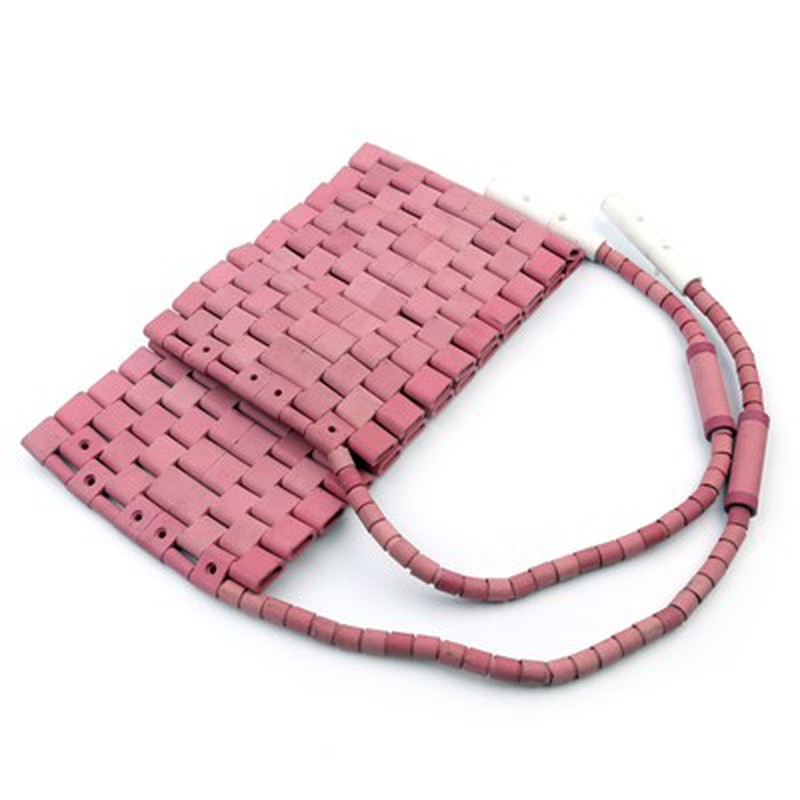
Heat Generation: As the resistance wire heats up, the ceramic beads absorb and evenly distribute the heat. The ceramic material has excellent heat retention and thermal stability, making it ideal for maintaining consistent temperatures.
Heat Transfer to Metal: The heat generated by the ceramic heating pad is transferred to the welded metal, raising its temperature in a controlled manner. In PWHT, precise control of heating rates is crucial to avoid rapid temperature changes that could cause thermal stress.
Temperature Control: During PWHT, a thermocouple is often used to monitor the temperature at various points on the metal surface. A control unit adjusts the power input to the ceramic heating pads to maintain the desired temperature over a specific period, ensuring uniform heat treatment.
Cooling Phase: After the heat treatment phase, the ceramic heating pad gradually cools down the metal. The controlled cooling is important to avoid any sudden temperature drops, which could introduce residual stresses or cause cracking.
Stress Relief and Metallurgical Improvement: The gradual heating and cooling provided by the ceramic heating pad help relieve internal stresses caused by welding and improve the grain structure of the metal, enhancing its mechanical properties and reducing the risk of future failures.
This process makes ceramic heating pads essential in PWHT, offering precise temperature control, flexibility in application, and durability for high-temperature environments.