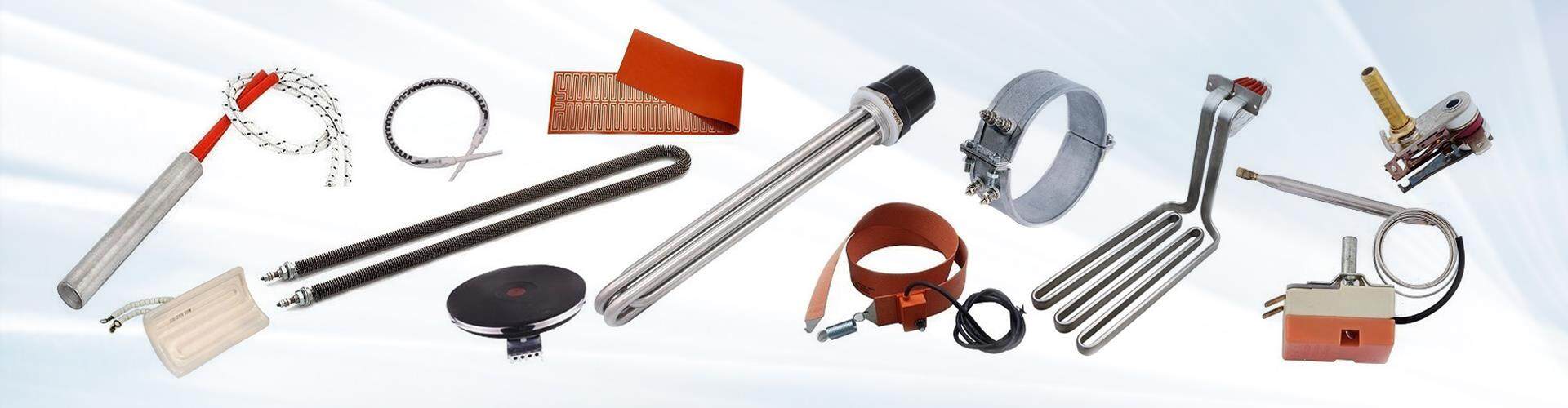
A flange cartridge heater with metal braided wire is an industrial electric heating device designed for high-temperature, high-vibration, and harsh environments. It combines a cartridge heater core, a mounting flange, and a protective braided lead wire.
Here's how it works:
Basic Working Principle (Cartridge Heater)
At its core, it works on resistive (Joule) heating:
Inside the heater is a nichrome resistance wire.
When electrical current passes through the wire, it resists the flow.
This resistance converts electrical energy into heat.
The heat transfers outward through:
Magnesium oxide (MgO) insulation (for heat transfer + electrical insulation)
Stainless steel sheath
Into the object being heated (metal block, mold, die, platen, etc.)
So the basic heating mechanism = electrical resistance → heat generation.
What the Flange Does
The flange is a mounting plate attached near one end of the cartridge heater.
Its purpose:
Prevents the heater from sliding too deep into a hole
- Allows bolting to machinery
- Provides mechanical stability
- Ensures correct positioning
- Helps with heat zone control
This is common in:
- Plastic injection molds
- Extruders
- Die casting equipment
- Packaging machinery
What the Metal Braided Wire Does
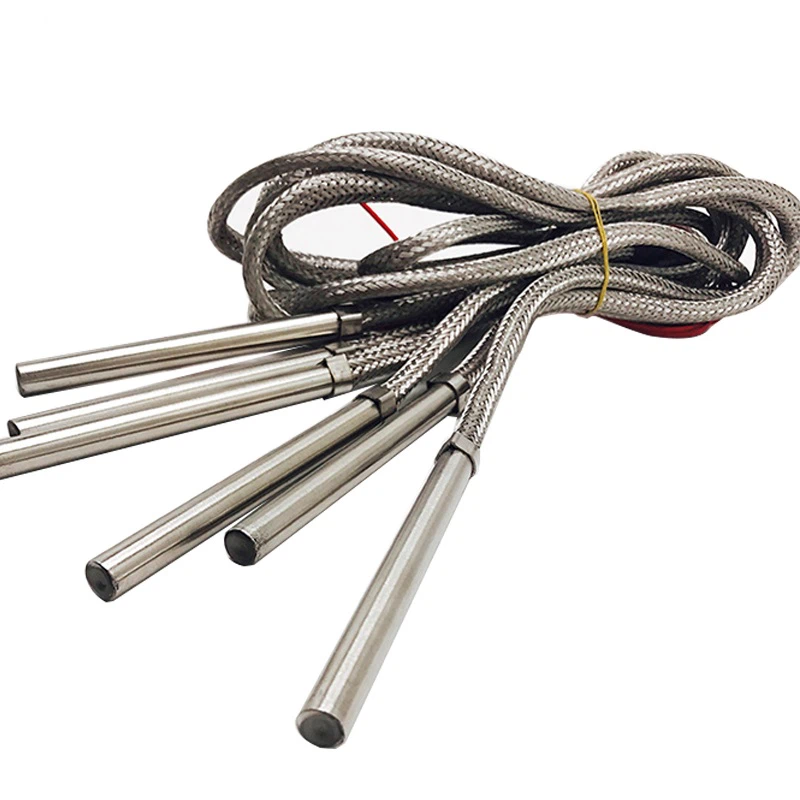
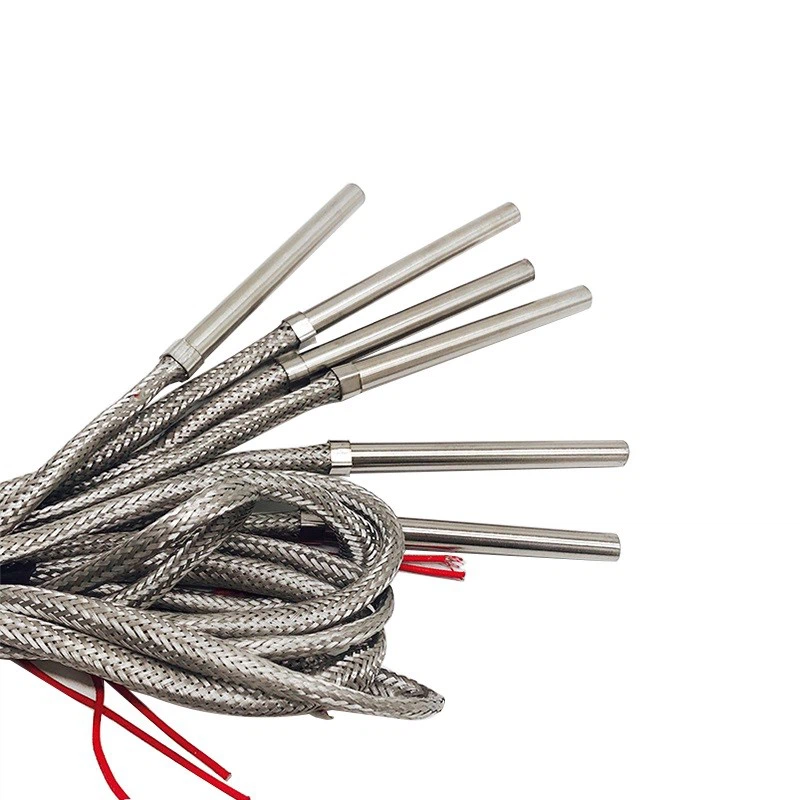
The metal braided lead wire protects the electrical connection wires that power the heater.
Inside the braid:
Two insulated high-temperature lead wires
Often fiberglass or ceramic insulated
Outside:
Stainless steel braided sleeve
Why metal braided?
It provides:
- Mechanical protection
- Abrasion resistance
- Protection from sharp edges
- Protection in high vibration environments
- EMI shielding (in some cases)
- Higher temperature durability
Without it, standard wire insulation could melt, crack, or wear out.

Step-by-Step Operation
- Power supply (AC or DC) connects to heater leads.
- Current flows through nichrome resistance coil.
- Coil heats up rapidly (can reach 100°C–800°C+ depending on design).
- Heat conducts outward to the heater sheath.
- Heat transfers to the surrounding metal.
- Flange holds heater securely in position.
- Braided wire protects electrical connections during operation.
Why Use a Flange Cartridge Heater?
Compared to standard cartridge heaters:
| Feature | Standard | Flange Type |
|---|---|---|
| Secure Mounting | No | Yes |
| Position Control | Limited | Precise |
| Vibration Resistance | Moderate | High |
| Heavy-duty Applications | Limited | Excellent |
Typical Applications
Plastic molding barrels
Packaging seal bars
Industrial ovens
Hot plates
Hydraulic presses
3D printing industrial heads

Temperature & Power Range
Typical specs:
Voltage: 120V – 480V
Power: 100W – 3000W+
Temperature capability: up to 800°C (depends on sheath material)
Simple Summary
A flange cartridge heater with metal braided wire:
Uses electrical resistance to generate heat
Transfers heat through a metal sheath into machinery
Uses a flange to secure it in place
Uses metal braided wire to protect the power leads
It is built for high heat, high vibration, and industrial durability.