Finned heating tubes are widely used in shrink wrap tunnels because they provide strong, uniform, and energy-efficient heating for the shrink process. Here's how they work in this application:
1. Heating Mechanism
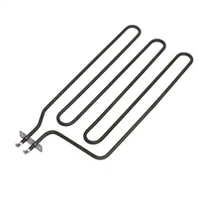
A finned heating tube is essentially a tubular heating element with metallic fins attached along its length.
When electric current passes through the heating element, it generates heat by resistance.
The fins increase the surface area of the heater, allowing it to transfer heat more efficiently to the surrounding air inside the tunnel.

2. Hot Air Circulation
In shrink wrap tunnels, fans or blowers circulate the air across the finned heating tubes.
The fins enable rapid heat exchange, so the moving air quickly absorbs the generated heat.
This heated air is evenly distributed throughout the tunnel chamber.
3. Shrink Process
As the packaged product passes through the tunnel on a conveyor, the uniform hot air flow surrounds the plastic shrink film.
The controlled, consistent temperature causes the film to shrink tightly around the product, creating a secure and professional seal.

4. Advantages of Using Finned Heating Tubes in Shrink Tunnels
- Fast Heat Transfer: The fins speed up air heating compared to plain tubular elements.
- Uniform Heating: Ensures consistent shrink results without uneven sealing.
- Energy Efficiency: Maximizes heat output per watt by enlarging the surface area.
- Durability: Can withstand continuous operation in industrial packaging environments.
- Compact Design: Allows effective heating in limited tunnel space.