1. Purpose in PCR Machines
PCR machines require precise and rapid temperature changes to enable DNA denaturation, annealing, and extension. Silicone thermal pads are used as heating elements because they are flexible, durable, and provide uniform heat transfer to the PCR reaction tubes or plates.

2. Working Mechanism
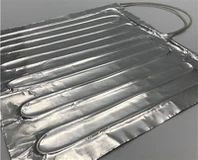
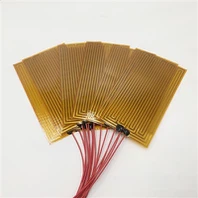
- The silicone thermal pad contains embedded resistance wires or conductive materials. When electric current passes through, it generates heat due to electrical resistance.
- Being flexible, the pad conforms closely to the PCR block or well plate, ensuring uniform heating across all samples.
- The pad is connected to a thermostat or temperature sensor. This feedback allows precise regulation of heating cycles required for PCR (e.g., 95°C for denaturation, 55°C for annealing, 72°C for extension).
- Silicone's good thermal conductivity and thin structure allow quick heating and cooling, essential for the PCR machine's efficiency.

3. Advantages
Flexibility: Conforms to different plate shapes.
Uniform Heating: Minimizes temperature variation between samples.
Durability: Resists repeated thermal cycles without degradation.
Compact Design: Fits into small PCR devices without taking extra space.