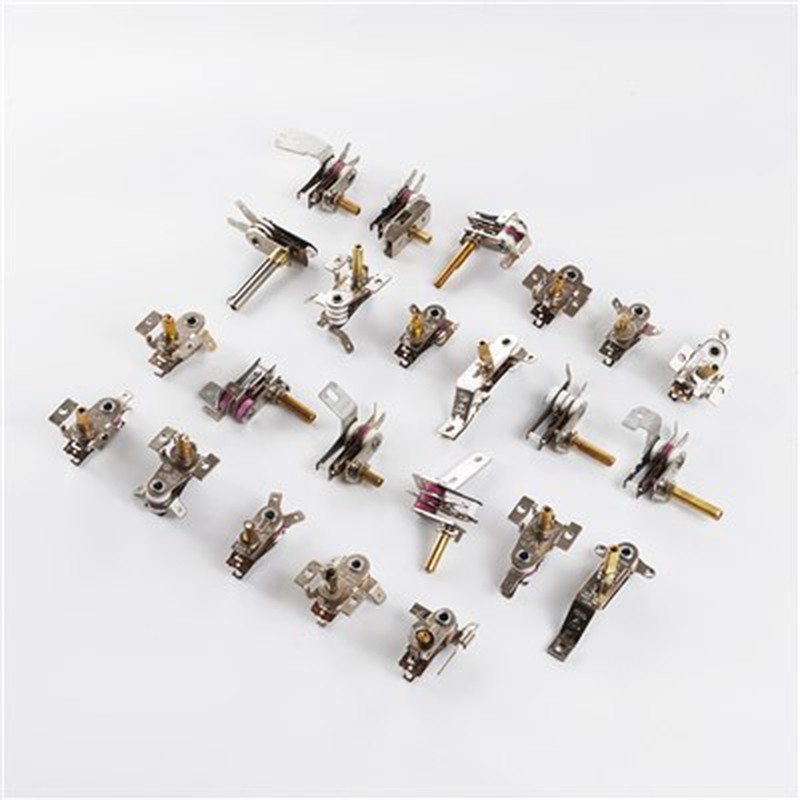
KST thermostats, commonly used in coffee makers, are snap-action thermostats that regulate temperature effectively and ensure safety. Here's how they work in a coffee maker:
1. Temperature Sensing:
The KST thermostat contains a bimetallic strip that bends or flexes in response to temperature changes. The strip is designed to react to specific temperature thresholds.
2. Heating Control:
When the coffee maker is turned on, the heating element begins warming the water or coffee.
As the temperature rises, the bimetallic strip in the thermostat detects the heat.
3. Snap-Action Mechanism:
At a pre-set temperature (e.g., for brewing coffee or keeping it warm), the bimetallic strip flexes sufficiently to trigger the snap-action mechanism, which:
Opens the electrical circuit to turn off the heating element, preventing overheating.
Provides quick, reliable switching to ensure accurate temperature control.
4. Automatic Reset:
As the coffee cools down or heat dissipates, the bimetallic strip cools and returns to its original shape.
This re-closes the circuit, reactivating the heating element to maintain the desired temperature.

5. Safety Feature:
If the coffee maker's temperature exceeds safe limits, the KST thermostat may include an overheat protection feature, cutting power entirely to prevent damage or hazards.