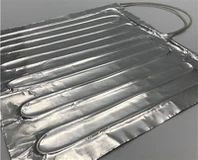
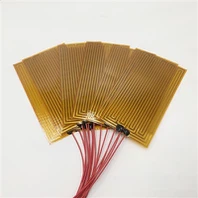
Silicone rubber heaters are highly effective solutions for maintaining or raising the temperature of pipelines. Here's how they work for pipeline heating:
Working Principle of Silicone Rubber Heaters on Pipelines:
Flexible Heating Element:
A silicone rubber heater consists of a resistance wire (typically nichrome) embedded between two layers of heat-conductive and electrically insulating silicone rubber sheets.
When electricity passes through the wire, it generates heat via Joule heating (resistance heating).

Direct Heat Transfer to Pipe Surface:
The heater is wrapped or bonded directly onto the pipeline surface.
The silicone rubber ensures tight surface contact, allowing efficient and uniform heat transfer to the pipe wall.
Thermal Insulation (Optional but Recommended):
An insulation layer (e.g., fiberglass or foam wrap) is often added on top of the heater to reduce heat loss and improve efficiency.
Temperature Control:
A thermostat, temperature sensor, or digital controller is used to regulate the heater, ensuring the pipeline stays within a desired temperature range.
Some systems also use thermostats integrated into the heater pad itself.

Advantages of Silicone Rubber Heaters for Pipeline Heating:
✅ Flexible and Conformable: Easily wraps around curved or irregular pipe surfaces.
✅ Moisture-Resistant: Silicone rubber offers excellent water and chemical resistance, ideal for outdoor or industrial environments.
✅ Fast Heat-Up Time: The thin construction and direct contact with the pipe allow quick thermal response.
✅ Customizable: Can be made in various lengths, watt densities, and voltages to suit different pipeline sizes and heating needs.
✅ Durable: Resistant to mechanical damage, UV, and aging.
Common Applications:
Preventing pipeline freezing in cold environments
Maintaining viscosity in oil or chemical transfer lines
Heating water or gas pipelines in processing plants
Food and beverage lines that require temperature consistency