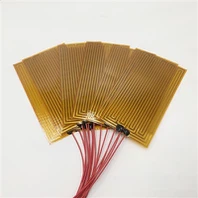
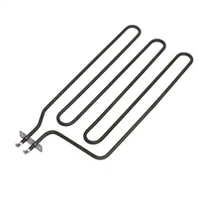
Mica heating elements are commonly used in various industrial and commercial applications due to their exceptional thermal stability, high resistance to heat, and low thermal conductivity. They are widely considered as one of the most reliable and cost-effective heating solutions in many industries. However, the performance of Mica heating elements can be influenced by factors such as thickness and size.
The thickness of a Mica heating element plays a crucial role in its performance. Thicker elements are often more robust and durable, able to withstand higher temperatures and pressures without breaking down easily. They also tend to have a longer lifespan and require less maintenance compared to thinner elements. However, thicker elements may consume more energy as they have a higher thermal mass, and hence take longer to heat up and cool down.
On the other hand, the size of a Mica heating element can also impact its performance. Larger elements can provide higher heating output, which is advantageous in applications that require a more significant amount of heat. Additionally, larger elements can distribute heat more evenly, which can result in better temperature control and more consistent heating. However, bigger elements may also be more challenging to construct and install, and may require more power to operate.
Overall, while thickness and size are essential factors that influence the performance of Mica heating elements, they are just a few of the many factors to consider when selecting a heating solution. Other factors include material compatibility, operating temperature, and overall efficiency. By carefully considering all these factors and selecting the right Mica heating element, one can achieve optimal performance and efficiency in their heating applications.