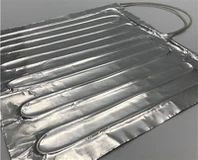
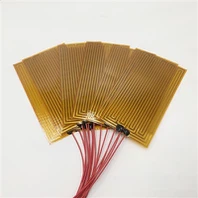
For hot foil embossing presses, the cast-in aluminium heating plate acts as the core heating element. Its working principle involves efficiently and uniformly transferring the heat generated by the heating elements embedded within the aluminium plate to the working surface through the aluminium's excellent thermal conductivity, thereby providing the essential and stable heat required for the foil stamping process.

To help you understand this process more clearly, it can be broken down into the following key steps:
In-depth Analysis of the Working Principle
Core Structure: The Combination of Heat Source and Heat Conductor
This type of heating plate has tubular electric heating elements (similar to high-power electric heating tubes) embedded within it. During manufacturing, these elements are directly cast into the aluminium or aluminium alloy plate, achieving integration with the plate.
Aluminium serves two key purposes here: firstly, as a protective shell, securing and protecting the heating elements; and secondly, as a highly efficient thermal conductor, leveraging its excellent thermal conductivity to rapidly transfer the heat generated internally throughout the entire plate surface.

Heat Transfer: From the Inside to the Surface
- When electrical power is applied, the internal heating elements generate heat. Due to aluminium's superior thermal conductivity, the heat spreads extremely quickly from the heating elements, transferring uniformly to all parts of the heating plate.
- Manufacturers typically ensure the heating plate surface is precision-ground flat. This guarantees maximum surface contact with the back of the foil stamping die, minimizing thermal contact resistance and ensuring efficient heat transfer to the die.
Precise Temperature Control: The Key to Perfect Foil Stamping
- Foil stamping processes demand extremely high temperature accuracy. The advantage of this type of heating plate lies in its excellent temperature uniformity. Manufacturers claim the temperature difference across the working surface can be controlled within ±3°C. This means the temperature across the entire stamping plate is virtually consistent, preventing issues like localized overheating that could scorch the stamping foil, or insufficient temperature in certain areas leading to poor adhesion.
- The system works in conjunction with temperature sensors (such as thermocouples) and a controller to monitor and precisely adjust the heating plate's temperature in real-time, meeting the requirements of different stamping materials and processes.

Heat Application: Direct or Indirect Die Heating
In hot foil stamping presses, cast-in aluminium heating plates are typically applied in two ways:
- Direct Heating: The heating plate itself serves as the mounting base for the stamping die, or even the die itself. Heat acts directly on the stamping plate.
- Indirect Heating: The heating plate acts as an independent heating unit. It first conducts heat to the stamping die mounted onto it, and then the die applies pressure and heat to the stamping foil and substrate. This method is more common, as it allows for changing different dies while the heating plate itself can be standardized.

Why Are They Suitable for Hot Foil Stamping Machines?
Based on the principles above, the widespread use of cast-in aluminium heating plates is primarily due to the several key advantages they offer for the stamping process:
- High Temperature Uniformity: A temperature difference of ±3°C ensures consistent stamping quality.
- Fast Thermal Response: Aluminium's low heat capacity and high thermal conductivity allow the heating plate to heat up quickly and recover temperature rapidly during the cyclical opening and closing of the press. This is beneficial for shortening cycle times and increasing production efficiency.
- Stable and Reliable Performance: The integrated casting construction makes it robust and durable, suitable for the demanding requirements of 24/7 continuous industrial production.
- Flexible Design: They can be customized to the specific dimensions and power requirements (up to 13kW) of the stamping press.