Type J Thermocouples are widely used in the chemical and energy industry due to their reliability, cost-effectiveness, and suitability for moderate temperature ranges. Below are their key applications:
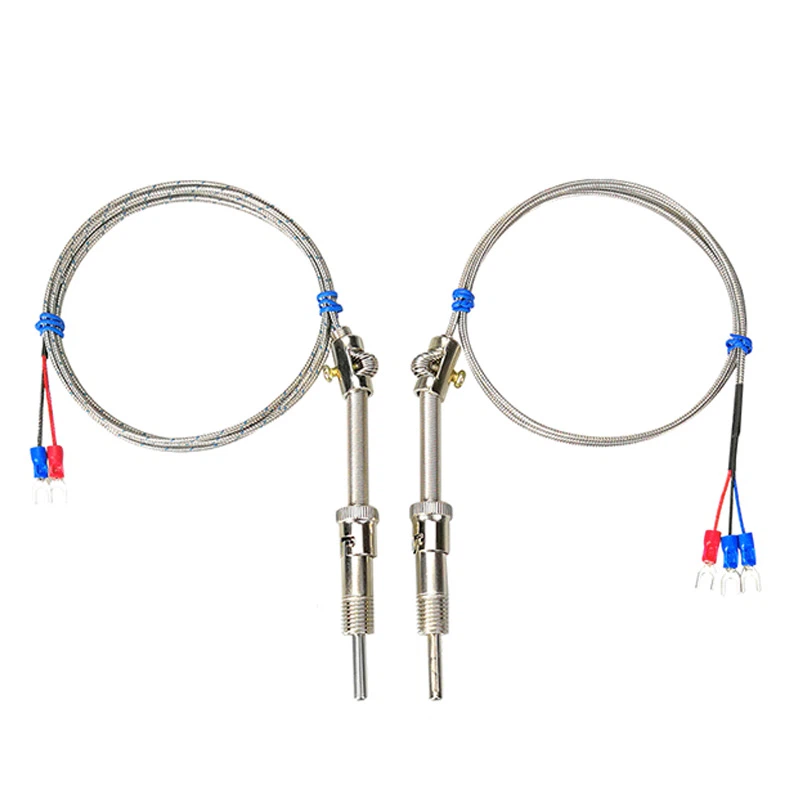
1. Temperature Monitoring in Chemical Reactors
Application: Type J Thermocouples are installed in chemical reactors to monitor and control reaction temperatures.
Advantages: Their fast response and durability ensure precise temperature management, optimizing chemical processes.
2. Heat Exchanger Performance Tracking
Application: They are used to measure inlet and outlet temperatures in heat exchangers.
Advantages: Helps maintain energy efficiency and prevent overheating or underperformance.
3. Pipeline Temperature Monitoring
Application: Installed in pipelines to monitor the temperature of fluids or gases.
Advantages: Ensures safe and efficient transport of materials, preventing leaks or damage caused by temperature fluctuations.
4. Boiler and Furnace Temperature Control
Application: Used in boilers and furnaces to monitor combustion temperatures.
Advantages: Enhances safety and efficiency by maintaining optimal operating conditions.
5. Energy Production Systems
Application: Applied in power plants to monitor temperatures in turbines, generators, and cooling systems.
Advantages: Ensures stable energy production and prevents equipment failure.
6. Storage Tank Temperature Management
Application: Used to monitor temperatures in storage tanks for chemicals or fuels.
Advantages: Prevents overheating or cooling, ensuring material stability and safety.
Advantages of Type J Thermocouples in the Chemical and Energy Industry:
Cost-Effective: Affordable solution for moderate temperature ranges.
Wide Temperature Range: Operates effectively between -40°C to 750°C.
Durability: Resistant to oxidation and suitable for various environments.
Easy Installation: Flexible and compatible with most industrial systems.