Polyimide (Kapton) Heaters: The Ideal Heating Solution for Precision Equipment
What is a Polyimide (Kapton) Heater?
A Polyimide (Kapton®) heater is an ultra-thin, flexible electric heater that uses polyimide film as both the insulating substrate and the overlay. Valued for their outstanding performance and reliability, they have become the preferred solution for many demanding heating applications in precision instruments and equipment. This type of heater is particularly suitable for scenarios with strict limitations on space, weight, heating speed, and temperature uniformity. Capable of stable operation at temperatures up to 260°C, they provide crucial thermal management support for modern industry and technology.

The Exceptional Properties of Polyimide (Kapton) Film
Polyimide (Kapton®) film is a high-performance organic polymer material. Its unique molecular structure grants it a series of irreplaceable excellent properties, making it an ideal substrate for manufacturing high-performance thin-film heaters:
Excellent Electrical Insulation: Possesses very high dielectric strength, enabling it to withstand high voltages effectively, ensuring the safe isolation of the live resistive circuit from the external environment. This is the cornerstone of equipment safety.
Outstanding Temperature Resistance: Can maintain physical and electrical performance stability within a broad temperature range from -269°C to +400°C, with a maximum continuous operating temperature of up to 260°C, meeting the needs of most precision applications.
Very Low Thermal Mass: The film form gives it an extremely low heat capacity, meaning the heater can achieve very fast heating rates and cooling speeds, enabling precise temperature control response.
Excellent Chemical Stability: Offers superior resistance to most organic solvents, acids, oils, and radiation, ensuring long-term reliability in harsh chemical environments.
High Mechanical Strength and Flexibility: While maintaining an ultra-thin thickness (typically ≤0.2mm), it possesses good mechanical strength and flexibility, allowing it to conform to irregular surfaces or be repeatedly bent.
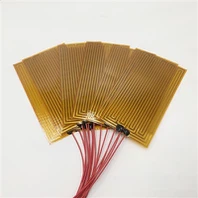
Semi-Transparency: The film itself is semi-transparent or amber-colored, facilitating direct visual inspection of the internal etched circuit condition, which is convenient for quality checks and fault diagnosis.
How Polyimide Heaters Work and Core Technology
The core structure of a polyimide heater is a classic "sandwich," and its manufacturing process is precise and technologically advanced.
1. Core Structure and Manufacturing Process
Resistive Circuit: Utilizes advanced etched foil technology. First, a very thin (e.g., 50μm) layer of precision resistance alloy (such as nickel-based alloy) foil is attached to a polyimide film. The precise circuit trace is designed using Computer-Aided Design (CAD). Then, using a photochemical etching process, the non-circuit metal is etched away, leaving the designed resistance circuit pattern. This process can create extremely complex and precise circuits to achieve specific heat distribution and resistance values.
Insulation and Encapsulation: The etched resistive circuit is sandwiched between two or more layers of polyimide film and firmly laminated into a single unit through a high-temperature lamination process. This ensures complete insulation and protection of the circuit.
2. Technical Advantages
Design Flexibility: Etching technology allows for the realization of circuit designs in almost any shape, including complex requirements such as multi-zone heating and dual input voltages. A bifilar circuit meander arrangement is possible, effectively eliminating parasitic inductance in the circuit. This is crucial for high-precision electronic equipment sensitive to electromagnetic interference (EMI), such as medical imaging and aerospace electronics.
Uniform Heating: Precise etched circuits can be designed with optimized patterns to ensure heat is distributed evenly across the entire heating area, avoiding local hot spots.
Wide Resistance Range: By adjusting the width, length, and thickness of the circuit, a wide range from low to high resistance values can be obtained, easily adapting to low-voltage application needs such as 5V, 12V, and 24V.
Key Technical Specifications of Polyimide Heaters
To assist you in better selection and design, here are the typical technical parameters for polyimide heaters:
|
Characteristic |
Parameter/Description |
Notes |
|---|---|---|
|
Input Voltage |
12V – 400V |
Can be customized for low voltage (e.g., 5V) or special voltages as required. |
|
Max Operating Temp |
260°C |
Note: Actual maximum temperature is affected by factors like adhesive backing and operating environment. |
|
Min Width |
8mm (single-side lead exit) / 5mm (dual-side lead exit) |
- |
|
Power Density |
≤ 3.0 W/cm² |
Aluminum foil backing can support higher power density. |
|
Operating Temp Range |
-50°C to +260°C |
- |
|
Max Width |
Theoretically unlimited (limited by raw film roll width) |
Wider dimensions can be customized based on demand. |
|
Power Tolerance |
≤ ±5% |
Ensures consistent and precise heating performance. |
|
Insulation Resistance |
> 100 MΩ |
Guarantees electrical safety. |
|
Total Thickness |
≤ 0.2mm |
Ultra-thin profile. |
|
Min Bending Radius |
≥ 0.8mm |
Good flexibility. |
|
Dielectric Strength |
> 1000V/1min |
High-standard electrical safety performance. |
Optional Configurations and Integration:
Temperature Sensors: Can integrate RTD (thin-film PT100), thermistor (NTC), thermocouple (K/J/T type), thermal fuse, or thermal switch for precise temperature monitoring and control.
Adhesive Backing: Optional pressure-sensitive adhesives (PSA) such as acrylic, silicone, or polyimide-based for quick installation and bonding to the heated surface.
Lead Wires: Various insulated lead wires available, such as Teflon, silicone rubber, polyimide-insulated cables, along with various plug connectors and terminations.
Enhanced Designs: Foil Backing and Metal Plating
To further enhance performance, polyimide heaters can incorporate enhanced designs:
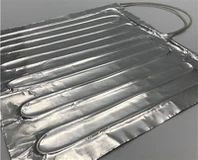
Aluminum Foil Backing: Adding a thin layer of aluminum foil to one side of the heater significantly improves the lateral spread of heat across the plane, resulting in a more uniform temperature distribution. It also allows the heater to withstand higher power densities and provides some mechanical protection.
Metal Plating (e.g., Aluminum, Copper): Applying a metal plating layer onto the polyimide film surface can significantly increase the heater's maximum operating temperature (plated versions can reach 260°C) and form an effective electromagnetic shielding (EMS) layer, reducing interference with surrounding precision components. This technology has been successfully applied in high-end fields such as medical CT scanners and particle accelerators.
Core Advantages of Polyimide Heaters
Compared to other types of heaters, Polyimide (Kapton) heaters offer a unique combination of values:
Ultra-Thin and Lightweight: Their extremely thin form factor and very light weight make them perfect for space- and weight-constrained applications.
Fast Thermal Response: Low thermal mass ensures millisecond-level heating rates, enabling extremely precise temperature control.
Excellent Uniformity: The etched foil circuit, combined with optional aluminum backing, provides unparalleled temperature uniformity.
Exceptional Reliability: Chemical resistance, high-temperature resistance, and flexibility ensure a long service life even in harsh environments.
Design Flexibility: Can be customized into almost any shape and easily integrated with sensors and leads to meet specific application needs.
Wide Range of Applications
The unique properties of polyimide heaters make them indispensable in numerous high-tech industries:
Medical Diagnostic Equipment: Used for heating sample trays, reagent bottles, CPAP ventilator humidifiers, analytical instruments, etc., where cleanliness, reliability, and precision are required.
Thermal Stabilization of Optoelectronic Components: Provides constant temperature control for lasers, optical lenses, CCD sensors, etc., to prevent performance drift.
Cold-Weather Operation of Outdoor Electronics: Ensures normal startup and operation of laptops, outdoor displays, ATMs, and communication equipment in severe cold environments.
Aerospace: Used for de-icing and heat retention of aircraft avionics, radomes, sensors, and pipeline systems.
Semiconductor Manufacturing: Provides precise pre-heating and temperature control in processes like wafer handling, etching, and deposition.
New Energy Vehicles (EV Batteries): Used for pre-heating battery modules to optimize the charging/discharging performance and lifespan of lithium batteries in low-temperature environments.
Why Choose a Professional Heater Manufacturer?
Choosing an experienced heater manufacturer like JAYE is crucial. We not only provide high-quality products but also offer comprehensive technical solutions:
Engineering Consulting Capability: Our team of engineers can assist you in optimizing thermal design from the early stages of the project, selecting the most suitable materials, power density, and structure.
Stringent Quality Control: Every step, from raw material intake to finished product shipment, undergoes strict inspection to ensure each product meets specifications and safety standards.
Large-Scale Customization Capability: We specialize in quickly providing customized heating solutions based on your drawings or requirements, seamlessly transitioning from prototypes to mass production.
Global Support and Service: We have a robust supply chain and logistics system, enabling stable and timely product delivery and technical support for customers worldwide.
Conclusion
In summary, Polyimide (Kapton) heaters are the ultimate solution for precision heating challenges where space is compact and performance demands are high. Their excellent performance in speed, uniformity, reliability, and design flexibility makes them irreplaceable in high-end fields such as medical, aerospace, and electronics.
If you are looking for an efficient, reliable, and ultra-thin heating solution for your equipment, Polyimide heaters are undoubtedly an option worth serious consideration. Please feel free to contact the JAYE technical team. Share your specific application requirements and parameters, and we will provide you with the most professional thermal management solutions and high-quality products.