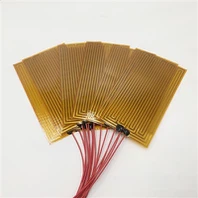
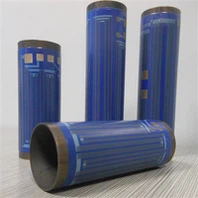
Silicone heating blankets are commonly used in laboratories for temperature-controlled experiments because of their flexibility, durability, and consistent heat distribution. Here's how they're typically used:
1. Precise Temperature Control
Silicone heating blankets are ideal for experiments that require specific and stable temperatures. They can be easily adjusted to provide uniform heat across a surface, ensuring that sensitive materials or samples are kept at a consistent temperature. This is particularly important for biological or chemical experiments that may require a controlled thermal environment.
2. Uniform Heat Distribution
The flexibility and thinness of silicone blankets allow them to conform to irregular surfaces or complex shapes. This ensures that heat is distributed evenly across whatever is being heated, minimizing the risk of hot spots or uneven heating.

3. Safe and Reliable
Silicone rubber is resistant to both high temperatures and chemical exposure, making it highly suitable for lab environments. The material's properties ensure that the blankets can safely be used with a variety of substances without degradation.
4. Applications in Laboratory Settings
Incubators: Silicone heating blankets are often wrapped around incubators, flasks, or beakers to maintain consistent temperatures, especially in biological or microbiological experiments.
Reaction Vessels: When conducting chemical reactions that require heating, silicone heating blankets can be wrapped around reaction vessels, ensuring that the temperature is uniform throughout the container.
Thermal Cycling: In some experiments, such as PCR (Polymerase Chain Reaction), silicone heating blankets can be used to maintain a specific thermal profile during cycles of heating and cooling.
5. Flexibility and Customization
These blankets can be custom-sized and are easy to position, making them versatile for a range of setups. Whether heating a beaker, a plate, or a specialized apparatus, the blanket can be tailored to fit and provide the needed temperature stability.

6. Energy Efficiency
Because silicone heating blankets are efficient in their heat transfer and heat retention, they tend to consume less energy compared to other heating methods, which can be important in laboratory settings where prolonged heating is required.
7. Use in Environmental Chambers
Silicone blankets can also be placed inside temperature-controlled chambers to help maintain a uniform heat profile within the chamber, often used in stability testing or materials research.