Commonly Used Methods of Mold Heating, Heat Preservation And Cooling
1. Overview
Compression molding process is one of the most common and oldest molding methods for plastic materials, and it is the most commonly used process method for studying material properties. It has the characteristics of simple molding device, small equipment investment, simple mold structure, etc. It is still one of the most popular production methods in today's highly developed mechanized and automated production. However, the literature that can be referred to for mold design for compression molding, except for textbooks, monographs written by several predecessors, and mold design illustrations, few people summarize the key skills in mold design.
The heating, heat preservation, cooling and clamping structure of the mold are an indispensable part of the composite mold design. The structural design directly affects the appearance and internal quality uniformity of the product, and also affects the molding efficiency of the product.
2. Design requirements for heating pipes
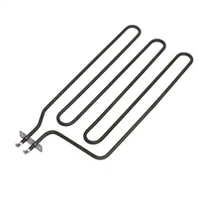
Steel heating is a heating method that must be used in the design of almost all plastic molding molds. It can be designed in various forms such as one-way wiring and two-way wiring. The material can be seam pipes, seamless pipes, stainless steel pipes, etc., and the characteristic is heat loss Small, high thermal efficiency, simple wiring, can be designed as 220V or 380V according to needs, and the wiring is flexible and diverse. However, due to the limitations of its materials and processing technology, it is necessary to pay attention to its oriented characteristics in the mold design.
(1) The heating tube usually has a long cold end at both ends, which cannot play a heating role.
(2) The power design of the heating section should not exceed the limit of 10 watts/cm as much as possible. Such as 30 cm long heating tube, the power should not exceed 300 watts as much as possible. If the design power exceeds this limit, the surface load of the heating tube will be high, and the steel tube will be susceptible to oxidation and corrosion, causing a short circuit.
(3) For mold design with a temperature higher than 250°C, it is difficult to use a heating tube. I once used a heating tube to heat up to 420°C, but this molding temperature has a high requirement on the quality of the heating tube, and it is necessary to frequently check the circuit for smoothness and short circuit. Because under this condition, the heating tube, the connecting terminal, the copper wire used for the connection, the steel sheet and other media are very easy to oxidize, resulting in a circuit break. Therefore, special treatment is required for the electrical transmission medium to avoid exposing the conductive wire to the air as much as possible to extend the service life of the wire.
Soldering iron core is usually used as a kind of mold heating tube, which is characterized by high power per unit length (usually a soldering iron core with a diameter of 10mm and a length of 8cm can reach an output power of 150 watts), durable, safe, and not easy to form a breakdown short circuit , Can be buried by drilling blind holes, the disadvantage is that it is difficult to customize the design, and it is fragile and broken when dismantling and replacing.
In the circuit design, insurance measures such as insurance and air switch are indispensable. The operating place must be kept clean and tidy, with good insulation, and be diligent in checking electrical faults during operation to prevent unnecessary dangers.