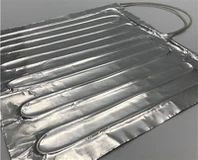
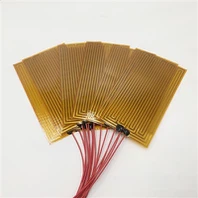
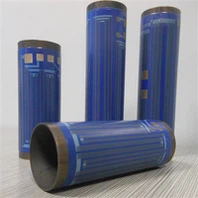
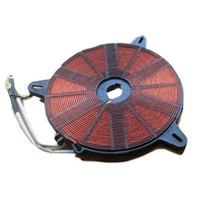
The heating wire itself is a metal conductor, and will emit heat and provide heat energy after being energized. Mainly used in metallurgical machinery, medical treatment, chemical industry, ceramics, electronics, electrical appliances, glass and other industrial heating equipment and civil heating appliances. The working principle of the heating wire is the same as that of other metal heating elements, and it is the electric heating phenomenon after the metal is energized. Electric heating means that after the current passes through the conductor, the current will generate a certain amount of heat and be transferred by the conductor.
Types of heating wire
The types of heating wires are classified according to the chemical element content and organizational structure of the heating wires. They can be divided into iron-chromium-aluminum alloy heating wires and nickel-chromium alloy heating wires.
The main advantages and disadvantages of Fe-Cr-Aluminum alloy series:
Advantages: Iron-chromium-aluminum electric heating alloy has a high use temperature, the highest use temperature can reach 1400 degrees, (0Cr21A16Nb, 0Cr27A17Mo2, etc.), long service life, high surface load, good oxidation resistance, high resistivity, and low price.
Disadvantages: The main reason is that the high temperature strength is low, and the plasticity increases as the use temperature increases, and the components are easy to deform, and are not easy to bend and repair.
Main advantages and disadvantages of nickel-chromium electric heating alloy series:
Advantages: high-temperature strength is higher than iron-chromium-aluminum, it is not easy to deform under high-temperature use, its structure is not easy to change, its plasticity is better, it is easy to repair, its emissivity is high, non-magnetic, strong corrosion resistance, long service life, etc.
Disadvantages: Due to the use of rarer nickel metal materials, the price of this series of products is up to several times higher than that of iron-chromium-aluminum, and the use temperature is lower than that of iron-chromium-aluminum.