The Core Architectural Divide: Heat Source Distribution
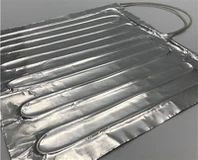
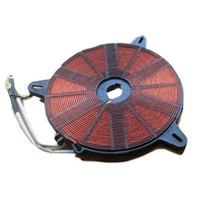
At the heart of the disparity lies the challenge of distributing a heat source-typically a resistive wire or etched foil element-over a defined area. A circular geometry is radially symmetric. Heat generation and dissipation are uniform from the center outwards to the edge. Designing for even heating is, in principle, more straightforward, as the primary challenge is compensating for greater edge losses per unit area compared to the center.
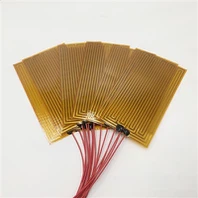
A square or rectangular geometry, however, introduces a critical complication: corners. These corners are thermally disadvantaged. They represent the furthest points from the center and have a higher surface area for heat loss relative to their contributing heating area. Without deliberate intervention, corners will be noticeably cooler than the center, creating a significant thermal gradient. Therefore, a well-designed square hot plate employs sophisticated element patterning. This often involves a non-uniform winding density or a custom etched foil circuit that delivers more power to the edges and, critically, the corners to compensate for these losses-a process known as edge compensation.

The Thermal Performance Benchmark: Uniformity
This brings us to the most critical metric for most applications: surface temperature uniformity, often expressed as a deviation like ±3°C or ±5°C across the working area.
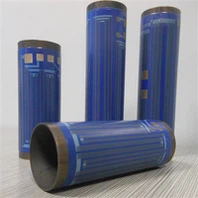
- Round hot Plates excel in naturally achieving excellent uniformity within their bounded circle, especially for heating cylindrical objects like pipes, beakers, or reactors. The uniform radial heat flow matches the geometry of the target.
- Square hot Plates are engineered champions for heating square or rectangular objects. When properly designed with compensation, they provide superior uniformity over the entire rectangular footprint. Placing a square PCB or a glass tray on a circular heater wastes thermal energy and leaves corners underheated. The square plate delivers heat precisely where it's needed, eliminating cold zones at the corners of your product.

Mechanical and Integration Considerations
The shape dictates integration:
- Installation & Sealing: Square plates are inherently easier to integrate into machinery with linear frames and right-angled assemblies. They simplify gasketing and sealing against flat surfaces. Circular plates often require custom mounting brackets or adapters in rectangular enclosures.
- Space Utilization (Packaging Density): In multi-zone systems or array setups, square plates can be tiled together with minimal dead space between heaters. Circular plates, when packed, leave inefficient interstitial gaps, reducing the overall usable heated area per panel size.
- Stress Distribution: Sharp corners on square plates can act as stress concentrators under thermal cycling or mechanical load. High-quality manufacturers radius these corners to mitigate crack initiation. Circular plates naturally distribute stress more evenly.

Analyze the shape of the object you need to heat. If it's rectangular, a square hot plate with proper edge compensation isn't just an option-it is the optimal engineering solution for efficient, uniform, and reliable performance. The shape is the first and most fundamental specification in your thermal system's blueprint. Choose wisely.