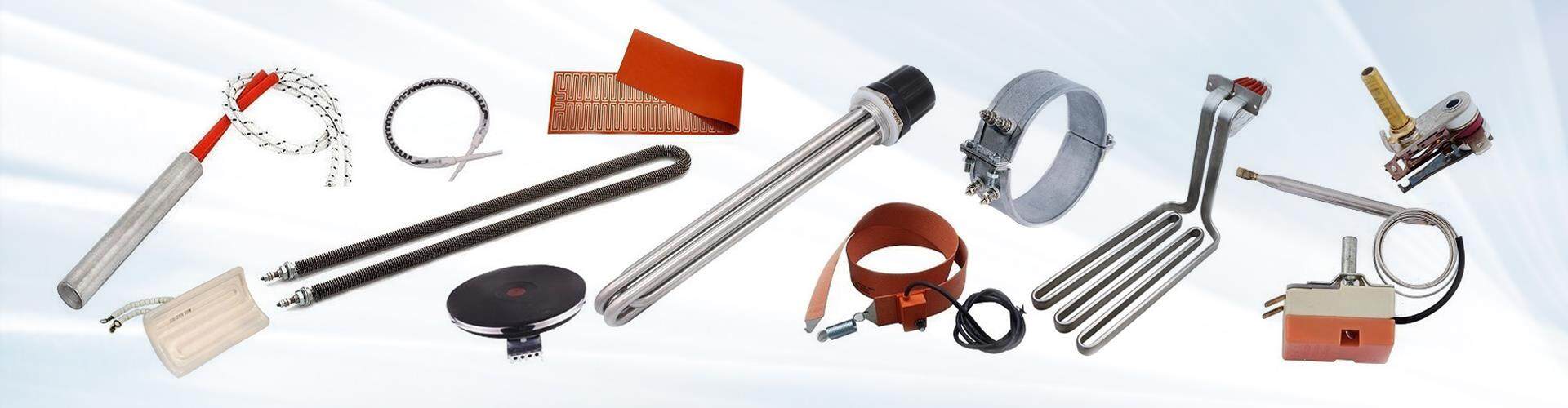
The Standard Choice: Finned Strip Heaters
Forced-air HVAC systems require a heater that can transfer a large amount of energy to moving air quickly and safely without reaching excessively high (and dangerous) surface temperatures. Finned strip heaters are specifically designed for this purpose.
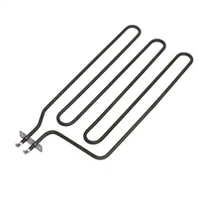
A finned strip heater consists of multiple finned tubular elements mounted in a sturdy metal frame (usually stainless steel) with integral terminals and mounting brackets.

Key Components and Why They Are Suitable:
1. Heating Element & Sheath Material:
Nickel-Chromium (NiCr) Resistance Wire: Standard for this application. It provides a reliable and cost-effective heat source with a long operational life at the typical temperatures required for duct heating.
Sheath Material:
- Stainless Steel 304: This is the most common and recommended choice for standard HVAC applications. It offers excellent resistance to oxidation and corrosion from typical airborne moisture, ensuring longevity.
- Stainless Steel 316: Used if the air quality is particularly poor, contains mild corrosive elements, or is in a coastal/marine environment with salt air.
- Incoloy 800/840: Typically overkill for standard comfort heating ducts. It might be specified for very high-temperature applications or where extreme longevity is critical, but it increases cost unnecessarily for most projects.

2. Fin Material:
Aluminum Fins: This is the standard and optimal choice. Aluminum is used because it is an excellent conductor of heat. The fins dramatically increase the surface area of the element, allowing heat to dissipate efficiently into the airstream. This results in:
- Lower Element Surface Temperature: The heat is spread out over a larger area, preventing dangerous "red-hot" spots and protecting against overheating if airflow is accidentally restricted.
- Higher Efficiency: More heat is transferred to the air and less is radiated into the duct wall or lost.
- Faster System Response: The large surface area allows the heater to impact the air temperature more quickly.

3. Construction & Configuration:
- Pressed (L-Type) or Wrapped (G-Type) Fins: Both are suitable. Pressed fins offer slightly better thermal contact and performance, but wrapped fins are perfectly adequate for most HVAC duties and are very cost-effective.
- Staged Heating Banks: A crucial feature for HVAC. A single duct heater assembly is almost always divided into multiple independent "stages" or "steps" (e.g., 3-stage: 33% - 66% - 100% power). This allows the heating output to modulate based on the demand from the thermostat, improving comfort and efficiency. It also allows the system to start with a lower load if necessary.

Critical Safety Features for Duct Heaters:
Any suitable duct heater must be integrated with mandatory safety controls:
- Airflow Proving Switch (Sail Switch): This is the most important safety device. It must be interlocked with the heater's power circuit to prevent the heater from energizing unless there is adequate airflow from the blower. No airflow = no heat. This prevents the heater from overheating and causing a fire.
- High-Limit Thermal Cutoff(s): One or more independent, non-resettable thermal fuses are embedded in the heater assembly. If the temperature exceeds a safe limit (due to a failed airflow switch or other fault), this fuse blows and permanently disables the heater until it is replaced.
- Overtemperature Controller: A resettable thermostat that monitors temperature and temporarily shuts off power to the heater if it gets too hot. It resets automatically once the temperature drops.

In conclusion, the finned strip heater with aluminum fins and a stainless steel sheath is the industry-standard, engineered solution for HVAC duct heating. Its design prioritizes efficient heat transfer to moving air while integrating seamlessly with the critical safety controls required by electrical and mechanical codes.