Where Are Flexible Heaters Commonly Used?
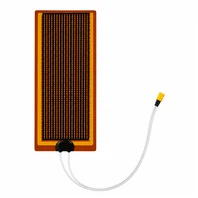
Flexible heaters have become an important heating solution for applications that require lightweight design, uniform heating, and easy installation. Compared with traditional rigid heating elements, flexible heaters can be customized into different shapes and sizes, allowing them to fit closely onto flat or curved surfaces. This makes them suitable for equipment where space is limited or precise temperature control is required.
One of the most common applications of flexible heaters is in battery thermal management systems. In electric vehicles and energy storage equipment, maintaining the proper battery temperature is essential for improving charging efficiency, performance, and service life. Flexible heaters can provide uniform heating to battery modules, especially in cold environments.
Flexible heaters are also widely used in medical and laboratory equipment. They can help maintain stable temperatures in devices such as diagnostic instruments, fluid warming systems, and testing equipment where accurate temperature control is critical.
In the electronics and communication industries, flexible heaters are often used for anti-condensation and low-temperature protection. Applications include outdoor cabinets, cameras, displays, sensors, and other electronic devices that require reliable operation in changing environments.
Industrial applications also benefit from flexible heating technology. Silicone rubber heaters are commonly used for pipe heating, tank heating, and equipment warming, while PI film heaters are suitable for compact electronic devices that require fast thermal response.