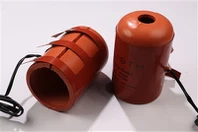
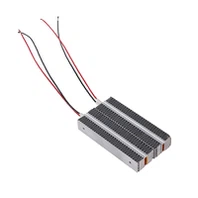
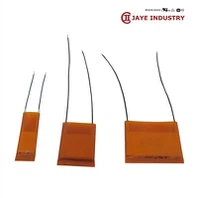
1. Why Thick Film for Coffee Machine Heaters?
Core Advantages
Instant Heating: Achieves 90°C in <10 seconds (vs 30+ seconds for traditional coil heaters)
Energy Efficient: 95%+ thermal conversion efficiency (vs 70-80% for resistive wire)
Precision Control: ±1°C temperature accuracy for optimal brewing
Space Saving: <2mm thickness vs 5-8mm for conventional heaters
Longevity: 50,000+ heating cycles without performance degradation

2. Thick Film Heater Construction
Layer Structure
| Layer | Material | Thickness | Function |
|---|---|---|---|
| Substrate | Alumina (Al₂O₃) or Stainless Steel | 0.5-1.0mm | Mechanical support and heat spreading |
| Dielectric | Glass-ceramic | 50-100μm | Electrical insulation (>2.5kV) |
| Heating Circuit | Silver-Palladium (Ag-Pd) paste | 10-20μm | Resistive heating element |
| Protective Layer | Lead-free glass | 30-50μm | Moisture and abrasion resistance |

3. Key Performance Parameters
Power Density: 15-25 W/cm² (optimized for 92-96°C brew temperature)
Voltage: Typically 120V/220V AC operation
Temperature Coefficient: +200 ppm/°C (self-regulating)
Thermal Shock Resistance: Withstands 300+ rapid cool/heat cycles

4. Manufacturing Process
Substrate Preparation
Laser cleaning and surface activation
Screen printing of dielectric layer (350-400 mesh)
Circuit Printing
Precision printing of Ag-Pd heater pattern
Multiple printing passes for uniform thickness
Sintering
Belt furnace processing at 850°C for 8-12 minutes
Controlled atmosphere (N₂/H₂ mix)
Quality Control
Infrared thermography for hotspot detection
100% electrical testing (insulation resistance >100MΩ)

5. Design Considerations
Pattern Optimization
Serpentine Layout: Balances current distribution
Graded Density: Compensates for edge heat loss
Integrated RTD: Printed temperature sensors for feedback control
Thermal Management
Heat Spreading: Substrate thermal conductivity >20 W/mK
Mounting: Spring-loaded pressure for optimal thermal contact

6. Comparison with Alternatives
| Feature | Thick Film | Calrod | PTC Ceramic |
|---|---|---|---|
| Heat-up Time | 5-10s | 30-45s | 15-20s |
| Efficiency | 95% | 75% | 85% |
| Lifespan | 50k cycles | 20k cycles | 30k cycles |
| Temperature Control | ±1°C | ±5°C | ±3°C |

7. Industry Applications
Drip Coffee Makers: Flat heating plates
Espresso Machines: Curved group head heaters
Smart Warmers: IoT-enabled temperature control

8. Future Trends
Graphene Inks: For ultra-fast heating (3-5 second warm-up)
3D Printed Heaters: Conformal shapes for advanced machine designs
Self-Diagnosing: Embedded sensors for predictive maintenance

Conclusion
Thick film heating technology enables faster, smarter, and more reliable coffee machines. Its combination of precision temperature control and compact form factor makes it ideal for both consumer and commercial applications.