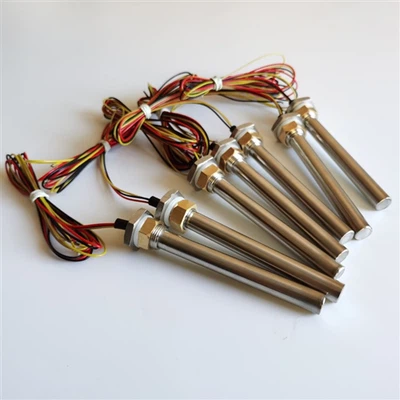
A PTC immersion heater transfers heat directly to liquid through a submerged sheath. It can be evaluated for hot-water tanks, parts washers, coolant reservoirs and compatible oil or process baths. Start with three details: the liquid composition, the time allowed to reach the target temperature and the lowest liquid level during operation. Together, they guide the choice of sheath material, heating power and mounting position.

How Does a PTC Immersion Heater Work?
PTC stands for positive temperature coefficient. As the ceramic element enters its self-regulating temperature range, its electrical resistance increases. At a fixed supply voltage, it draws less power. Heat passes from the ceramic through the insulating layer and housing into the liquid.
For a general explanation of the PTC heating principle, including how temperature changes affect electrical resistance and heating performance, read our guide to how a PTC heater works.
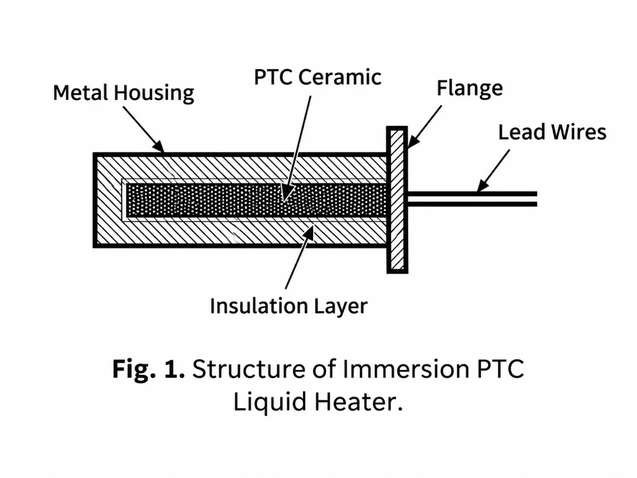
PTC Immersion Heater vs. Conventional Immersion Heater
PTC immersion heaters and conventional immersion heaters are both used for liquid heating, but they differ in heating technology, temperature regulation, and application requirements.
| Comparison | PTC Immersion Heater | Conventional Immersion Heater |
|---|---|---|
| Heating Principle | Uses PTC ceramic elements with self-regulating resistance. | Uses resistance wire enclosed in a metal sheath. |
| Temperature Control | Heating output decreases as element temperature rises. | Typically relies on an external thermostat or temperature controller. |
| Heating Efficiency | Heating output adjusts according to element temperature. | Provides relatively stable rated heating output. |
| Application Suitability | Suitable for applications requiring self-regulating heating characteristics. | Suitable for a wide range of industrial and commercial liquid heating applications. |
| Maintenance | Requires inspection of the sheath, electrical connections, and scale buildup. | Requires inspection of the heating tube, insulation, connections, and scale buildup. |
Which Type Should You Choose?
A PTC immersion heater may be suitable when self-regulating heating characteristics are important. A conventional immersion heater may be a better choice when specific heating power, customized tubular structures, or externally controlled temperature regulation are required.
The final selection should depend on liquid properties, operating temperature, heating power, installation conditions, and safety requirements.
Where Can You Use a PTC Immersion Heater?
The applications below are examples to evaluate. Confirm suitability for the exact heater model, liquid formulation, temperature and installation conditions before specifying a unit.
|
Application |
What to confirm |
|
Hot-water tanks and parts washers |
Check the fill volume, water chemistry and cleaning additives. For potable water, verify the applicable requirements for all wetted materials. |
|
Coolant reservoirs |
Specify the coolant formulation and concentration, cold-start temperature and circulation conditions. |
|
Hydraulic oil and lubricant reservoirs |
Confirm the oil grade, cold-start viscosity and maximum allowable heater surface temperature for the fluid. |
|
Plating tanks and other process baths |
Provide the bath chemistry, concentration and temperature. Verify compatibility for the sheath, seals and other wetted parts. |
Before selecting a PTC immersion heater, liquid compatibility, sheath material, operating temperature, and installation conditions should be carefully evaluated.
ank Applicwo Tations to Evaluate
Hot-Water Tanks
For a tank that heats a batch of water, size the heater around the working fill volume and the time allowed for the coldest expected fill to reach the target temperature. If the tank also needs to maintain that temperature during use, check the holding duty separately. Heat loss and cold water entering during refill can increase demand.
Worked example · A tank holding 10 L of water needs to heat it from 20°C to 60°C in 30 minutes. Using approximately 10 kg of water, a specific heat capacity of 4.18 kJ/(kg·°C), and a temperature rise of 40°C, the water needs 1,672 kJ of heat.
- Heat required by the water · 10 kg × 4.18 kJ/(kg·°C) × 40°C = 1,672 kJ
- Average power delivered to the water · 1,672 kJ ÷ 1,800 s ≈ 0.93 kW
When sizing the heater, also account for heat absorbed by the tank and heat lost to the surroundings. Ask for the model's power data at your supply voltage across the 20°C to 60°C water temperature range. Check startup current separately, then verify the 30-minute heat-up time with the intended fill volume and mounting position.
Hydraulic Oil Reservoirs
Start with the oil grade, the lowest expected oil temperature and whether the pump circulates oil during warm-up. Cold, viscous oil moves less readily around the heater, so the oil near the sheath can get much hotter than the bulk fluid. Confirm the allowable sheath surface temperature and watt density for the oil and the expected circulation conditions. If the heater runs before the pump starts, give the supplier that condition when requesting a model recommendation.
Choosing Between Immersion and Flow-Through Heating
Choose direct immersion when the heater can transfer heat into the liquid held in a tank. For a system that needs to heat fluid as it moves through a line, evaluate a flow-through PTC heater. Confirm the model's allowable flow range, pressure rating and required flow protection.
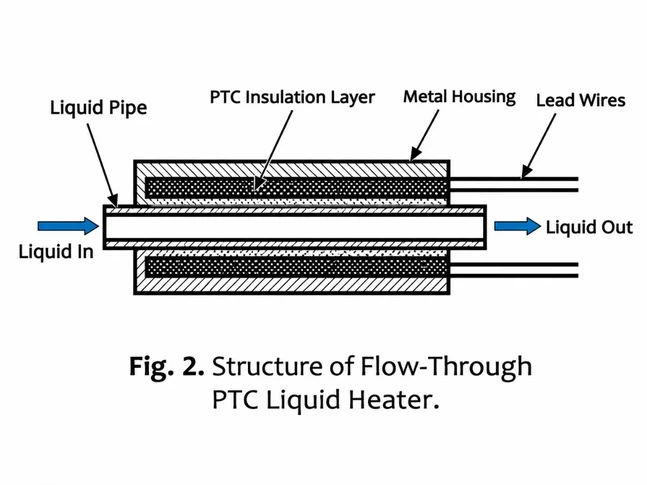
Mounting and Minimum Liquid Level
Follow the mounting orientations permitted for the model. Keep the entire active heating section below the lowest operating liquid level. Check what happens while the tank fills, operates, and drains.
For a through-wall installation, verify the seal and required clearance. If the tank has a threaded port, review the NPT or BSP threaded PTC immersion heater and confirm the thread standard and size.
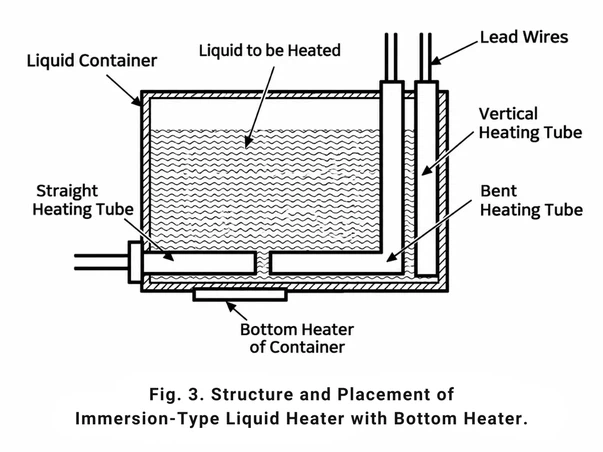
If the PTC water heating element sits near the tank bottom, account for deposits that can collect beneath it. For tanks with limited circulation, check whether the upper and lower layers reach different temperatures before choosing where to put the control sensor.
Electrical Protection and Temperature Control
Check startup current separately when sizing the power supply, wiring and switching devices. Follow the model's installation instructions and applicable requirements for grounding, electrical protection and keeping terminals dry.
Use a liquid temperature sensor and controller when the process needs a specific setpoint. Provide an independent high-temperature cutoff appropriate to the equipment. Where the active heating section could be exposed, use a low-liquid-level cutoff to de-energize the heater before that happens.
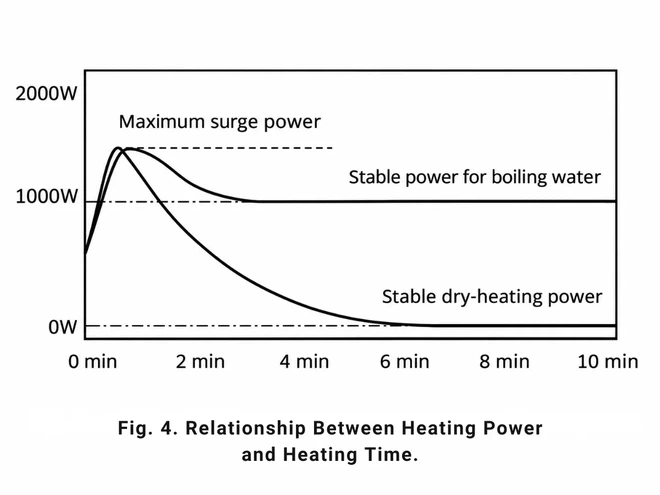
Frequently Asked Questions
Q1. Can the same PTC immersion heater heat water, coolant and oil?
A: Only if the model is approved for each fluid under the intended operating conditions. Confirm sheath and seal compatibility and verify heating performance for each liquid.
Q2. How do I choose the wattage for my tank?
A: Estimate the liquid's heat-up load, allow for the tank and heat losses, then check the model's power data over the intended temperature range. Verify startup current separately.
Q3. Does a self-regulating PTC immersion heater need a thermostat?
A: Use a sensor and controller if the liquid must hold a set temperature. The PTC ceramic regulates its power in response to its own temperature.
Q4. Can a PTC immersion heater run dry?
A: Keep the active section submerged unless the manufacturer explicitly rates the model for dry operation under your installation conditions. A low-liquid-level cutoff can shut off power before exposure.
Q5. Can I mount the heater horizontally or vertically?
A: Follow the orientations specified for the model. In either position, check minimum immersion depth, clearance, sealing and terminal protection.
Q6. When should I use a flow-through PTC heater instead?
A: Consider a flow-through model when the fluid needs heating as it circulates through a line. Verify the flow range and pressure rating for that model.
Q7. What factors affect the heating time of a PTC immersion heater?
A:
The heating time of a PTC immersion heater depends on several factors, including liquid volume, initial and target temperatures, heater power, liquid properties, and heat loss.
The main factors include:
- Liquid Volume: Larger tanks require more energy and generally take longer to reach the target temperature.
- Heater Power: Higher heating power can reduce heating time, provided the heater is suitable for the application.
- Temperature Difference: A greater difference between the initial and target temperatures requires more energy.
- Liquid Properties: Different liquids have different specific heat capacities, which affect how quickly they heat up.
- Heat Loss: Tank insulation, ambient temperature, and heat dissipation through the tank walls can affect actual heating performance.
- Liquid Circulation: Proper circulation helps distribute heat more evenly and reduces temperature differences within the tank.
For water heating, the theoretical heating energy can be estimated using:
Q = m × c × ΔT
Where:
- Q = Required heat energy (J)
- m = Water mass (kg)
- c = Specific heat capacity of water (approximately 4,186 J/kg·°C)
- ΔT = Temperature increase (°C)
The estimated heating time can then be calculated by dividing the required energy by the effective heating power.
In actual applications, additional time should be allowed for heat loss and variations in heater output. Proper power selection should consider both the required heating time and the operating conditions.
Q8. How do I select the right sheath material for different liquids?
A: Selecting the correct sheath material is essential for the corrosion resistance, service life, and safe operation of a PTC immersion heater.
The material should be selected according to the chemical composition of the liquid, concentration, operating temperature, and working environment.
Common considerations include:
- Water and General Heating Applications: Stainless steel 304 or 316 may be suitable, depending on water quality and operating conditions.
- Chloride-Containing Liquids: Stainless steel 316L or titanium may be considered, depending on chloride concentration and temperature.
- Corrosive Chemical Solutions: Titanium, nickel-based alloys, or other corrosion-resistant materials may be considered after checking chemical compatibility.
- Specialty Process Liquids: Material selection should account for chemical reactions, contamination requirements, and long-term exposure conditions.
Before selecting a sheath material, confirm the following information:
- Liquid type and chemical composition.
- Chemical concentration and pH value.
- Normal and maximum operating temperatures.
- Chloride content or other corrosive components.
- Required service life and operating conditions.
For customized PTC immersion heaters, the sheath, flange, fittings, and other liquid-contacting components should all be evaluated for compatibility with the process liquid.
If the liquid composition or operating conditions are uncertain, consult the heater manufacturer before finalizing the material selection.
Specify a PTC Immersion Heater for Your Equipment
See the Jaye Heater PTC Immersion Heater. For an application review, send your liquid composition, tank dimensions, fill volume, minimum liquid level, supply voltage, starting and target temperatures, required heat-up time and mounting drawing. Contact Jaye Heater.
References
- Watlow - Wattage Calculator · Reference for estimating heat-up power and accounting for heat loss.
- Tempco - Electric Immersion Heater Installation and Operating Instructions · General reference for liquid-level and overtemperature protection. Follow the instructions for the specific heater model being installed.

Need a PTC Immersion Heater for Your Tank?
Send Jaye Heater your liquid type, fill volume, supply voltage, target temperature, and required heat-up time. Include a mounting drawing if available so we can help you select a heater that fits your application.