1 Introduction to Heating Elements
Heating elements are essential components that efficiently convert electrical energy into heat through the principle of Joule heating. They are fundamental to countless applications, ranging from domestic appliances to sophisticated industrial processes and medical equipment. Understanding the diverse types of heating elements, their unique characteristics, and their appropriate applications is crucial for selecting the optimal solution that ensures efficiency, longevity, and safety. This guide provides a comprehensive overview of the various heating elements available, empowering you to make an informed decision tailored to your specific thermal requirements.
The performance of a heating element is largely determined by its design and the materials from which it is constructed. Factors such as the required temperature range, environmental conditions, power density, and physical constraints of the application all play a critical role in the
selection process. Choosing the wrong type of element can lead to premature failure, inefficient operation, and potential safety hazards.

2 Resistance Wire Heating Elements
Resistance wire heating elements are among the most common and versatile types available. They are typically fabricated from alloys such as Nickel-Chromium (NiCr) or Iron-Chrome-Aluminum (FeCrAl), which are chosen for their high resistivity and ability to withstand elevated temperatures.
NiCr alloys offer a high melting point (approximately 1,400°C) and excellent oxidation resistance, making them a preferred choice for industrial furnaces and ovens. FeCrAl alloys, on the other hand, can withstand even higher temperatures and are often a cost-effective alternative, though they may become brittle over prolonged use.
These elements are often formed into coils or strips, allowing for flexibility in design to meet the spatial and heating requirements of various equipment, including laboratory ovens and small household appliances.
Their advantages include a rapid thermal response, uniform heating distribution, and proven reliability. The simplicity of their design contributes to their widespread use in applications like electric kettles and stoves. Their customizable nature makes them an excellent choice for both standard and specialized heating situations.

3 Tubular and Cartridge Heating Elements
Tubular heating elements consist of a resistive wire coil, typically made of an alloy like NiCr, encased within a metal sheath (often stainless steel). The space between the coil and the sheath is filled with a highly thermally conductive but electrically insulating material, such as magnesium oxide, which ensures efficient heat transfer while providing electrical isolation.
This construction makes them robust, durable, and sealed against moisture and contaminants. Their versatility is enhanced by the ability to be bent into various shapes, including U-tubes or flanged designs, for optimal integration into systems like water heaters, industrial fluid warmers, and surface heating plates.
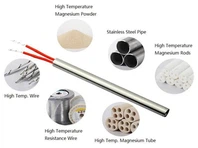
Cartridge heaters are another specialized type designed for localized heating in confined spaces. These compact, cylindrical elements are engineered to be inserted into drilled holes in molds, dies, platens, and packaging machinery
. They frequently utilize NiCr coils and ceramic insulators to achieve very high watt densities and rapid heat transfer. Their primary advantage lies in providing precise, concentrated temperature control for applications where heating a specific component within an assembly is required. The ability to deliver high power in a small form factor makes them indispensable in manufacturing and process industries.

4 Band Heaters for Industrial Applications
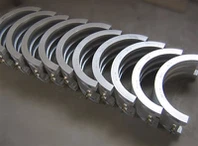
Band heaters are specifically designed to clamp uniformly around cylindrical surfaces, such as pipes, barrels, and nozzles. This design ensures excellent mechanical contact and promotes even heat distribution across the circumference of the object being heated.
Inside the metal band, a resistive wire is wound, and the assembly is often insulated to improve efficiency and safety. They are exceptionally common in plastic processing machinery, such as extruders and injection molding machines, where they maintain the barrel at the precise temperature needed for material melting and flow.
For applications demanding higher temperatures, ceramic band heaters are available and can operate effectively up to 750°C.
The key benefit of band heaters is their ability to deliver consistent, uniform heat to cylindrical surfaces without the need for permanent modification to the host equipment.
Their installation and replacement are straightforward, minimizing downtime in industrial settings. This combination of effective performance and practical design solidifies their role in continuous industrial processes.

5 Infrared and Ceramic Heating Technologies
Infrared heating elements operate on a different principle than convective heaters. Instead of heating the surrounding air, they emit radiant energy that directly heats objects and surfaces upon contact. This method is highly energy-efficient, as it reduces heat loss to the environment. These elements typically use materials like quartz or ceramic as the emitter or support structure. They are widely employed in space heating, drying and curing processes, and food warming, where focused and rapid heating is desired.
Ceramic heating elements, including infrared emitters and cartridge styles, leverage the exceptional thermal stability, electrical insulation properties, and low contamination risk of ceramic materials.
Ceramic elements are particularly valuable in sensitive environments such as semiconductor manufacturing and medical devices, where material purity and precise temperature control are paramount.
One common form is the ceramic bobbin heater, made from high-alumina ceramic and quality resistance wire, which is often used in hot air guns and nozzles for heating gases. Their ability to withstand high temperatures and resist chemical corrosion makes them a reliable and durable choice for demanding applications.

6 Specialized Heating Elements for Medical Fields
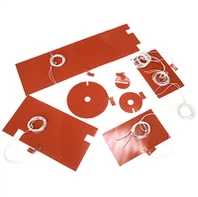
The medical industry requires heating elements that are safe, reliable, and often flexible to conform to specific device geometries. Silicone rubber heaters are a prime example, constructed as thin sheets (typically around 1.5mm thick) that offer excellent flexibility, allowing them to be in close contact with curved or irregular surfaces.
Composed of nickel alloy resistance wires embedded between layers of silicone and fiberglass, they are safer than some flat carbon-based elements and can be custom-shaped to meet precise design requirements for devices like blood analyzers and tube heaters.
Non-woven heating elements are created by sandwiching a heating wire between two layers of non-woven fabric. With a minimal thickness of only 3-5mm, they are lightweight, safe, hygienic, and provide uniform surface heat. They are ideally suited for low-temperature therapeutic applications such as wearable massagers, heated blankets, and shapewear, where patient comfort and safety are critical.
Another advanced type is the high-temperature co-fired ceramic heater, which is manufactured by printing a circuit of high-melting-point metal slurry onto ceramic layers and sintering them at high temperatures.
This process results in an element with superior temperature uniformity, rapid thermal response, and compliance with strict environmental standards like EU RoHS, making it perfect for medical equipment like intravenous fluid warmers and infrared therapy devices.
7 Key Material Considerations
The selection of a heating element is inextricably linked to the material from which it is made. Each material offers a distinct set of properties that determine its suitability for different temperature ranges and environments.
Nickel-Chromium (NiCr) Alloys: These alloys represent a dominant choice for general-purpose heating due to their excellent balance of high resistivity, oxidation resistance, and durability at temperatures up to approximately 1,200°C.
Iron-Chrome-Aluminum (FeCrAl) Alloys: Known for their cost-effectiveness and capability to withstand higher temperatures than standard NiCr, though they may exhibit brittleness after extended use.
Silicon Carbide (SiC): This material is employed in very high-temperature industrial processes, such as metal melting, as it can operate effectively at extreme temperatures.
Molybdenum Disilicide (MoSi2): Suitable for the most demanding applications, including laboratory furnaces, with operational capabilities reaching up to 1,800°C.
Graphite: Valued for its rapid heating capabilities, graphite is often used in vacuum furnaces but requires an inert atmosphere to prevent oxidation at high temperatures.
Understanding the properties of these materials is fundamental to selecting an element that will deliver optimal performance and service life in your specific application, whether it involves extreme heat, corrosive environments, or precise temperature control.
8 Selection Criteria and Conclusion
Selecting the perfect heating element is a multifaceted process that requires careful evaluation of your application's needs. The following criteria should guide your decision:
- Temperature Requirements: The maximum operating temperature is the primary factor, as it directly dictates the suitable materials.
- Environmental Conditions: Consider factors such as exposure to moisture, chemicals, or mechanical abrasion, which will influence the choice of sheath material or element type.
- Power Density and Wattage: The necessary heat output per unit area will help determine the size and type of element required.
- Physical Space and Integration Constraints: The available space and the method of installation (e.g., clamping, insertion, or surface mounting) are critical for practical implementation.
- Thermal Response Time: Applications needing rapid heating or cooling may benefit from elements with low thermal mass, like thin infrared or wire elements.
In summary, the world of heating elements is diverse, with each type-from robust resistance wires and versatile tubular elements to flexible silicone rubber and efficient infrared heaters-catering to a unique set of industrial, commercial, and medical challenges. A thorough understanding of these options is the key to achieving efficient, reliable, and safe operation of your equipment.

One-stop Heating Element Factory in China
If you require heating elements, Jaye Heater-as a long-standing manufacturer of heating elements-will assist you with our team of professional technicians and sales personnel.