
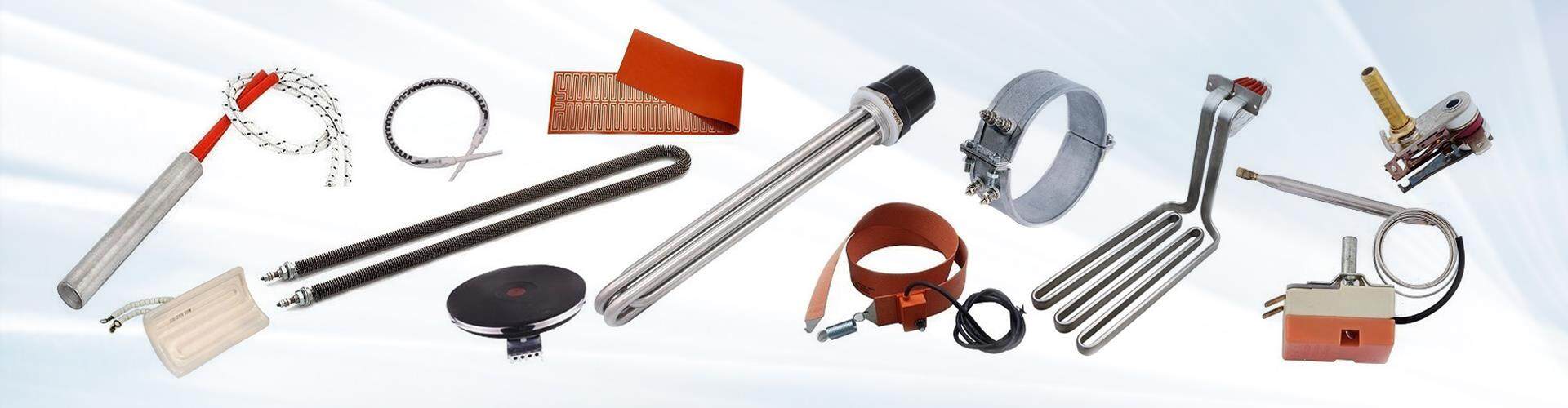
A silicone rubber heating pad is an incredibly versatile thermal solution. However, the heating element itself is only half of the equation. Without the right temperature control system, you risk thermal runaway, damaged equipment, or inconsistent product quality.
At Jaye Heater, we understand that every application has unique thermal requirements. Whether you need a simple freeze-protection setup or a highly precise medical heating system, choosing the right combination of thermostats, controllers, sensors, and safety fuses is critical. This guide will help you navigate our product offerings to find the perfect match for your project.
1. Understanding Your Temperature Control Options
When it comes to controlling your silicone heater, you have a spectrum of choices ranging from simple mechanical thermostats to advanced electronic PID controllers.
Mechanical Thermostats
Mechanical thermostats are devices that sense temperature and control the heating element to maintain a set range. They are cost-effective, rugged, and do not require external power to operate the sensing mechanism. Jaye Heater offers three main types:
Snap Action Thermostat (Automatic Reset): This thermostat provides a distinct "on/off" action. It snaps open when the setpoint is reached and automatically resets when the temperature drops. It is ideal for general-purpose heating and basic over-temperature protection.
Adjustable Thermostat: Enclosed in a molded silicone rubber housing and permanently attached to the heater, this option allows users to dial in a specific temperature. It features a high-temperature knob for manual adjustments.
Electrical Ratings: 12.5A @ 125V, 6.5A @ 250V (1500W @ 120V, 1560W @ 240V).
Creep Action Thermostat: This thermostat provides a sustained response and a slow cutoff at the trip point. It exhibits a "slow make/slow break" action around the setpoint, which helps prevent rapid cycling and extends the life of the heater.
Setpoints: Available from 50°F to 300°F in 10°F increments.
Electrical Ratings: 120 Vac (12 Amp, 1440W) and 240 Vac (6 Amp, 1440W).
Electronic Temperature Controllers
For applications requiring the highest level of precision, electronic temperature controllers are the answer. These controllers offer digital displays, programmable setpoints, and advanced PID (Proportional, Integral, Derivative) control algorithms. PID controllers continuously modulate power output to maintain incredibly stable temperatures, minimizing overshoot and fluctuation.
2. Selecting the Right Temperature Sensor
The sensor is the "eyes" of your control system. It measures the temperature of the target surface or environment and feeds this data back to the controller or thermostat. Jaye Heater can integrate various sensors directly into your silicone heater.
Thermocouples (Type J or K): We can integrate common Type J or K thermocouples at nearly any location on the heater surface. They are highly durable, respond quickly, and are excellent for harsh industrial environments.
RTDs (Resistance Temperature Detectors): We utilize platinum thin film RTDs (2- or 3-wire) with 100 ohm @ 0°C (0.00385 TCR / DIN43760) or 1000 ohm options. Because their resistance increases linearly with temperature, RTDs are the most accurate and stable sensors available, making them ideal for medical and laboratory equipment.
Thermistors: These resistive-based sensors exhibit non-linear responses and are suitable for limited temperature ranges or specific single temperatures. Small bead-style thermistors can be attached directly to the heater and integrated into your electronic control system.
3. Safety First: Thermal Fuses
No thermal control system is complete without a fail-safe. While thermostats and controllers regulate temperature during normal operation, a Thermal Fuse is a safety device designed to open the electrical circuit permanently if the temperature exceeds a predetermined threshold. This protects against damage to the heater, the surrounding components, and prevents catastrophic overheating if the primary controller fails.
4. Comparison & Selection Guide
Choosing the right setup depends on your required precision, complexity, and budget. Use the table below to guide your selection:
| Control Type | Precision | Complexity | Best Application Scenario |
|---|---|---|---|
| Snap Action Thermostat | Low (±5°C to ±10°C) | Very Low | Freeze protection, basic warming, cost-sensitive consumer goods. |
| Adjustable Thermostat | Moderate | Low | User-adjustable industrial warming, food holding equipment. |
| Creep Action Thermostat | Moderate-High | Low | Applications requiring reduced thermal cycling and sustained heat. |
| Electronic PID Controller | Very High (±0.1°C to ±1°C) | High | Medical devices, 3D printer beds, semiconductor processing, lab equipment. |
Application Scenarios
Medical & Laboratory Equipment: Choose an RTD sensor paired with an Electronic PID Controller to achieve the sub-degree stability required for incubators and analytical instruments.
Industrial Tanks & Food Warming: An Adjustable or Creep Action Thermostat integrated with a Type J Thermocouple provides durable, reliable, and user-friendly temperature control.
3D Printer Heated Beds: A Thermistor paired with an Electronic PID Controller is the standard, offering the fast response and precise thermal management needed for consistent print adhesion.
Freeze Protection: A Snap Action Thermostat with a Thermal Fuse offers a cost-effective, reliable solution to prevent pipes or enclosures from freezing.
5. FAQ
Q1: Can I use a Thermistor with an Electronic PID Controller?
Yes, but you must ensure your electronic controller is specifically configured to read the non-linear resistance curve of a thermistor. RTDs or Thermocouples are generally easier to integrate with universal PID controllers due to their linear or standardized outputs.
Q2: What is the difference between a Snap Action and a Creep Action Thermostat?
A Snap Action thermostat opens and closes the circuit instantly, resulting in a wider temperature swing. A Creep Action thermostat makes and breaks the circuit slowly, providing a tighter temperature band and reducing electrical arcing, which extends the thermostat's lifespan.
Q3: Do I really need a Thermal Fuse if I already have a Thermostat?
Absolutely. A thermal fuse is a critical redundant safety measure. If your primary thermostat or controller malfunctions and gets stuck in the "ON" position, the thermal fuse will permanently cut power to prevent a fire hazard.
Ready to optimize your thermal system?
At Jaye Heater Technology, we don't just sell heating elements; we provide complete thermal solutions. Contact our engineering team today to discuss your specific voltage, wattage, and control requirements. We will help you design a custom silicone heating pad with the perfect integrated control system for your application.


