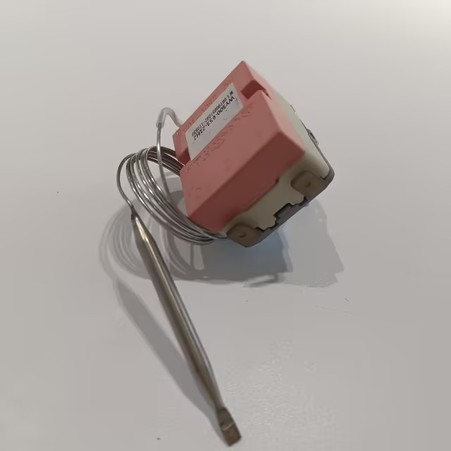
The positioning of the sensing bulb directly influences the accuracy, responsiveness, and safety of your fryer's capillary thermostat. Here's how placement affects performance:
1-Temperature Measurement Accuracy
1)Optimal Placement: Mount the bulb in the oil bath, submerged but not touching the fryer's heating element or walls. This ensures it reads the actual oil temperature rather than ambient air or surface heat.
2)Poor Placement: If the bulb contacts the heating element or fryer wall, it may overreact to localized heat spikes, causing erratic cycling or overshooting.
2-Response Time
1)Closer to Heat Source: Placing the bulb near the heating element speeds up detection of temperature changes but risks premature shutdowns (if oil circulation is uneven).
2)Away from Heat Source: Delays temperature feedback, risking oil overheating or underheating.
3-Oil Circulation & Uniformity
Ensure the bulb is positioned in a zone with consistent oil flow. Poor placement (e.g., near cold spots or dead zones) leads to inaccurate readings, compromising fry quality and oil longevity.
4-Calibration Integrity
Avoid mounting the bulb in areas exposed to splashing, airflow, or mechanical stress. External factors can shift calibration over time, causing drift in temperature control.
5-Safety & Durability
Keep the bulb clear of direct flame or excessive radiant heat (common in gas fryers). Overexposure degrades the bulb's sensitivity and shortens its lifespan.
Recommendation for Your Design:
Use a dedicated thermowell or immersion sleeve to secure the bulb in the oil's thermal "sweet spot" (typically mid-depth, away from heating zones and cold edges).
Test placements during prototyping to balance responsiveness with stability.
By optimizing bulb placement, your fryers achieve precise temperature control, consistent cooking results, and reduced energy waste-key selling points for commercial customers.