Polyimide heaters are an ideal heating solution for 3D printers due to their efficiency, flexibility, and thin profile. They are crafted from a durable polyimide film, a high-temperature thermoplastic known for its excellent insulating properties and ability to withstand extreme temperatures. In 3D printing, polyimide heaters are commonly used as the heated bed element, which is essential for achieving better adhesion between the print bed and the initial layer of printed material, reducing warping, and improving print quality.
How Polyimide Heaters Work in 3D Printers
- Structure and Composition
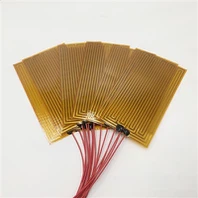
Polyimide heaters are composed of a flexible polyimide film that encases a thin layer of resistive heating elements, usually made from etched foil or wire. The polyimide film offers high dielectric strength and can operate effectively at temperatures up to 200°C or more, making it suitable for 3D printer beds. The heater's structure is exceptionally thin-often less than a millimeter-which ensures minimal heat loss and reduces the weight added to the 3D printer's components.

- Heating Mechanism
When electrical current passes through the resistive elements within the polyimide heater, the resistance generates heat. This process is called Joule heating, and it converts electrical energy into thermal energy. Polyimide heaters are known for their quick response time; they reach target temperatures faster than many other heating types because of their thin construction and excellent heat transfer properties. This rapid heating is especially beneficial for 3D printers that require consistent and controlled heating during the entire print process.
- Temperature Control
Polyimide heaters can be integrated with sensors and thermostats, allowing precise temperature control. Accurate temperature regulation is critical in 3D printing as various filament types-such as PLA, ABS, and PETG-require different bed temperatures to prevent issues like warping or poor adhesion. Many polyimide heaters come with built-in thermistors, enabling the 3D printer's control system to adjust and maintain the correct temperature throughout the printing process. This precision ensures consistent print quality and enhances the durability of the final product.
- Flexibility and Adhesion
Due to their flexible nature, polyimide heaters can conform to curved or irregular surfaces, providing even heating across the print bed. This flexibility is particularly advantageous in compact or custom-built 3D printers where space is limited, or where unique bed shapes are used. Their thin design also helps with the installation, allowing the heater to be placed directly onto the print bed or other components without causing misalignment or adding bulk.
Advantages of Polyimide Heaters for 3D Printing
- High Temperature Range: Polyimide heaters can reach temperatures that support various filaments, offering versatility across many 3D printing materials.
- Uniform Heating: The design ensures consistent heat distribution, essential for high-quality prints.
- Rapid Heating: Quick heating minimizes waiting time and energy consumption.
- Thin and Lightweight: Their low-profile design minimizes interference with printer mechanics, maintaining precision.
- Durability: Polyimide heaters are resistant to chemicals, abrasion, and high temperatures, making them long-lasting.
Conclusion
Polyimide heaters are integral to 3D printers that need efficient, controlled heating, particularly on the print bed. Their flexibility, precise temperature control, rapid heating response, and durability contribute to high-quality prints and consistent adhesion across various filament types. For 3D printing applications, polyimide heaters offer both performance and reliability, supporting more advanced and creative printing possibilities.